
Grade 10 Science Worksheets
7,174 worksheets
Mendelian Inheritance Patterns and Probability Worksheets Grade 10
 Created byTeachers Club
Learning Objectives
- Predict offspring genotypes from single-gene crosses
- Calculate expected phenotype ratios using Punnett squares
- Interpret pedigrees to infer likely inheritance patterns
Also included in: Heredity & Inheritance Biology Worksheets Grade 10 NGSS Bundle +1 more
Instant download

Grade 10 Worksheet B: Mendelian Patterns and Inheritance Practice | NGSS PDF
 Created byClear Sky Classroom
Learning Objectives
- Use Mendelian principles (dominance, segregation, and independent assortment) to predict offspring phenotypes from parental genotypes.
- Interpret pedigree information and relate inheritance patterns to probability outcomes.
- Apply Punnett-square reasoning to single-gene traits and identify common misconceptions.
Also included in: Grade 10 Genetic Variation and Inheritance Science Lesson Bundle: NGSS +1 more
Instant download
10th Grade Science | Mendelian Patterns Worksheet (PDF+ Answer Key)
 Created byCopper Leaf Classroom
Learning Objectives
- Understand the principles of dominant and recessive inheritance patterns.
- Use Punnett squares to predict offspring genotypes and phenotypes.
- Interpret pedigree charts to analyze inheritance of traits.
Instant download

Mendelian Patterns Assessment | NGSS Standards-Aligned Grade 10 Science
 Created byPrism Point Learning
Learning Objectives
- Explain the concepts of dominance, segregation, and independent assortment in inheritance.
- Use Punnett squares and pedigree charts to predict offspring phenotypes and genotypes.
- Analyze inheritance patterns including linked genes and polygenic influences.
Also included in: Grade 10 Science | DNA, Mendelian Patterns & Mutation NGSS Assessment
Instant download

Grade 10 Science | Mendelian Patterns Worksheet (NGSS10 PDF)
 Created bySilver Birch Teaching
Learning Objectives
- Explain Mendelian inheritance patterns using probability and pedigree analysis.
- Describe the concepts of dominance, segregation, and independent assortment.
- Relate chromosome behavior during meiosis to Mendelian principles.
Also included in: Grade 10 Genetics Science Lesson Bundle NGSS: Mutation, Mendelian, DNA +1 more
Instant download
Grade 10 Science – Mendelian Patterns Worksheet (NGSS Aligned) (PDF)
 Created byBright Mind Resources
Learning Objectives
- Understand basic Mendelian inheritance patterns and how they relate to offspring traits.
- Analyze Punnett squares, pedigree charts, and probability in genetic inheritance.
- Explain concepts of dominance, segregation, and independent assortment during meiosis.
Instant download
Grade 10 Science – Mendelian Patterns Worksheet (PDF +Answer Key)
Created byCopper Leaf ClassroomLearning Objectives
- Identify dominant and recessive traits using Punnett squares.
- Understand the concepts of segregation and independent assortment.
- Relate chromosome behavior during meiosis to inheritance patterns.
Instant download
Grade 10 Science | Mendelian Patterns Worksheet with Short Notes (Printable PDF)
 Created byMeadowlark Worksheets
Learning Objectives
- Understand core concepts of inheritance, including dominance, segregation, and independent assortment.
- Apply Punnett squares and pedigree analysis to predict inheritance outcomes.
- Analyze the effects of linked genes and polygenic traits on inheritance ratios.
Also included in: Grade 10 Science | Heredity, Inheritance & Traits NGSS Unit Bundle (worksheets) +1 more
Instant download

Mendelian Patterns Practice Worksheet | Grade 10 Science NGSS Review
Created byPrism Point LearningLearning Objectives
- Explain how dominance, segregation, and independent assortment relate to meiosis and gamete formation.
- Use Punnett squares and pedigree reasoning to predict possible offspring phenotypes from parental genotypes.
- Interpret inheritance patterns using probability, including how linked genes and polygenic traits can alter simple Mendelian ratios.
Instant download
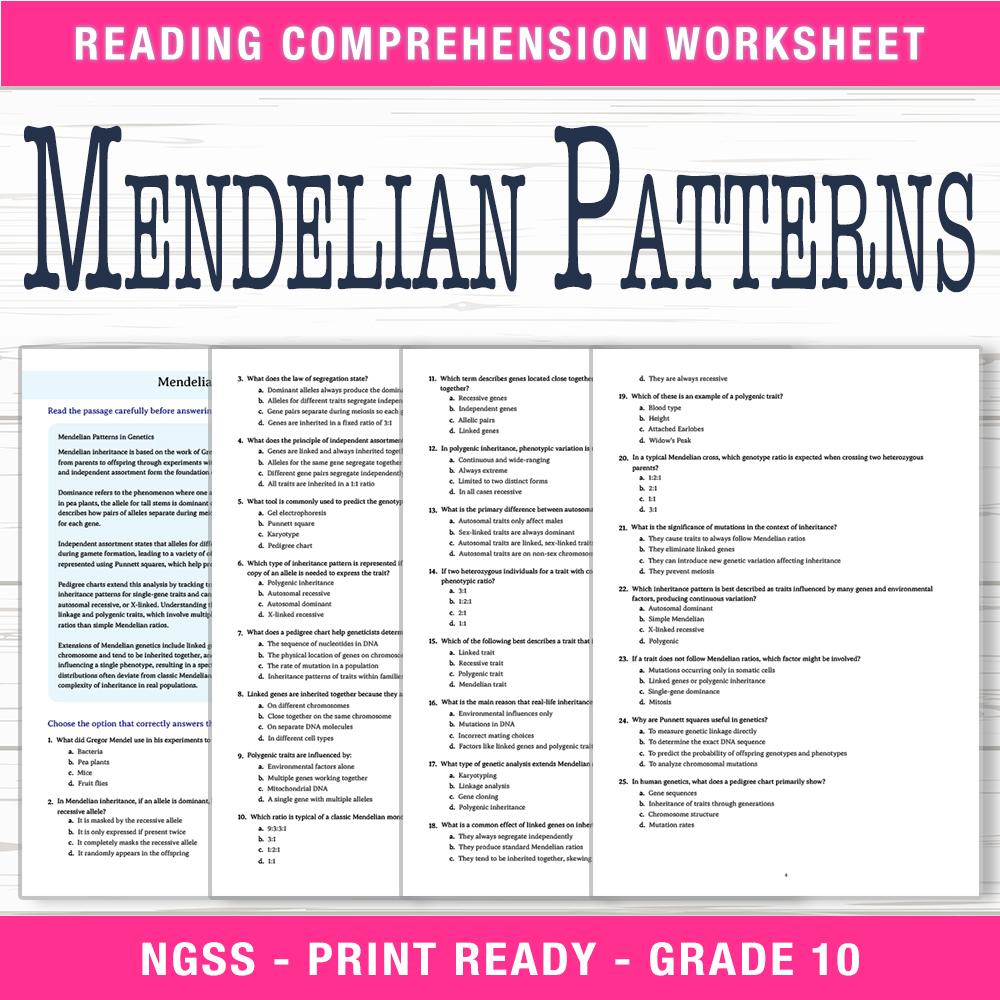
Grade 10 Science | Mendelian Patterns Worksheet (PDF + Answer Key)
 Created byRiverstone Classroom
Learning Objectives
- Explain the principles of dominance, segregation, and independent assortment in Mendelian genetics.
- Use Punnett squares to predict offspring genotypes and phenotypes from parental crosses.
- Analyze inheritance patterns using pedigree charts for single-gene traits.
Instant download

Mendelian Inheritance and Probability Worksheet | Genetics | Grade 10 NGSS
 Created byAmber Owl Education
Learning Objectives
- Explain how dominance and segregation relate to outcomes in single-gene crosses.
- Use Punnett squares to predict offspring phenotypes from given parental genotypes.
- Interpret pedigree patterns using Mendelian inheritance and simple probability.
Instant download

Grade 10 Ecosystem Structure, Niches & Energy Flow Worksheet | NGSS Science
Created byAmber Owl EducationLearning Objectives
- Distinguish biotic and abiotic components of terrestrial and aquatic ecosystems
- Explain how producers, consumers, and decomposers transfer energy through trophic levels
- Use food-web reasoning to predict how changes affect stability and nutrient cycling
Instant download
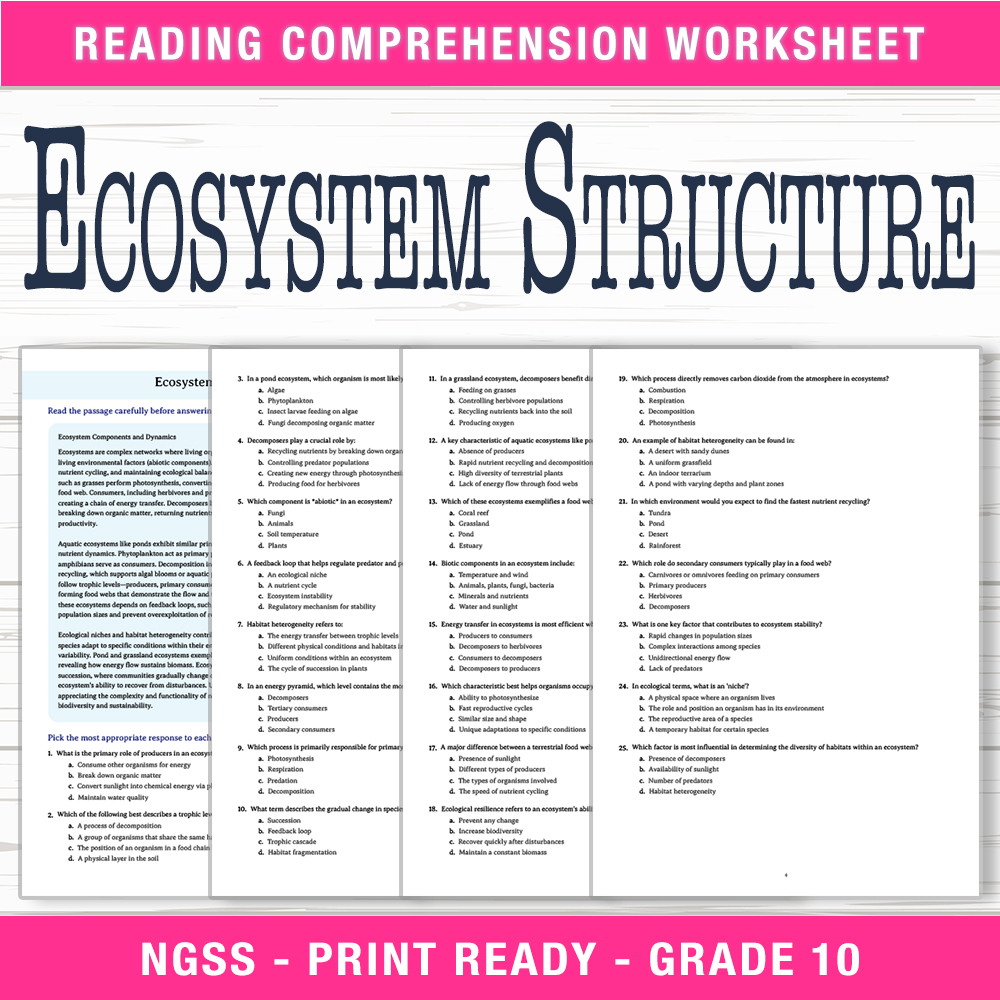
Grade 10 Science | Ecosystem Structure Worksheet (PDF + Answer Key)
Created byRiverstone ClassroomLearning Objectives
- Describe the roles of biotic and abiotic components in ecosystems.
- Explain energy flow and trophic levels within food webs.
- Analyze ecosystem stability and feedback mechanisms.
Also included in: Grade 10 Science Ecosystems & Biodiversity UNIT Worksheet Bundle
Instant download

Ecosystem Structure and Energy Flow Worksheets | Grade 10 Science
Created byTeachers ClubLearning Objectives
- Identify biotic and abiotic components in aquatic and terrestrial ecosystems
- Explain energy movement through trophic levels in food webs
- Describe how decomposers support nutrient cycling in ecosystems
Also included in: Grade 10 Science Ecosystems NGSS Worksheets & Lesson Bundle +1 more
Instant download
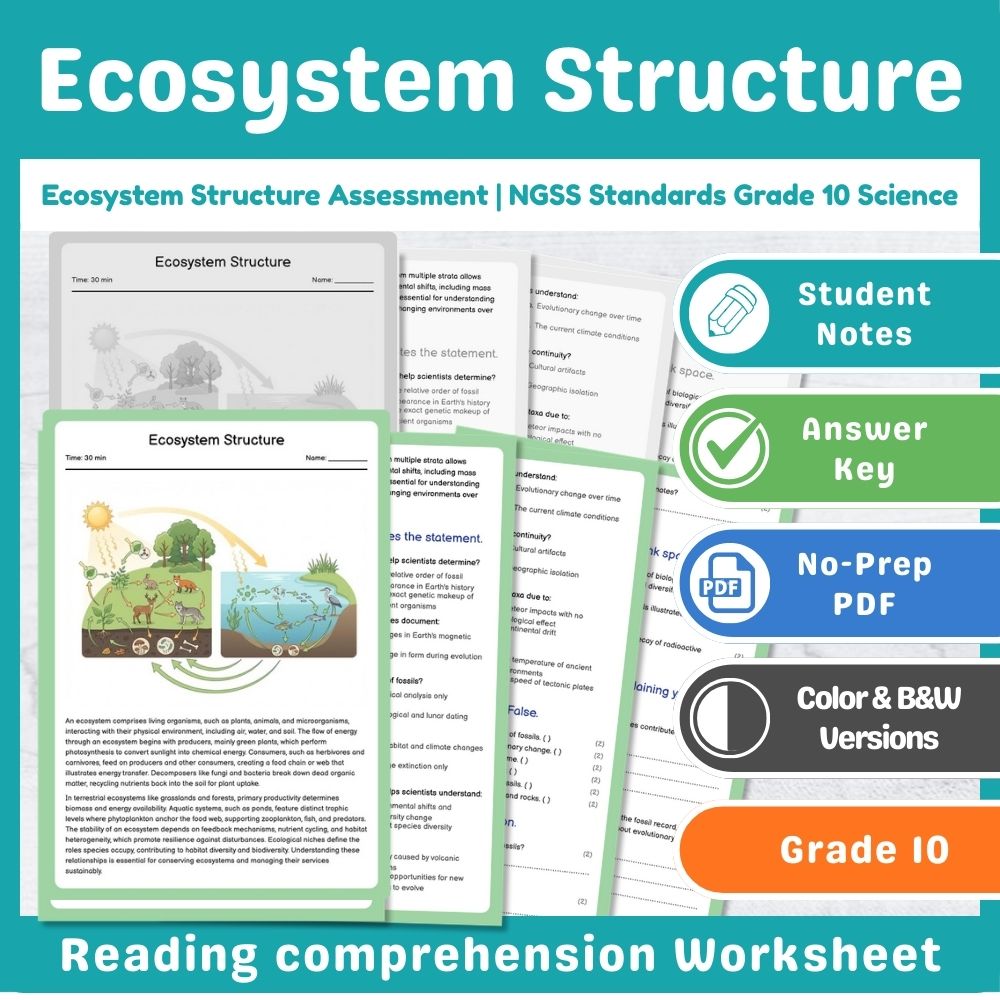
Ecosystem Structure Assessment for Grade 10 Science NGSS Standards
Created byPrism Point LearningLearning Objectives
- Explain the roles of biotic and abiotic components in ecosystems.
- Identify and analyze food webs, trophic levels, and energy flow within ecosystems.
- Understand the concepts of ecosystem stability, feedback loops, and ecological niches.
Instant download
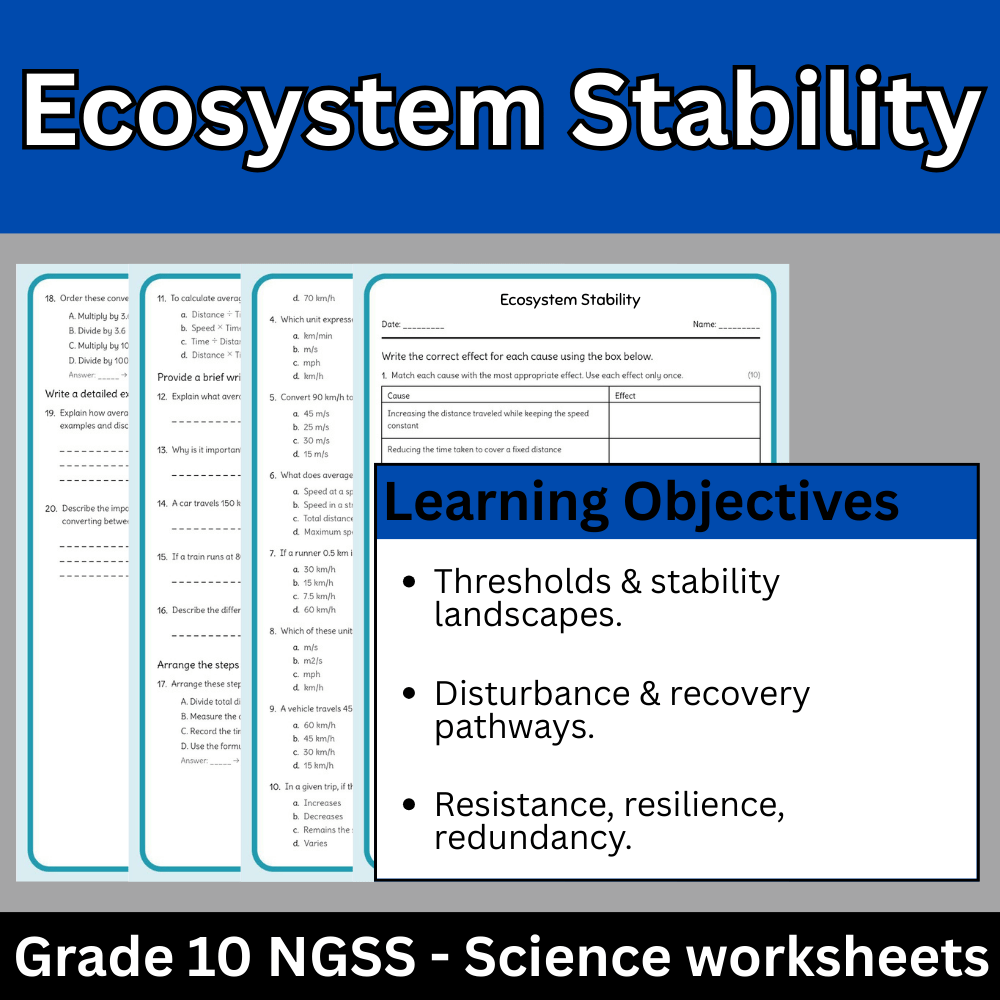
Grade 10 Science – Ecosystem Structure Worksheet (NGSS Aligned) PDF
Created byBright Mind ResourcesLearning Objectives
- Identify biotic and abiotic components within ecosystems
- Explain energy flow and trophic levels in food webs
- Analyze ecosystem stability and feedback mechanisms
Instant download

Grade 10 Science | Ecosystem Structure Worksheet (PDF + Answer Key)
Created byCopper Leaf ClassroomLearning Objectives
- Identify the biological and physical components that make up ecosystems.
- Explain energy flow, trophic levels, and food web interactions.
- Analyze ecosystem stability, feedback mechanisms, and the roles of different organisms.
Instant download
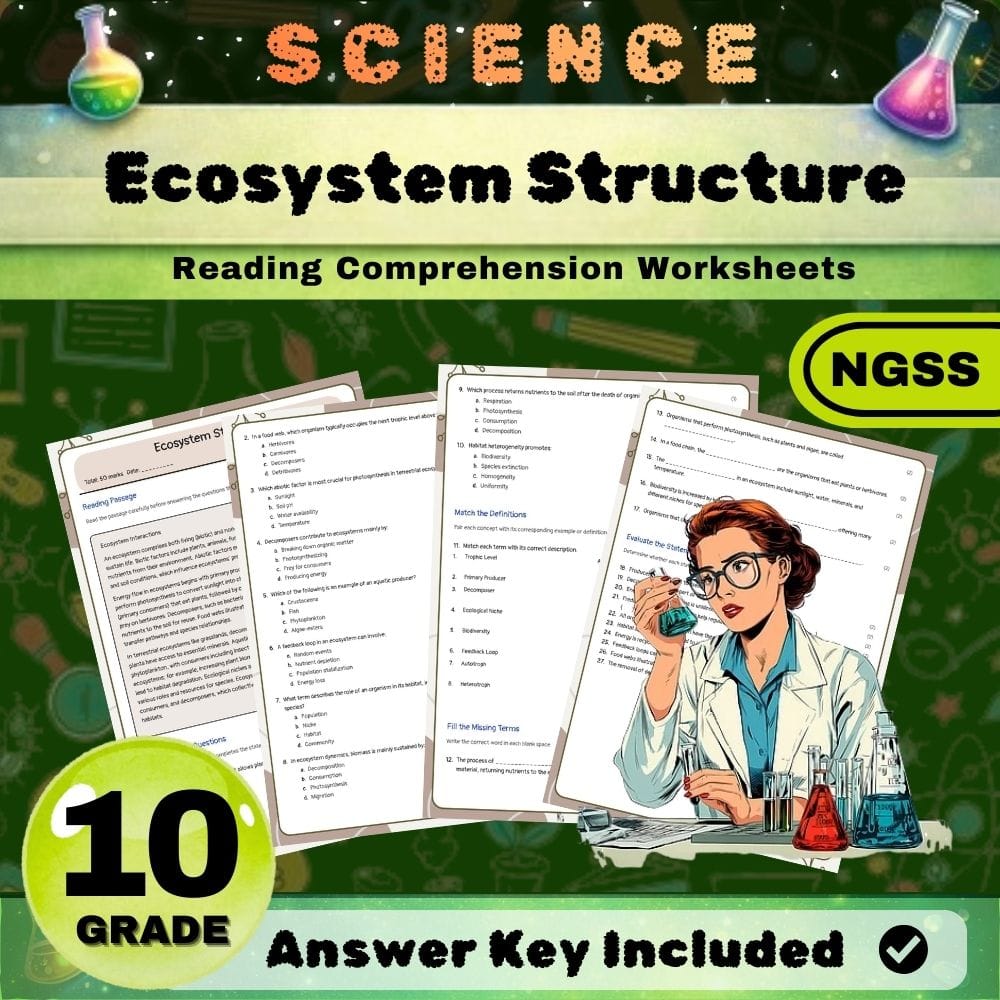
Grade 10 Science | Ecosystem Structure Worksheet (NGSS) PDF
 Created byMaple Path Learning
Learning Objectives
- Identify the components of ecosystems, including biotic and abiotic factors.
- Explain energy flow and trophic levels within food webs.
- Describe the roles of producers, consumers, and decomposers in ecosystem dynamics.
Also included in: Grade 10 Science Ecosystems Interactions Energy and Dynamics Lesson Bundle | NGSS +1 more
Instant download

Grade 10 Science | Ecosystem Structure - Daily Reading Comprehension
 Created byCoral Reef Learning
Learning Objectives
- Identify biotic and abiotic components of ecosystems
- Understand energy pathways and trophic levels
- Recognize examples of food webs, primary production, and decomposition
Instant download

Grade 10 Worksheet B: Ecosystem Structure (Biotic & Abiotic Components) | NGSS
Created byClear Sky ClassroomLearning Objectives
- Identify major biotic (producers, consumers, decomposers) and abiotic components in terrestrial and aquatic ecosystems.
- Explain how energy flows through trophic levels and how food webs differ from simple food chains.
- Describe how decomposition and nutrient cycling help sustain ecosystem productivity and stability.
Also included in: Grade 10 Ecosystem Energy Transfer & Biodiversity Science Lesson Bundle: NGSS +1 more
Instant download

Grade 10 Science – Ecosystems Worksheet (PDF +Answer Key)
Created byCopper Leaf ClassroomLearning Objectives
- Identify the biotic components within various ecosystems.
- Recognize abiotic factors that influence ecosystem dynamics.
- Understand the flow of energy through food webs and trophic levels.
Instant download

Grade 10 Science | Ecosystem Structure NGSS Worksheet (PDF)
Created bySilver Birch TeachingLearning Objectives
- Analyze biotic and abiotic components in ecosystems and understand energy flow and trophic levels.
- Describe the roles of producers, consumers, and decomposers in sustaining biomass and nutrient cycling.
- Examine ecosystem dynamics such as stability, feedback loops, and habitat heterogeneity in terrestrial and aquatic systems.
Also included in: Grade 10 Ecosystem Stability and Biodiversity Science Lesson Bundle NGSS +1 more
Instant download

Ecosystem Structure Worksheet | NGSS-Aligned Grade 10 Science Practice
Learning Objectives
- Describe the roles of producers, consumers, and decomposers in ecosystems.
- Explain energy flow and trophic levels within terrestrial and aquatic systems.
- Analyze the components of food webs and nutrient cycling processes.
Instant download

Grade 10 Science – Ecosystem Structure Daily Reading Worksheet | NGSS Aligned
Created byBright Mind ResourcesLearning Objectives
- Identify biotic components such as producers, consumers, and decomposers.
- Differentiate between biotic and abiotic factors in ecosystems.
- Understand the role of energy flow, trophic levels, and nutrient cycling.
Also included in: Ecosystems Grade 10 Science Daily Reading Worksheets Bundle | NGSS +2 more
Instant download

Ecosystem Structure Practice Test Prep | Grade 10 Science NGSS
Created byPrism Point LearningLearning Objectives
- Differentiate biotic and abiotic components of terrestrial and aquatic ecosystems.
- Explain energy flow through trophic levels and describe how decomposers recycle matter.
- Use examples to interpret food webs, ecological niches, and habitat heterogeneity.
Also included in: Grade 10 Ecosystems & Biodiversity Science Lesson Bundle Practice: NGSS
Instant download

Grade 10 Ecosystem Structure Worksheet | NGSS Science Activity & Notes
 Created byBRIGHT PATH RESOURCES
Learning Objectives
- Identify components of food webs and trophic levels
- Understand energy flow within ecosystems
- Recognize roles of producers, consumers, and decomposers
Also included in: Grade 10 Ecology Lesson Bundle | Daily Reading | ngss Science +1 more
Instant download
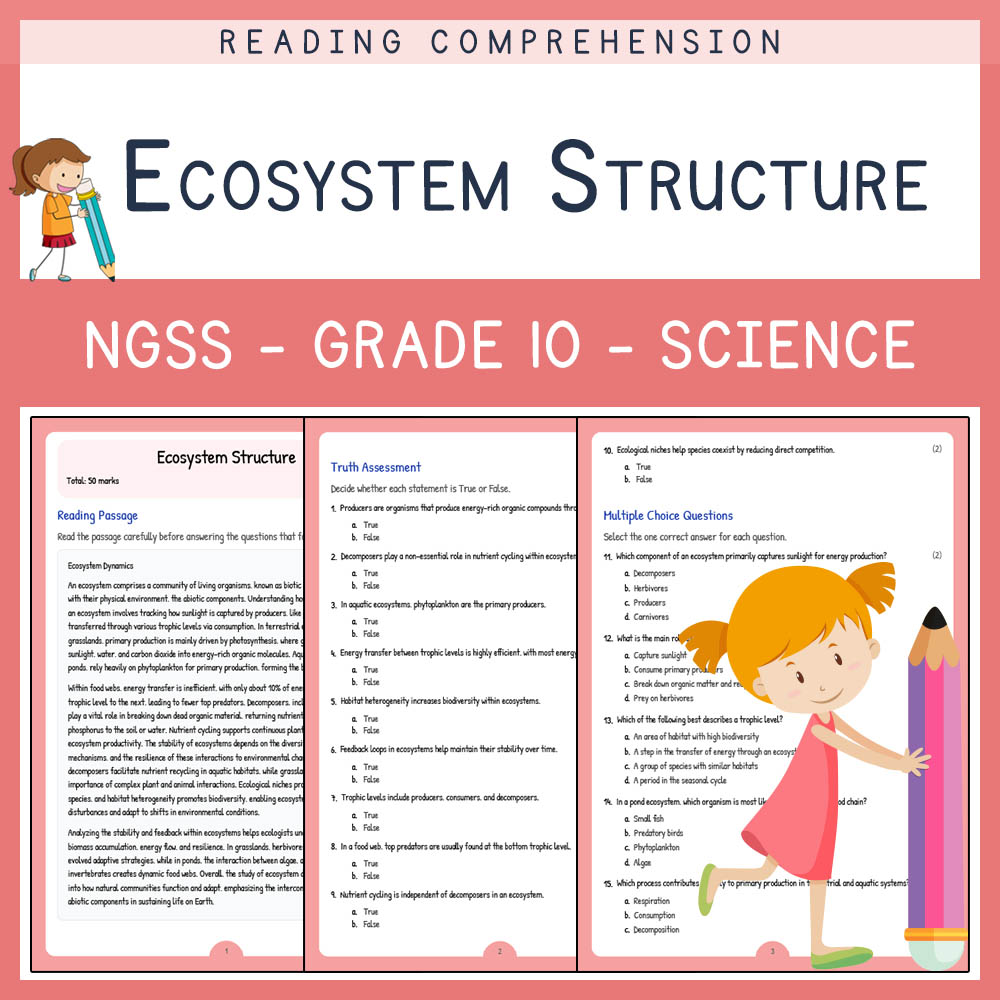
Grade 10 Science | Ecosystem Structure Worksheet & Answer Key (NGSS-Aligned)
 Created byLumora Learning
Learning Objectives
- Understand the components and interactions within terrestrial and aquatic ecosystems.
- Analyze energy flow, trophic levels, and food web dynamics in different habitats.
- Explain the roles of producers, consumers, and decomposers in ecosystem stability.
Instant download

Grade 10 Science | Model-Data Fit in Projectile Motion - Reading Comprehension
Created byCoral Reef LearningLearning Objectives
- Understand the concept of residuals in data analysis
- Differentiate between model predictions and observed data
- Assess model adequacy using goodness-of-fit criteria
Also included in: Science Practices Reading Comprehension Lesson Bundle: Grade 10 Science AP +1 more
Instant download

Model-Data Fit Worksheet | AP Science Practice for Grade 10
Learning Objectives
- Understand how to compare model predictions with observed data using residual analysis.
- Interpret goodness-of-fit metrics and identify systematic deviations in model-data comparisons.
- Evaluate the sensitivity of model parameters and incorporate uncertainty in model assessment.
Instant download

Grade 10 Model-Data Fit Worksheet | AP Practice & PDF
Created byClear Sky ClassroomLearning Objectives
- Compare model predictions to observed data using residuals and quantitative measures of fit
- Interpret patterns in residuals to diagnose systematic model errors or missing effects
- Evaluate model adequacy by considering goodness-of-fit ideas and uncertainty in parameters and measurements
Also included in: Grade 10 Science Practices in Science: Lesson Bundle for Advanced Placement (AP) +1 more
Instant download

Grade 10 Science – Model-Data Fit & Residuals | Daily Reading Worksheet
Created byBright Mind ResourcesLearning Objectives
- Understand the concept of comparing model predictions with observed data
- Learn how to interpret residuals and identify systematic deviations
- Apply goodness-of-fit concepts to evaluate model adequacy
Also included in: Grade 10 Scientific Reasoning Science Lesson Bundle | AP Daily Reading +2 more
Instant download
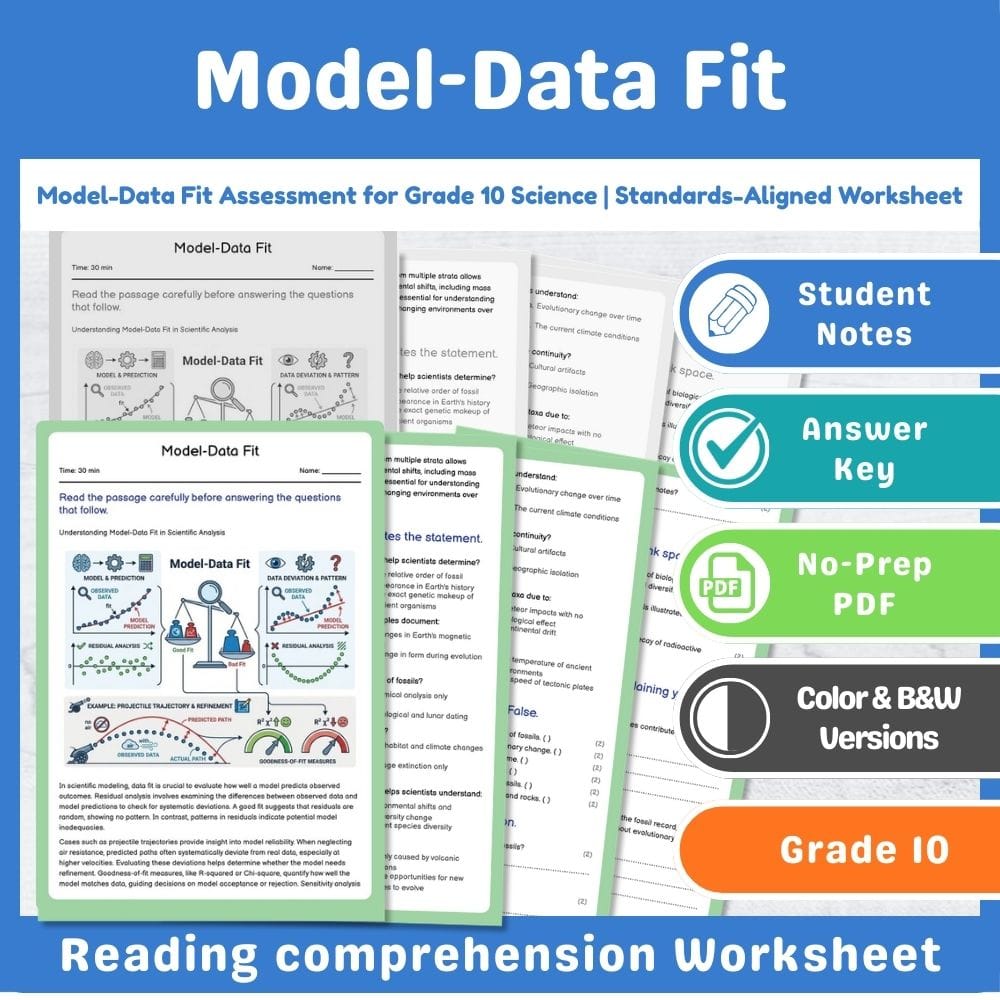
Model-Data Fit Assessment for Grade 10 Science | Standards-Aligned Worksheet
Created byPrism Point LearningLearning Objectives
- Interpret residuals and assess model adequacy using residual analysis.
- Apply goodness-of-fit concepts to evaluate the accuracy of model predictions.
- Analyze cases like projectile motion with and without air resistance to understand systematic deviations.
Instant download
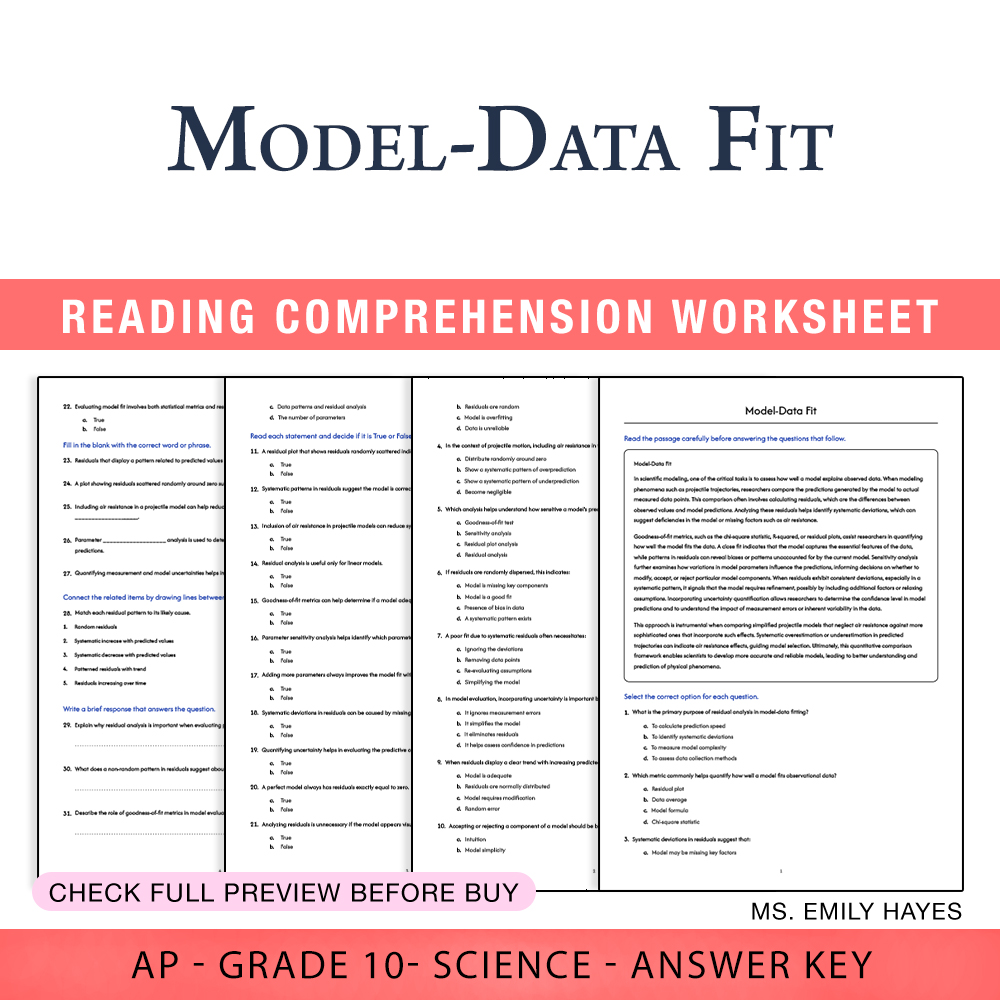
10th Grade Science | Model-Data Fit Worksheet (PDF+ Answer Key)
Created byCopper Leaf ClassroomLearning Objectives
- Understand how to compare model predictions with observed data using residual analysis.
- Interpret goodness-of-fit metrics to evaluate model accuracy.
- Analyze systematic deviations in data to assess model adequacy.
Also included in: Grade 10 Science AP | Data Analysis & Modeling Skills (PDF + Answer Key) +1 more
Instant download

Grade 10 Science Worksheet | Model-Data Fit (AP Standard) PDF
 Created byEvergreen Desk Education
Learning Objectives
- Use residuals to compare model predictions with observed data and interpret patterns in discrepancies.
- Apply goodness-of-fit ideas to judge whether a model component is adequate for a given dataset.
- Explain how parameter sensitivity and uncertainty affect the confidence in model selection.
Also included in: Grade 10 Scientific Modeling & Quantitative Reasoning Science Lesson Bundle (AP) +1 more
Instant download

Grade 10 Science | Model-Data Fit Worksheet | AP-aligned
Created byLumora LearningLearning Objectives
- Understand how to compare model predictions with observed data using residual analysis.
- Evaluate the goodness-of-fit of different models in data analysis.
- Interpret discrepancies between models and data to inform model adequacy.
Instant download

Model-Data Fit Worksheet Grade 10 AP Science Graph Analysis Skills
Created byPrism Point LearningLearning Objectives
- Explain how residuals and goodness-of-fit help evaluate whether a model matches observed data
- Use residual patterns and parameter sensitivity to identify when a model component is missing or inadequate
- Justify model acceptance or rejection using quantitative comparison and uncertainty
Also included in: AP Science Inquiry Skills Lesson Bundle | Grade 10 | Modeling & CER
Instant download

Grade 10 Science — Model-Data Fit Worksheet MCQ Paper for Mastery
 Created byThe Resource Hub
Learning Objectives
- Understand how to compare model predictions with observed data using residual analysis.
- Identify criteria for evaluating the goodness-of-fit of a model.
- Interpret discrepancies between models with and without air resistance in projectile motion.
Also included in: Grade 10 Science Bundle: Master Scientific Modeling & Data Analysis +1 more
Instant download
Grade 10 Science – Ecosystem Modeling Worksheet (NGSS PDF)
Created byMaple Path LearningLearning Objectives
- Understand the development and application of conceptual and quantitative models of ecosystems.
- Interpret flows of energy and matter within ecosystems and predict responses to perturbations.
- Familiarize with models such as Lotka–Volterra equations, mass-balance nutrient models, and carbon budget estimations.
Also included in: Grade 10 Science Ecosystems Interactions Energy and Dynamics Lesson Bundle | NGSS +1 more
Instant download

Ecosystem Modeling and Perturbation Predictions Worksheets Grade 10
Created byTeachers ClubLearning Objectives
- Describe how models represent energy and matter flows in ecosystems
- Interpret model predictions of ecosystem responses to disturbances
- Compare steady-state and transient ecosystem dynamics
Also included in: Grade 10 Science Ecosystems NGSS Worksheets & Lesson Bundle +1 more
Instant download

Ecosystem Modeling Worksheet for Grade 10 Science NGSS Standards
Learning Objectives
- Understand the development and interpretation of ecosystem models such as Lotka–Volterra equations.
- Analyze how models predict flows of energy and matter in ecosystems.
- Evaluate the use of empirical data in calibrating ecosystem models to assess system responses.
Instant download
Grade 10 Science – Ecosystem Modeling Worksheet (PDF + Answer Key)
Created byRiverstone ClassroomLearning Objectives
- Understand the fundamental concepts of ecosystem modeling and how they represent energy and matter flows.
- Interpret different types of ecological models such as Lotka–Volterra equations and nutrient flux models.
- Analyze the role of empirical data in calibrating ecosystem models and predicting system responses.
Also included in: Grade 10 Science Ecosystems & Biodiversity UNIT Worksheet Bundle
Instant download

Grade 10 Science – Ecosystem Modeling & NGSS | Daily Reading Worksheet
Created byBright Mind ResourcesLearning Objectives
- Understand basic concepts of ecosystem models
- Identify different types of ecosystem models
- Recognize how models predict responses to environmental changes
Also included in: Ecosystems Grade 10 Science Daily Reading Worksheets Bundle | NGSS +2 more
Instant download

Ecosystem Modeling Worksheet | NGSS Grade 10 Science printable PDF
Learning Objectives
- Explain how ecosystem models represent flows of energy and matter and why they help with predictions
- Interpret the meaning of model parameters, steady states, and system responses to perturbations
- Use conceptual and quantitative reasoning to evaluate resilience, tipping points, and consequences of disturbances
Also included in: Grade 10 Ecosystem Dynamics Lesson Bundle | NGSS Science Ecology
Instant download
Grade 10 Science – Ecosystem Modeling Worksheet (PDF +Answer Key)
Created byCopper Leaf ClassroomLearning Objectives
- Describe the basic components of ecosystems and how energy flows through them.
- Explain different models used to predict ecosystem responses, including Lotka–Volterra equations and mass-balance models.
- Interpret the significance of system stability, resilience, and tipping points in ecosystems.
Instant download
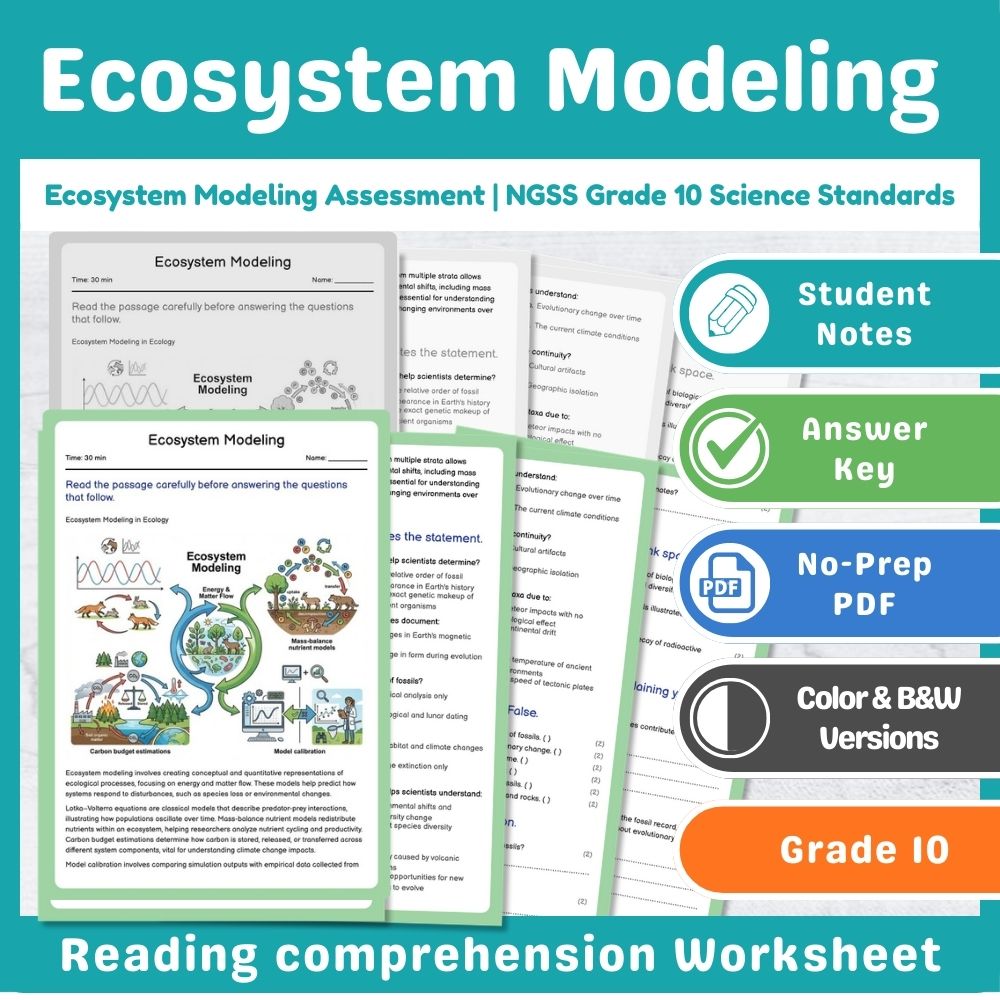
Ecosystem Modeling Assessment | NGSS Grade 10 Science Standards
Created byPrism Point LearningLearning Objectives
- Understand the development and interpretation of ecological models such as Lotka–Volterra equations.
- Analyze how energy and matter flows are represented in ecosystem models.
- Evaluate the impact of perturbations, species loss, and altered fluxes on ecosystem stability and resilience.
Instant download

Ecosystem Modeling Test Prep Worksheet | Grade 10 Science NGSS
Created byPrism Point LearningLearning Objectives
- Explain how conceptual and quantitative ecosystem models represent flows of energy and matter.
- Interpret model predictions for ecosystem responses to disturbances and species loss.
- Describe how calibration with data supports conclusions about steady-state and transient dynamics.
Also included in: Grade 10 Ecosystems & Biodiversity Science Lesson Bundle Practice: NGSS
Instant download

Grade 10 Ecosystem Modeling Worksheet | NGSS Science Systems Activity
Created byBRIGHT PATH RESOURCESLearning Objectives
- Understand different types of ecosystem models and their purposes
- Interpret the use of models like Lotka–Volterra equations and mass-balance models
- Analyze how models predict ecosystem responses to disturbances
Also included in: Grade 10 Ecology Lesson Bundle | Daily Reading | ngss Science +1 more
Instant download

Grade 10 Science | Ecosystem Modeling - Daily Reading Comprehension
Created byCoral Reef LearningLearning Objectives
- Understand the flow of energy and matter within ecosystems.
- Interpret diagrams representing energy and matter exchange.
- Learn about different models used to simulate ecosystem dynamics.
Instant download
About Grade 10 Science Worksheets
Find Science worksheets built for Grade 10. All 7,174 cover core skills, practice, and review, each an instant PDF download.
Every worksheet on MyTeachingSheets is created by independent teacher-authors and reviewed before publication. All resources download as printable PDFs for classroom, homework, or at-home practice, and many include answer keys. Preview any worksheet free before buying.