
Grade 6 Worksheets
8,761 grade resources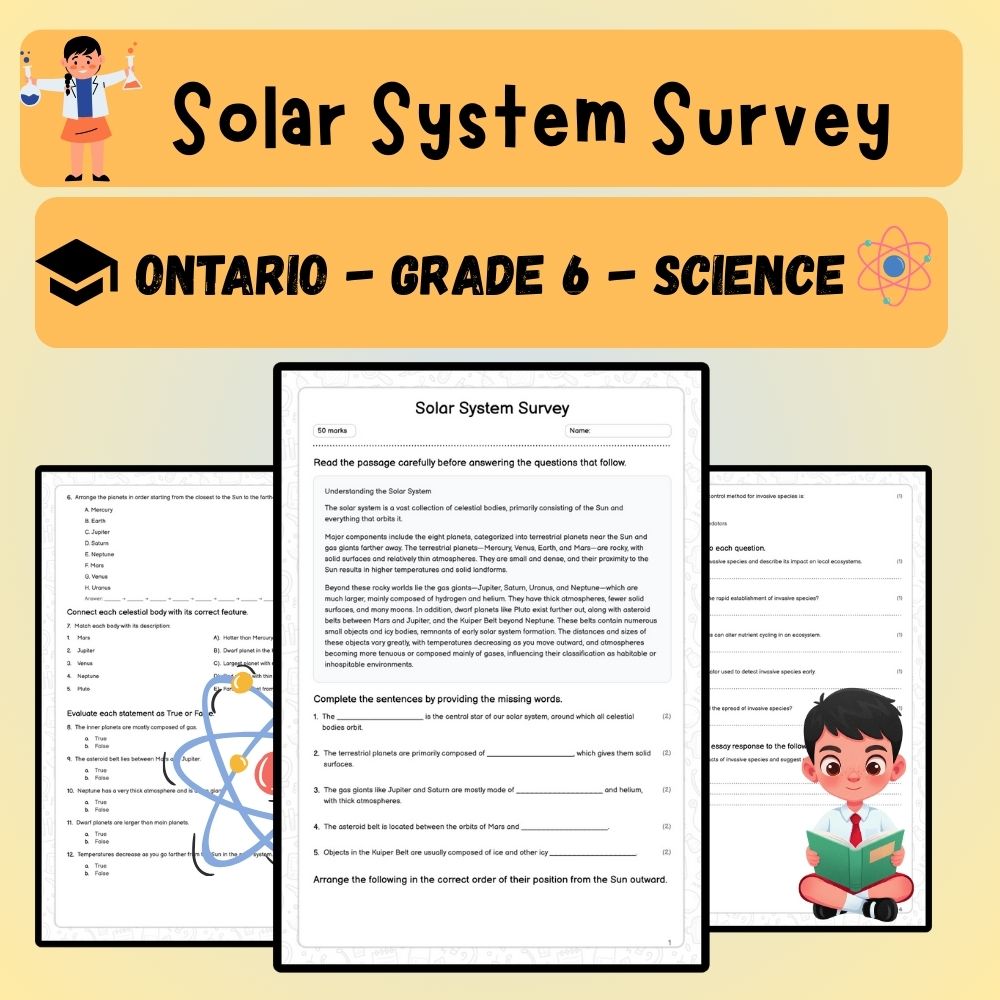
Grade 6 Science – Solar System Exploration Worksheet (PDF )
 Created byPrism Point Learning
Learning Objectives
- Describe the major components of the solar system, including planets, dwarf planets, and belts.
- Compare and contrast terrestrial planets with gas giants in terms of composition, size, and orbital characteristics.
- Explain the factors influencing planetary habitability, such as atmosphere, surface conditions, and energy sources.
Instant download
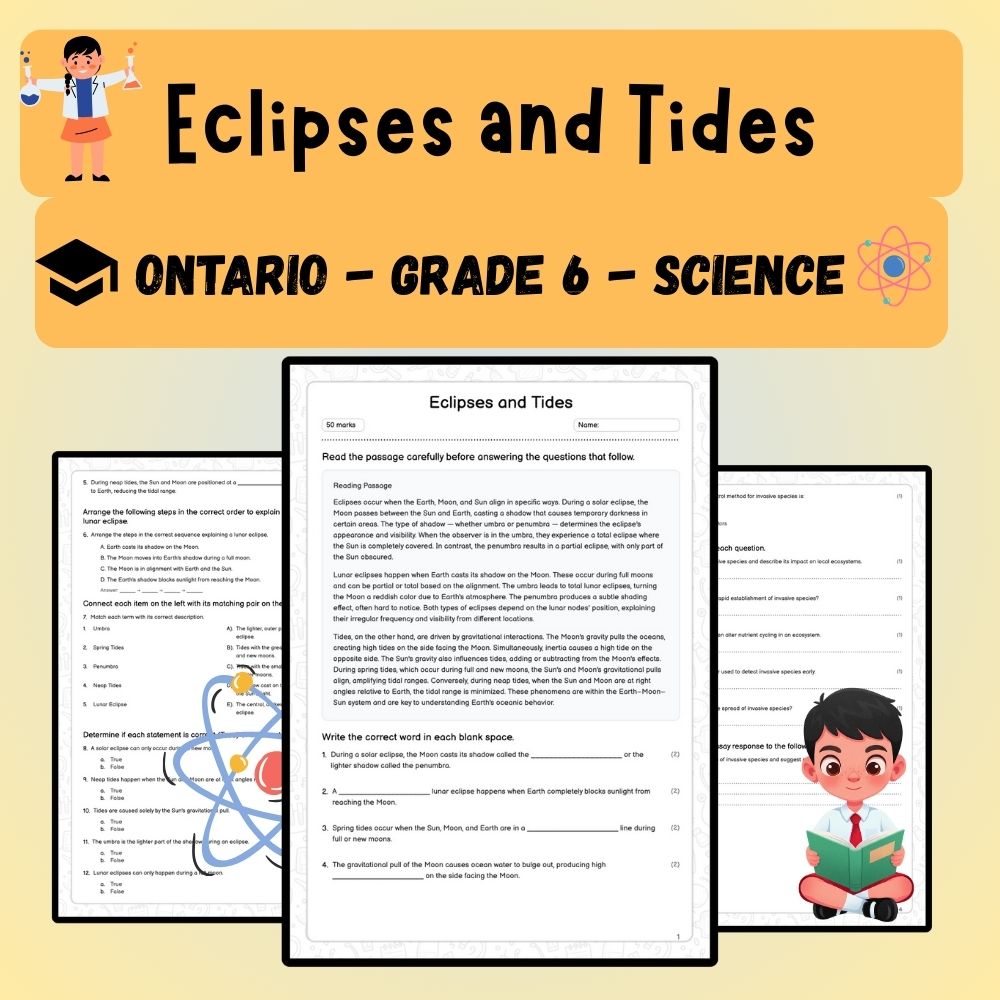
6th Grade Science | Eclipses and Tides Worksheet (PDF )
Created byPrism Point LearningLearning Objectives
- Explain the geometric and observational aspects of solar and lunar eclipses, including umbra and penumbra effects.
- Describe the gravitational mechanisms behind tides, including the effects of the Moon and Sun, and distinguish between spring and neap tides.
Instant download
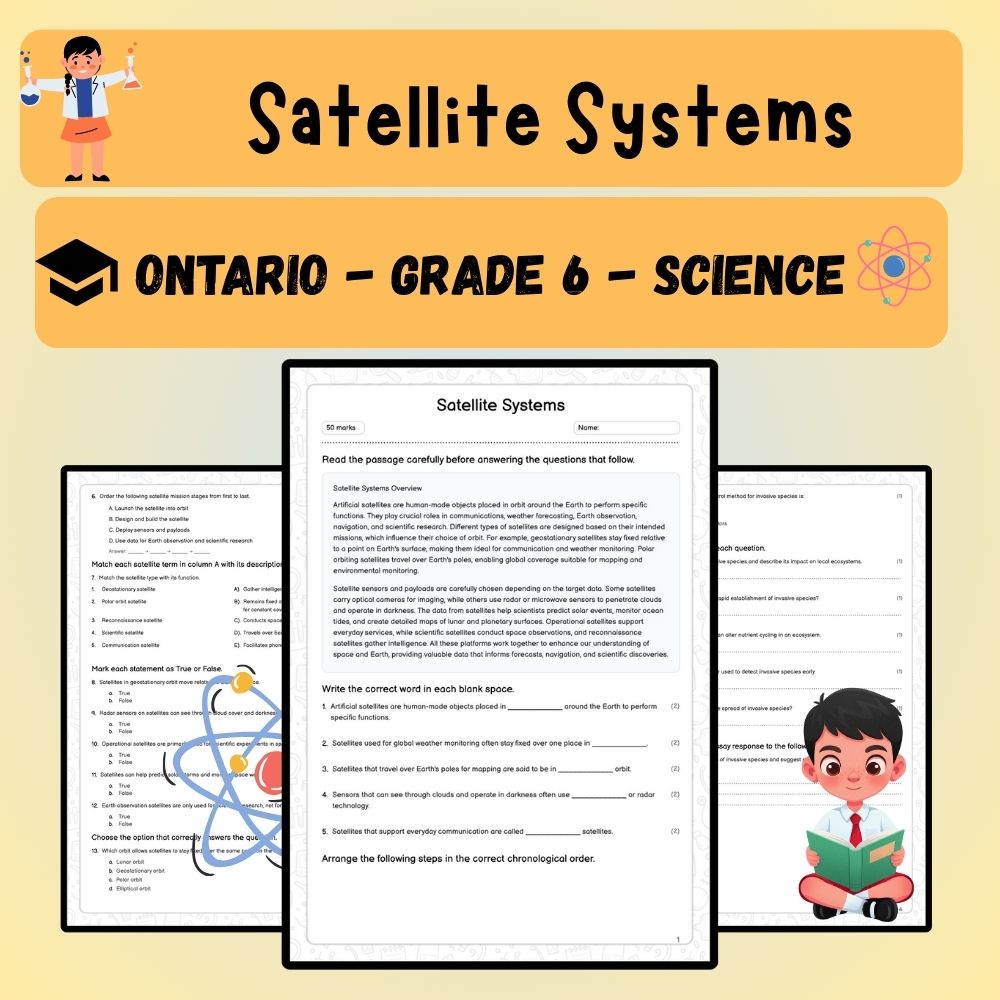
6th Grade Science | Satellite Systems Worksheet (PDF ) - Ontario Standards
Created byPrism Point LearningLearning Objectives
- Understand the functions and categories of artificial satellites.
- Describe orbital choices such as geostationary and polar orbits.
- Explain how satellite data contributes to Earth observation and science.
Instant download
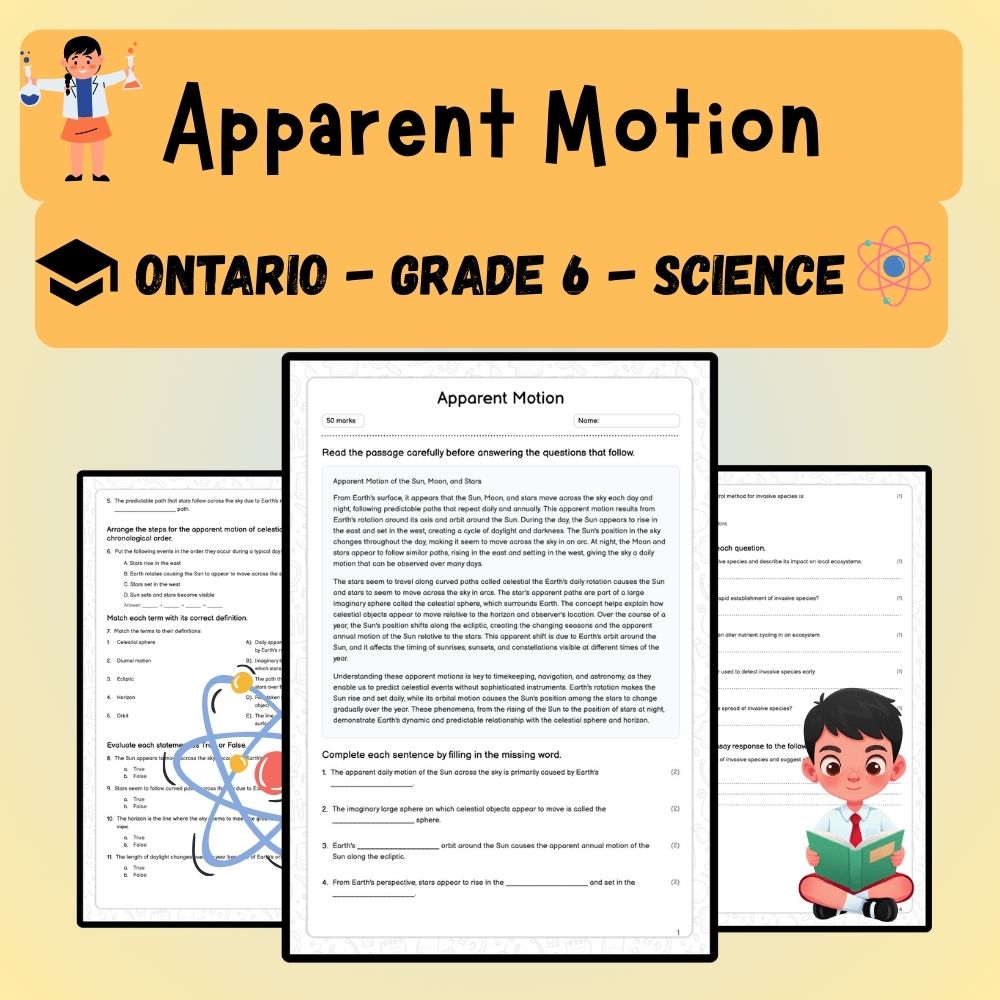
6th Grade Science | Apparent Motion Worksheet (PDF ) – Ontario Standards
Created byPrism Point LearningLearning Objectives
- Explain the daily and annual apparent motions of the Sun, Moon, and stars from Earth's perspective.
- Describe how Earth's rotation and orbit cause celestial phenomena such as rising, setting, and star paths.
Instant download
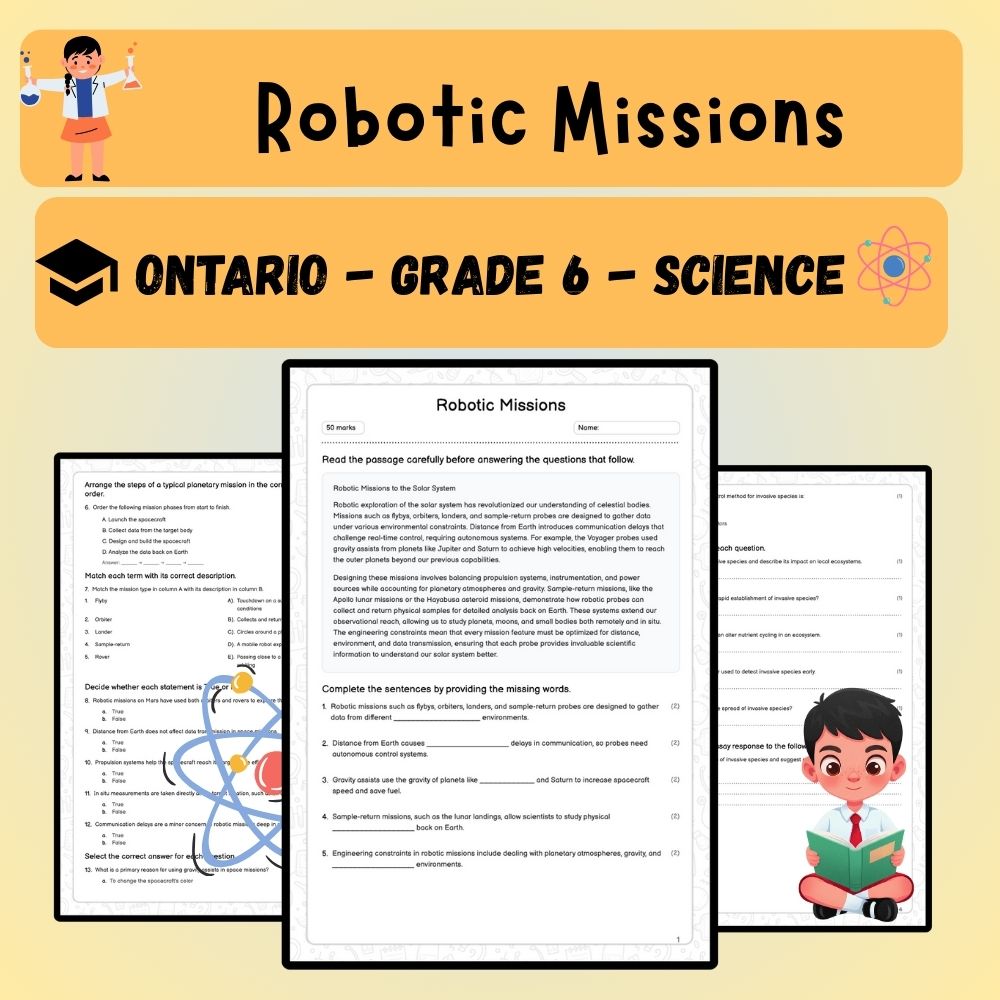
Grade 6 Science | Robotic Missions Worksheet (PDF ) | Ontario Standards
Created byPrism Point LearningLearning Objectives
- Describe different types of robotic space missions such as flyby, orbiter, lander, and sample-return.
- Explain the engineering constraints imposed by planetary environments and distance in robotic missions.
- Identify how mission design addresses challenges like gravity assists, propulsion, and communication delays.
Instant download
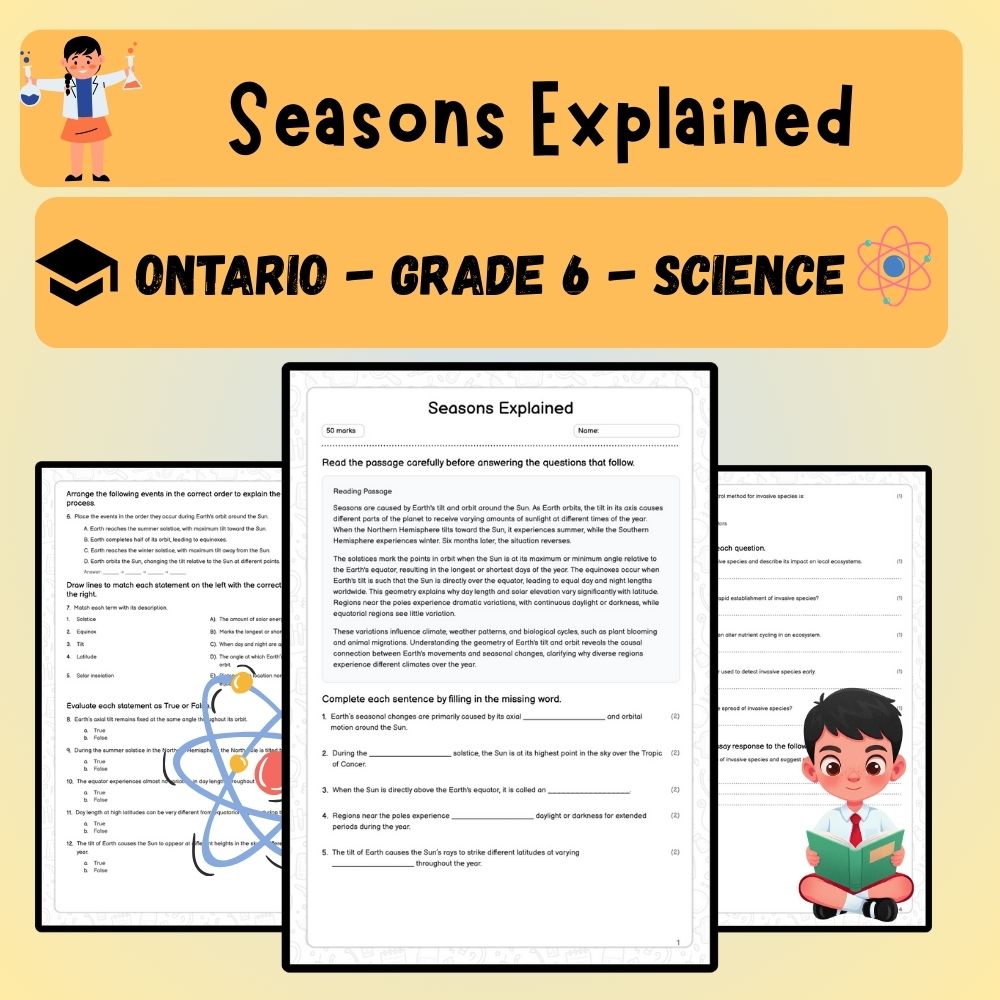
6th Grade Science – Seasons Explained Worksheet (PDF )
Created byPrism Point LearningLearning Objectives
- Explain how Earth's axial tilt and orbital motion cause seasonal changes.
- Describe why hemispheres experience opposite seasons and how day length varies across the year.
- Identify key concepts such as solstices and equinoxes and their geometry.
Instant download
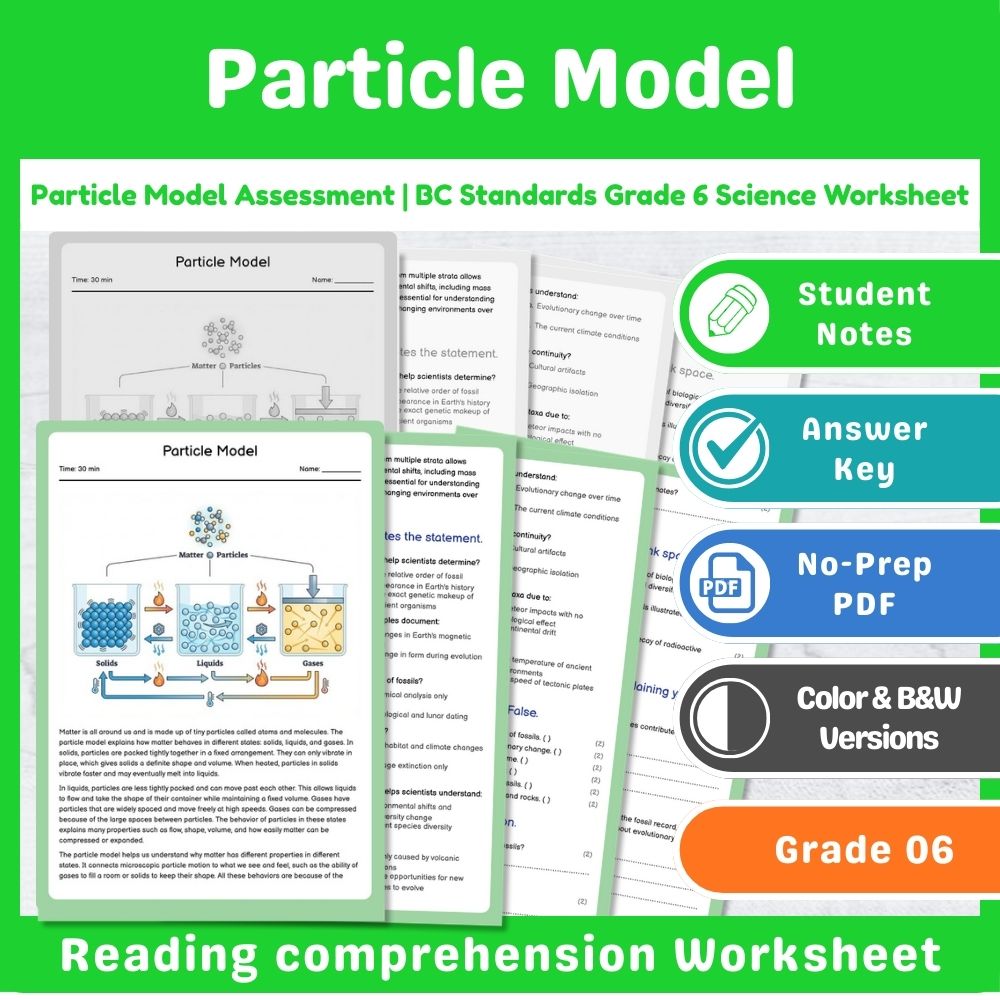
Particle Model Assessment | BC Standards Grade 6 Science Worksheet
Created byPrism Point LearningLearning Objectives
- Describe the particle model of matter and its states: solids, liquids, and gases.
- Explain how particle arrangements affect the properties of matter such as shape, volume, and flow.
- Relate microscopic particle behavior to macroscopic properties like compressibility and flow.
Instant download

Grade 6 Day Night Seasons Worksheet | NGSS Earth Science Activity & Answer Key
 Created byNorthstar Worksheets
Learning Objectives
- Explain how Earth’s rotation causes day and night.
- Describe how Earth’s orbit and 23.5° axial tilt lead to seasons.
- Use solstices and equinoxes as observable markers for seasonal change.
Also included in: Grade 6 Earth Science Scale of Space & Moon Seasons Lesson Bundle – NGSS +1 more
Instant download

Grade 6 Moon Relationships Worksheet | NGSS Earth Science Activity & Answer Key
Created byNorthstar WorksheetsLearning Objectives
- Explain how the relative positions of Earth, Moon, and Sun create lunar phases and eclipses.
- Describe the sequence of primary lunar phases and how illumination changes during the month.
- Identify the conditions for solar and lunar eclipses using line-of-sight and shadow explanations.
Also included in: Grade 6 Earth Science Scale of Space & Moon Seasons Lesson Bundle – NGSS +1 more
Instant download

Grade 6 Orbital Motion Worksheet | NGSS Earth Science Activity & Answer Key
Created byNorthstar WorksheetsLearning Objectives
- Explain how gravitational attraction controls the motion of planets and satellites.
- Describe how gravity between the Sun and planets creates elliptical orbits and changes orbital speed.
- Connect orbital period and orbital speed to how distance affects gravitational pull.
Also included in: Grade 6 Earth Science Scale of Space & Moon Seasons Lesson Bundle – NGSS +1 more
Instant download

Grade 6 Science | Chemical Energy Release in Food - Daily Reading Comprehension
 Created byCoral Reef Learning
Learning Objectives
- Understand how chemical energy stored in food molecules supports organisms' activities.
- Recognize that energy changes form but is conserved during cellular processes.
- Explain how food provides energy necessary for staying active and maintaining body functions.
Instant download

Grade 6 Science – Energy Forms & Concepts | Daily Reading Worksheet
 Created byBright Mind Resources
Learning Objectives
- Identify different forms of energy such as kinetic, potential, thermal, chemical, and electrical.
- Relate everyday phenomena to energy forms, like a rolling ball or a lit bulb.
- Differentiate between motion, position, and internal energy in objects.
Also included in: Matter & Energy Grade 6 Science Daily Reading Worksheets Bundle | TEKS +2 more
Instant download

Grade 6 Science – Energy Transfer & Heat Methods | Daily Reading Worksheet
Created byBright Mind ResourcesLearning Objectives
- Understand the three main mechanisms of heat transfer: conduction, convection, and radiation.
- Identify real-life examples of each heat transfer method.
- Connect observable temperature changes to different energy transfer processes.
Also included in: Matter & Energy Grade 6 Science Daily Reading Worksheets Bundle | TEKS +2 more
Instant download
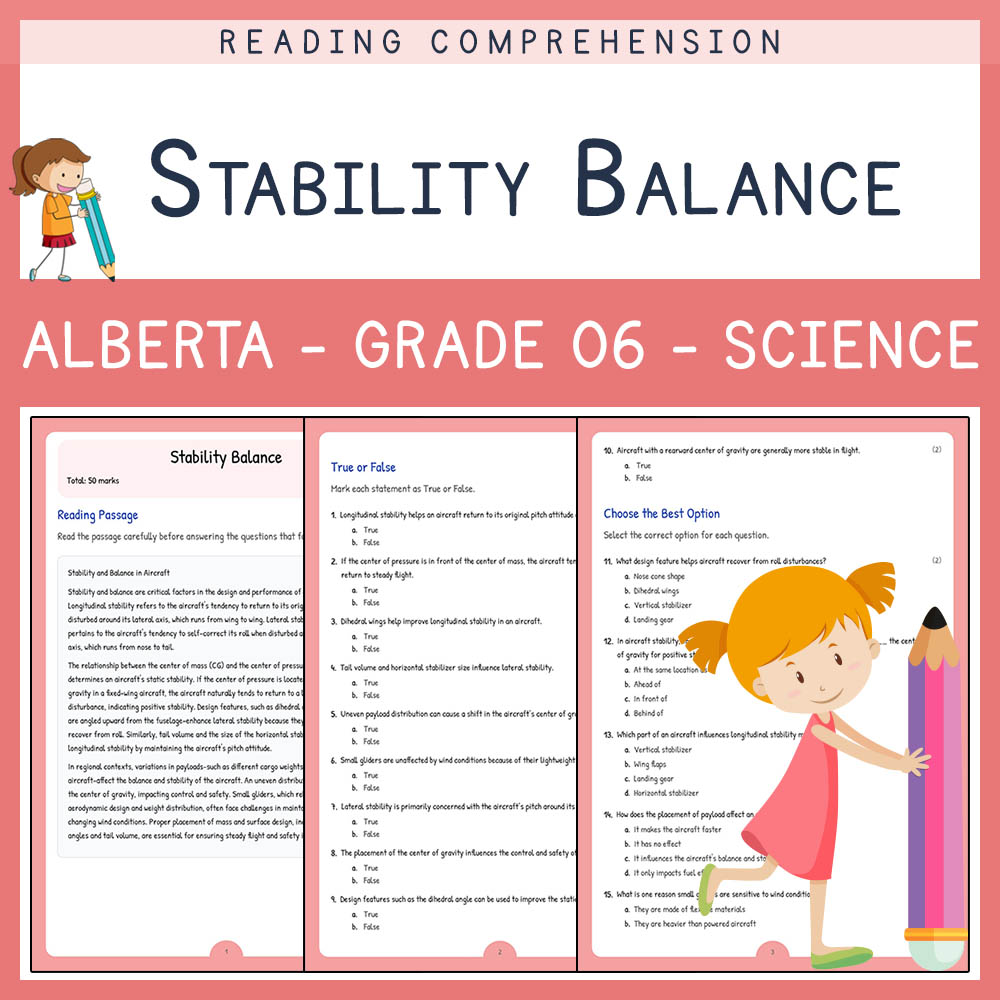
Grade 6 Science Assessment | Stability Balance Worksheet | Alberta Standards
 Created byLumora Learning
Learning Objectives
- Understand the principles of longitudinal and lateral stability in aircraft and gliders.
- Explain how the center of mass and center of pressure influence static stability.
- Identify design features such as dihedral angles and tail volume that contribute to stability.
Also included in: Grade 6 Science | Air and Aerodynamics Science Lesson Bundle | Alberta
Instant download
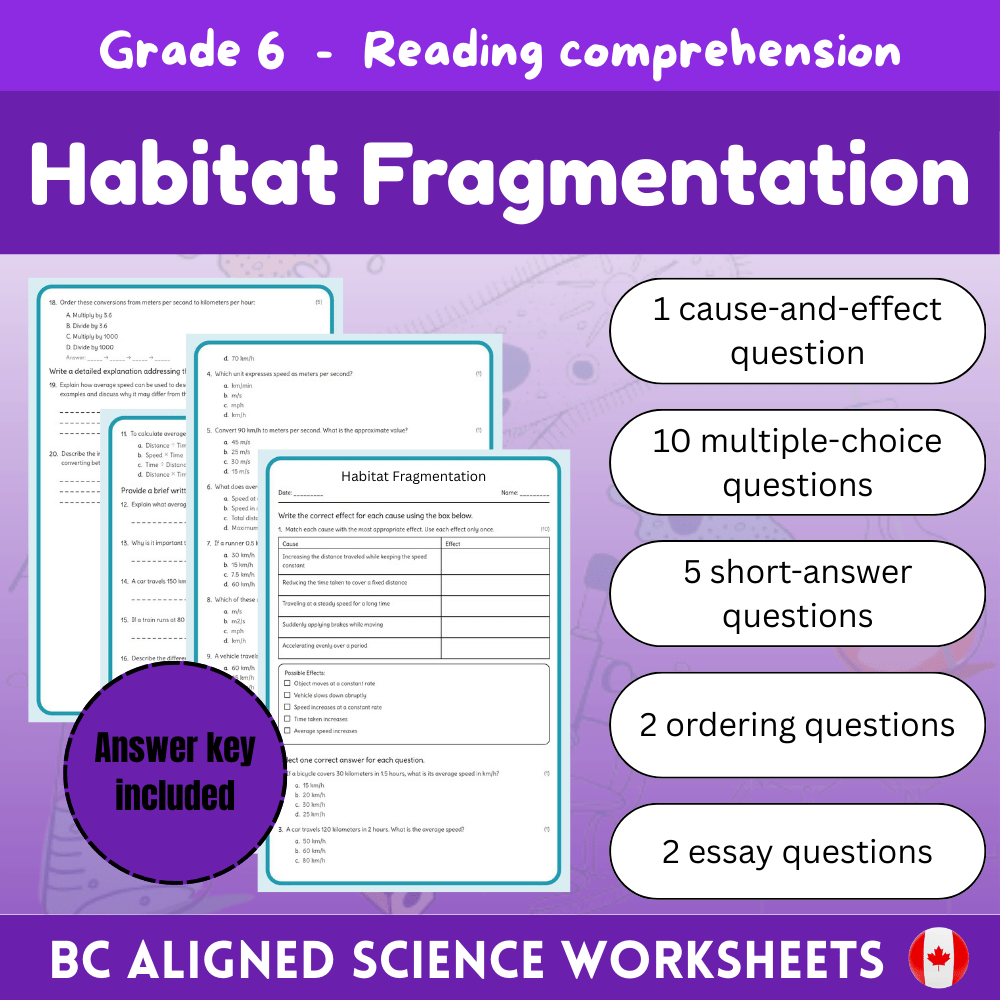
6th Grade Science | Habitat Fragmentation Worksheet (PDF) – BC Standards
Created byBright Mind ResourcesLearning Objectives
- Understand what habitat fragmentation is and how it affects ecosystems.
- Identify causes and effects of habitat fragmentation.
- Recognize strategies to mitigate habitat fragmentation impacts.
Instant download
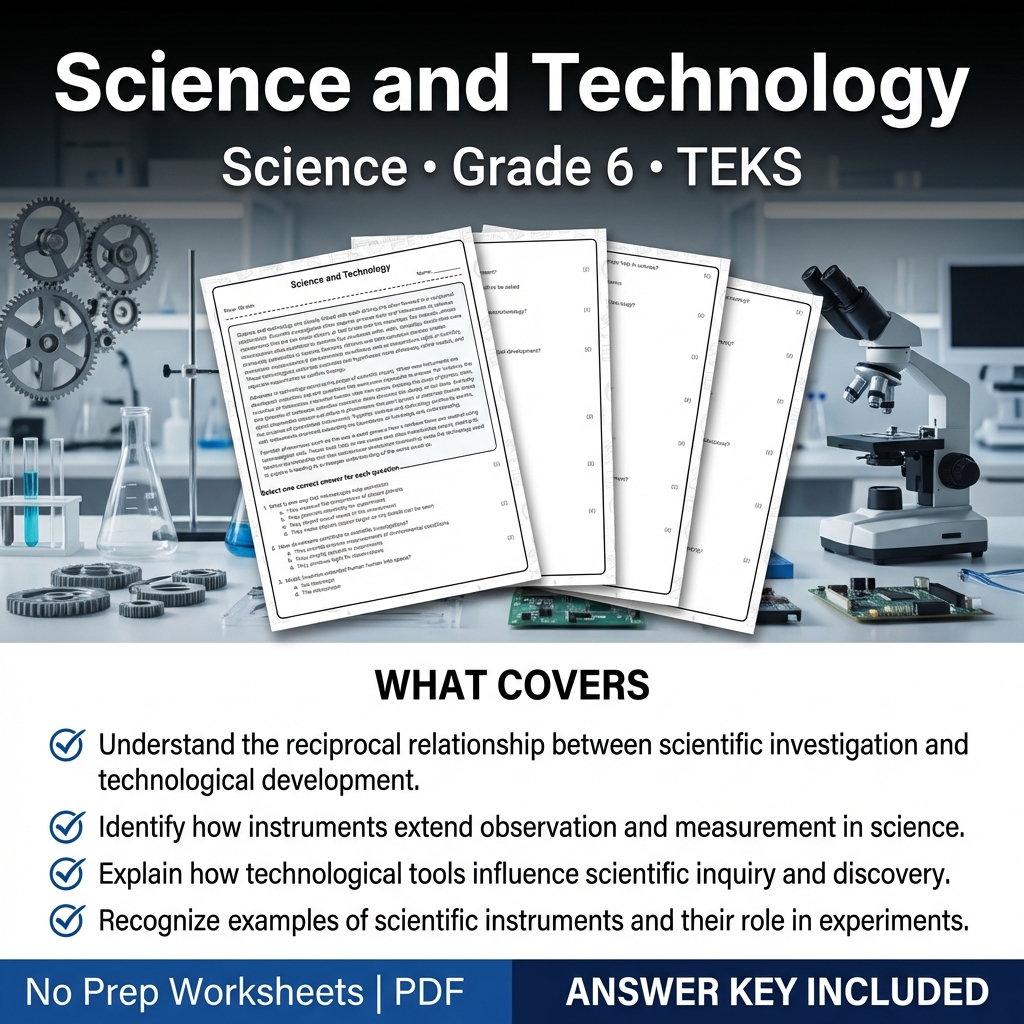
Grade 6 Science Worksheet on Science and Technology | TEKS-Aligned Assessment
Created byCoral Reef LearningLearning Objectives
- Understand the reciprocal relationship between scientific investigation and technological development.
- Identify how instruments extend observation and measurement in science.
- Explain how technological tools influence scientific inquiry and discovery.
Instant download
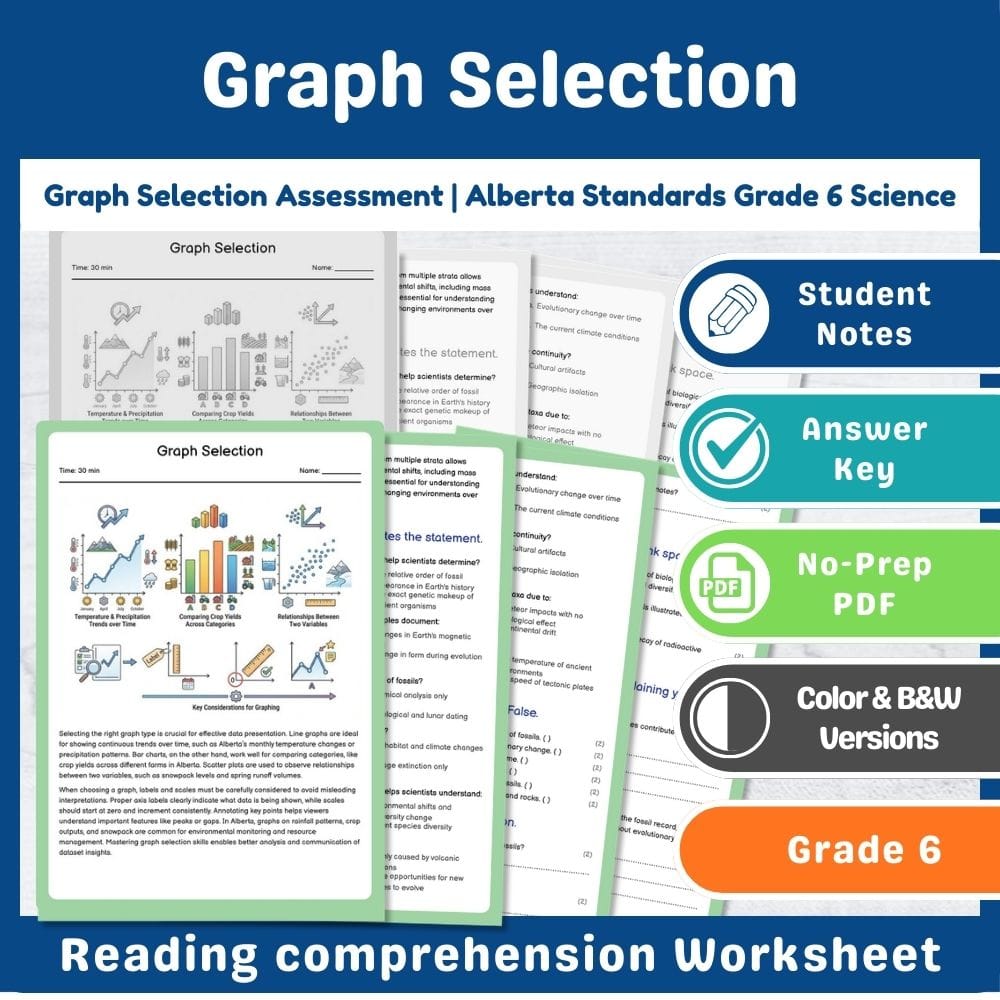
Graph Selection Assessment | Alberta Standards Grade 6 Science
Created byPrism Point LearningLearning Objectives
- Identify appropriate graph types for different data sets.
- Understand how to label axes and choose scales that accurately represent data.
- Learn to interpret graphs including line graphs, bar charts, and scatter plots.
Also included in: Lesson Grade 6 Science Mini Bundle | Evidence and Investigation
Instant download
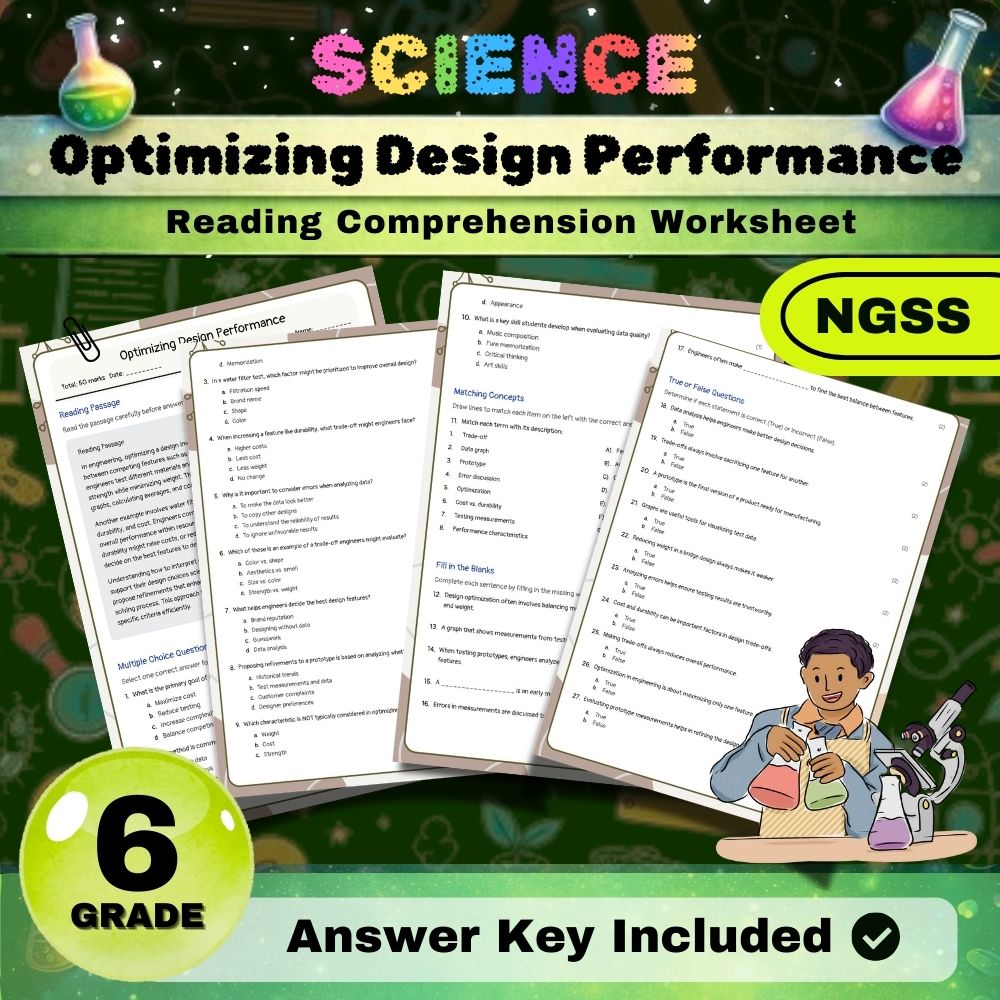
Grade 6 Science | Optimizing Design Performance Worksheet (PDF) NGSS
 Created byMaple Path Learning
Learning Objectives
- Understand how data from comparative tests informs design improvements.
- Analyze graphs, averages, and error discussions to make data-supported design choices.
- Evaluate trade-offs like strength versus weight or cost versus durability in optimization.
Also included in: Grade 6 Science Engineering Design Unit | NGSS Worksheets Pack +1 more
Instant download

6th Grade Social Studies | Political Institutions Practice (PDF + Answer Key)
Learning Objectives
- Understand the purpose and development of political institutions such as councils, assemblies, and legal systems.
- Identify the functions of these institutions in organizing authority, creating laws, and resolving conflicts.
- Analyze how social needs and cultural values influence the evolution of political systems in societies.
Also included in: Grade 6 Social Studies | Types of Governance & Political Institutions Bundle +1 more
Instant download

Grade 6 Science | Pollution Effects in Lakes - Daily Reading Comprehension
Created byCoral Reef LearningLearning Objectives
- Understand the causes and types of pollution affecting lakes
- Identify physical and chemical indicators of ecological health in aquatic environments
- Learn about how pollution impacts aquatic life and ecosystems
Instant download
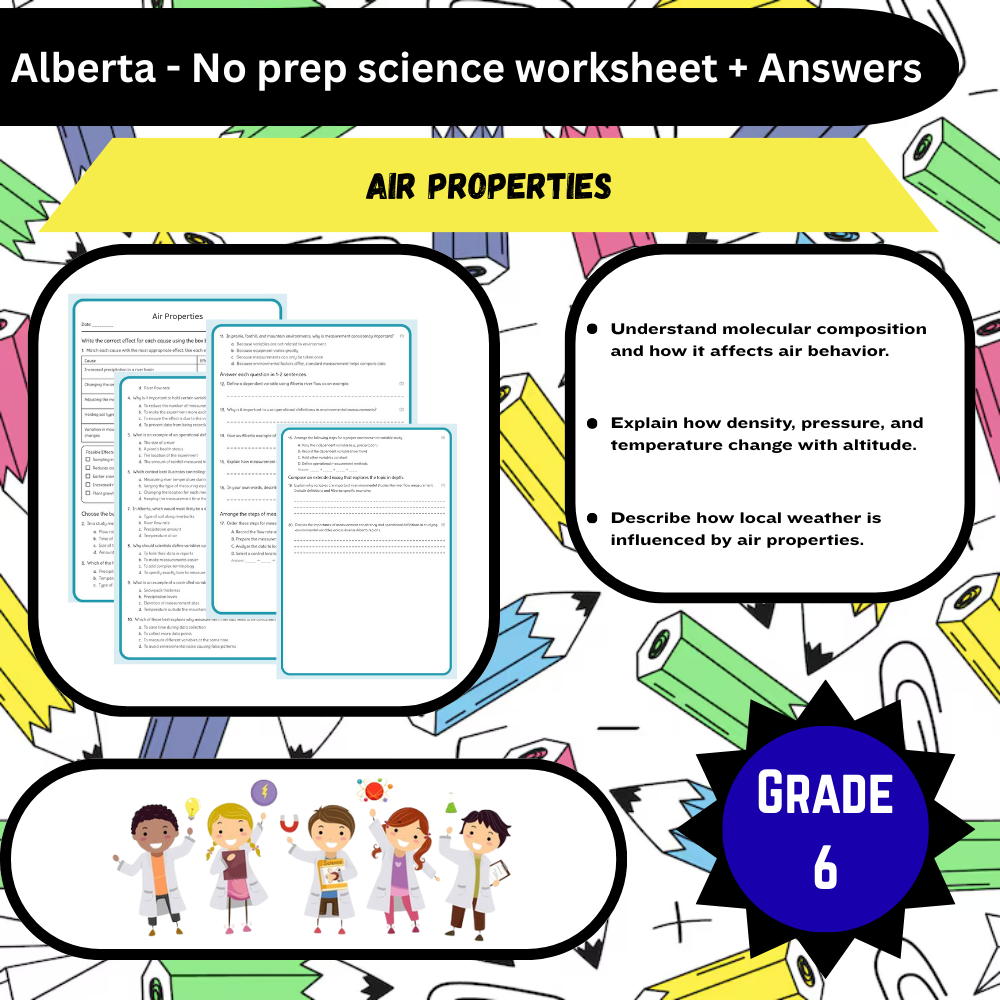
Grade 6 Science | Air Properties Worksheet (PDF) – Alberta Standards
Created byBright Mind ResourcesLearning Objectives
- Understand the molecular composition and how it affects air behavior
- Explain how air density, pressure, and temperature change with altitude and regional conditions
- Describe how local weather phenomena are influenced by air properties
Instant download
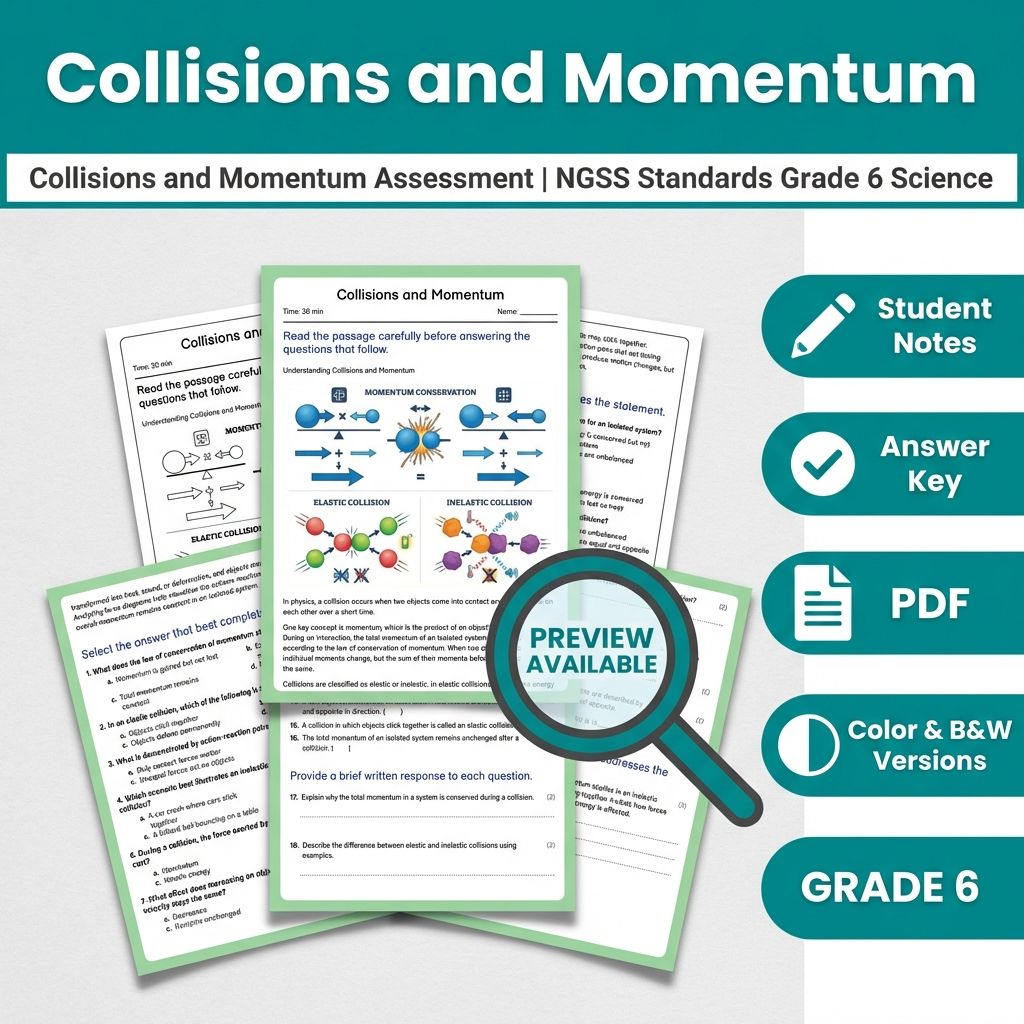
Collisions and Momentum Assessment | NGSS Standards Grade 6 Science
Created byPrism Point LearningLearning Objectives
- Understand the principles of conservation of momentum in two-body collisions.
- Differentiate between elastic and inelastic collisions through examples.
- Calculate momentum and analyze forces during object contact scenarios.
Also included in: Grade 6 Science Mini Bundle | Forces and Interactions NGSS Standards +1 more
Instant download
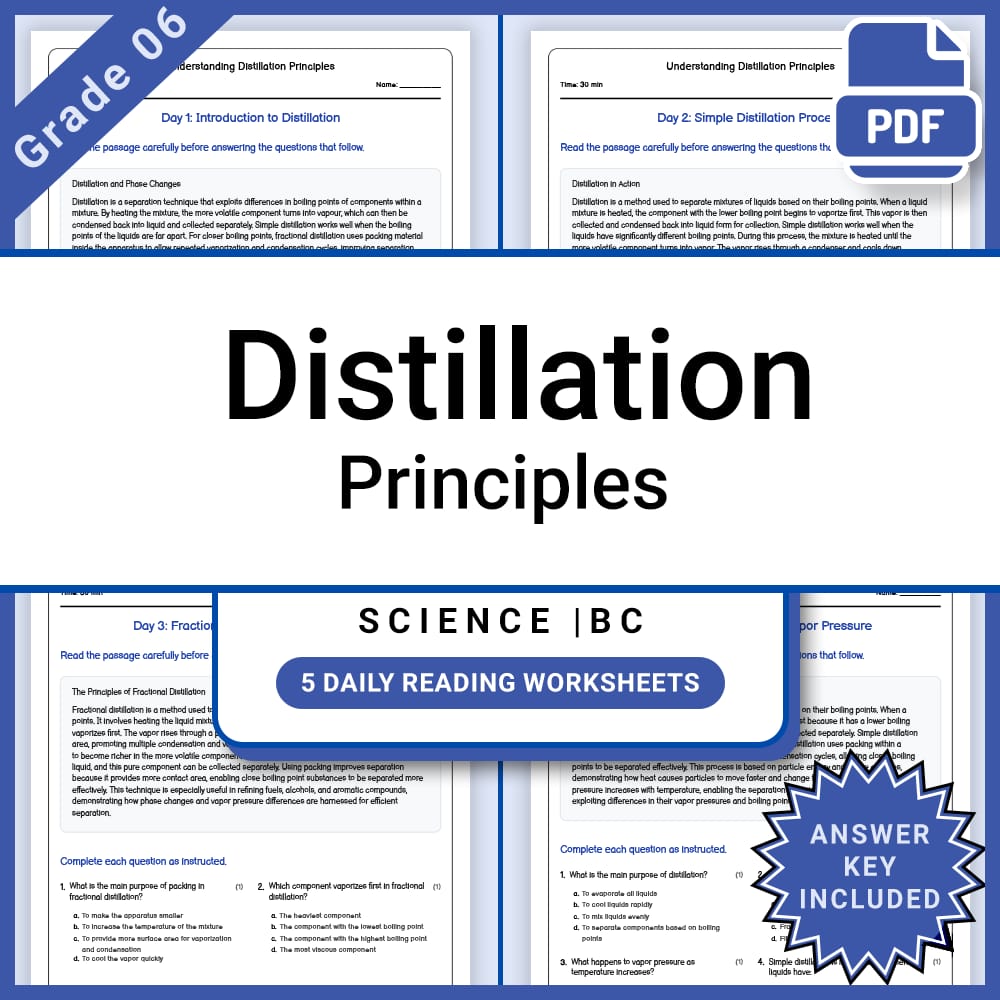
Grade 6 Science – Distillation Principles Daily Reading Worksheet + Answer Key
Learning Objectives
- Explain the basic concept of distillation and how it separates mixtures.
- Describe the difference between simple and fractional distillation.
- Understand the role of boiling points and vapor pressure in distillation.
Also included in: Grade 6 Science Lesson Group Bundle | Inquiry-Based Science Activities +1 more
Instant download

Grade 6 | Respect and Rights Worksheet Elena | Holiday Standard | January
Created byLumora LearningLearning Objectives
- Explain what religious freedom means and why it matters in a diverse community.
- Identify respectful behaviors that protect others’ rights during holiday celebrations.
- Apply empathy and bystander strategies when someone’s beliefs are mocked or challenged.
Instant download
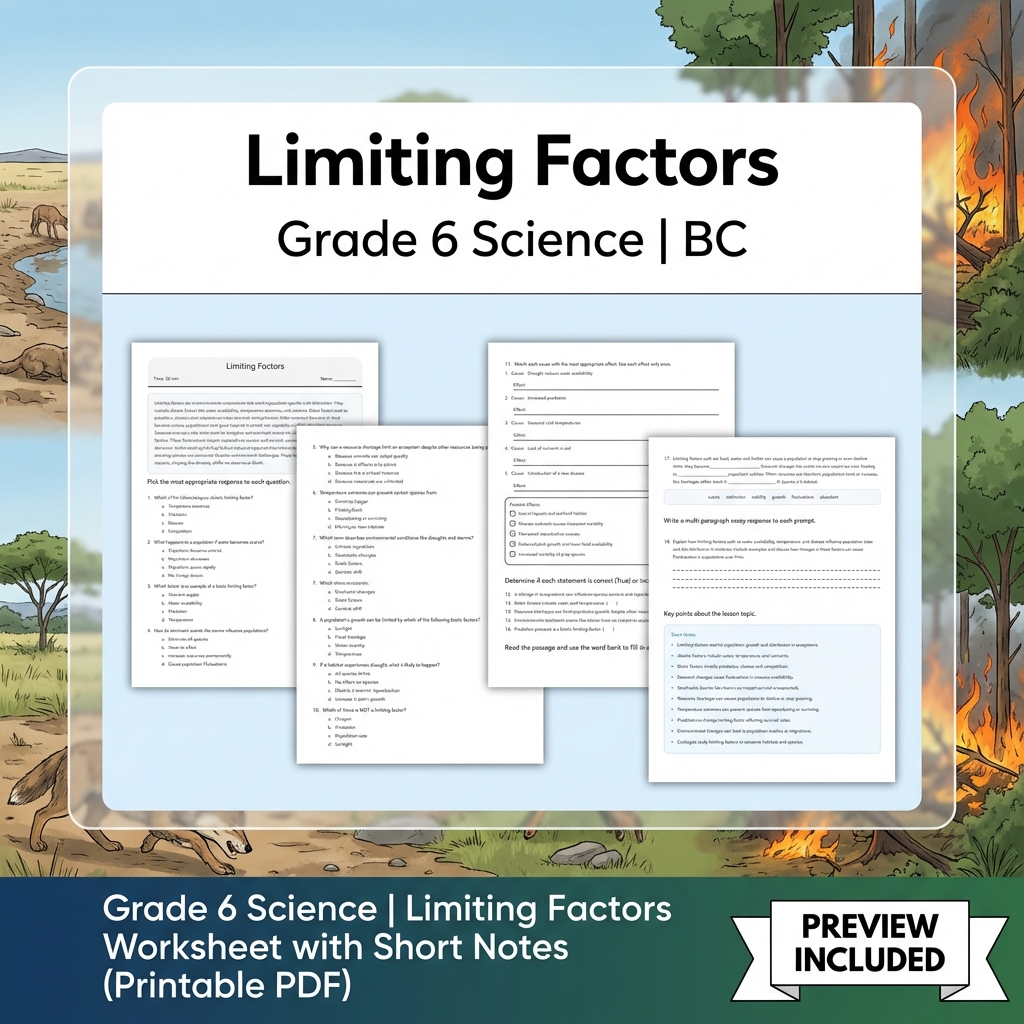
Grade 6 Science | Limiting Factors Worksheet with Short Notes (Printable PDF)
 Created byMeadowlark Worksheets
Learning Objectives
- Understand what limiting factors are in ecosystems.
- Identify abiotic and biotic factors that restrict population growth.
- Explain how changes in limiting factors affect species survival.
Also included in: Grade 6 Science | Ecosystems & Interdependence UNIT Worksheet Bundle +1 more
Instant download
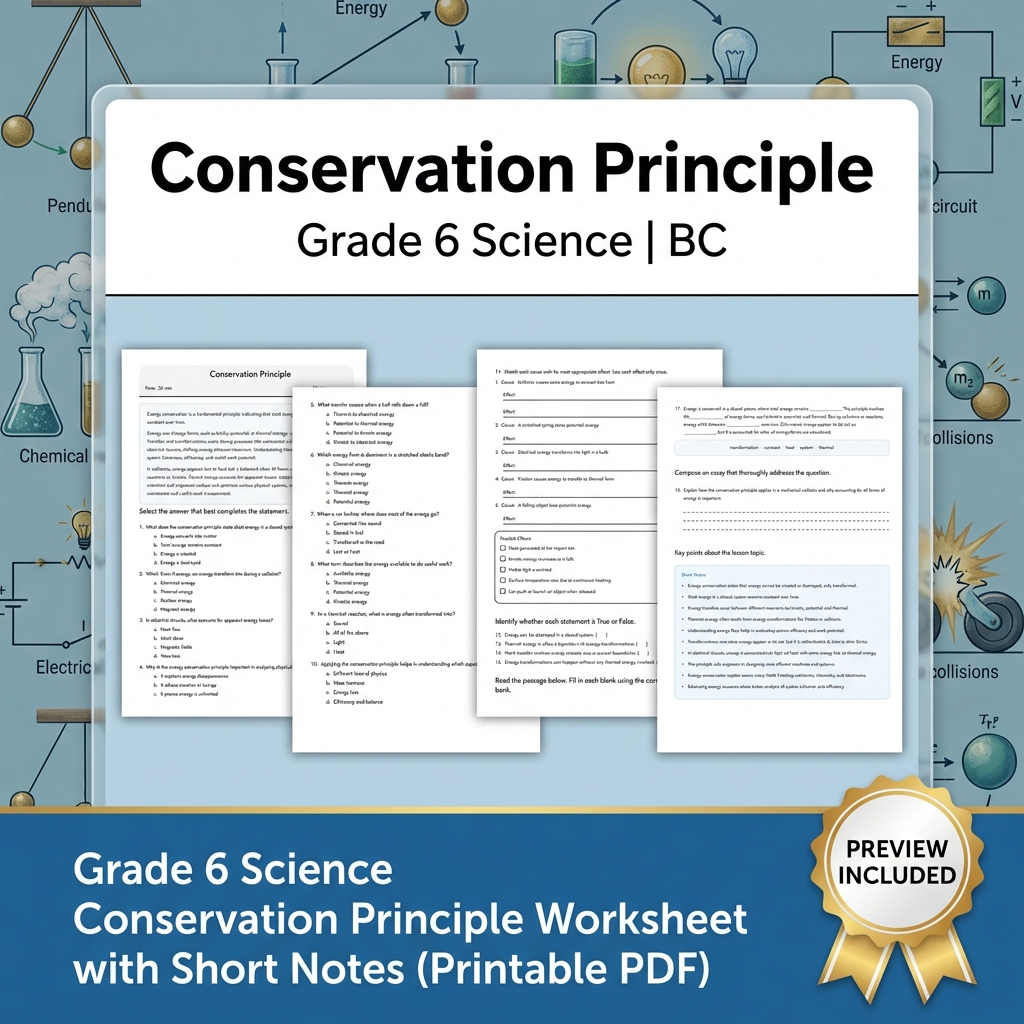
Grade 6 Science Conservation Principle Worksheet with Short Notes (PDF)
Created byMeadowlark WorksheetsLearning Objectives
- Understand the concept of energy conservation and how energy transforms within a system.
- Identify different forms of energy and how they relate to conservation.
- Apply the conservation principle to diverse physical scenarios such as collisions, reactions, and circuits.
Also included in: Grade 6 Science | Energy, Waves & Circuits UNIT Bundle (BC Frame work) +1 more
Instant download
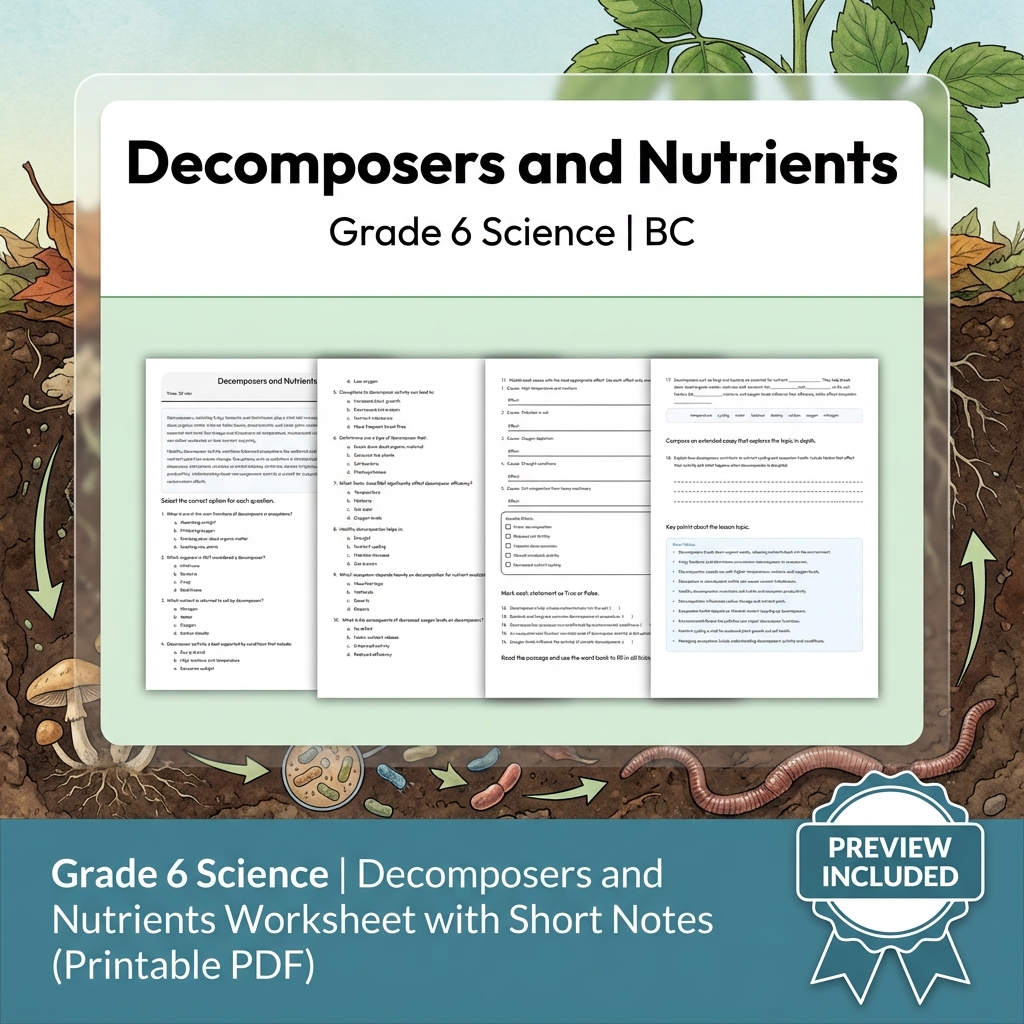
Grade 6 Science | Decomposers and Nutrients Worksheet with Short Notes (PDF)
Created byMeadowlark WorksheetsLearning Objectives
- Understand the role of decomposers in breaking down organic matter.
- Identify different types of decomposers such as fungi, bacteria, and detritivores.
- Explain how decomposers influence nutrient cycling and soil health.
Also included in: Grade 6 Science | Ecosystems & Interdependence UNIT Worksheet Bundle +1 more
Instant download
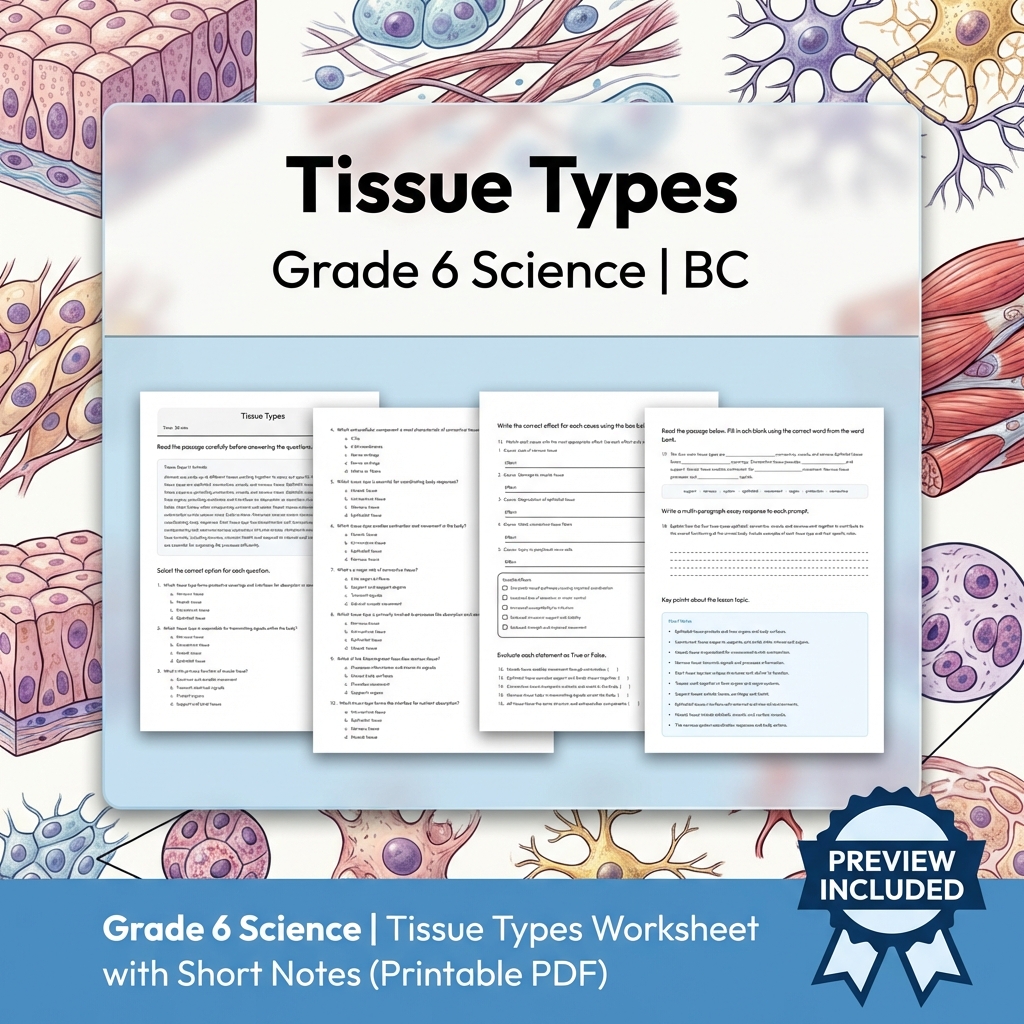
Grade 6 Science | Tissue Types Worksheet with Short Notes (Printable PDF)
Created byMeadowlark WorksheetsLearning Objectives
- Identify and describe the four main tissue types in animals.
- Understand the functions and structural features of epithelial, connective, muscle, and nervous tissues.
- Explain how tissue types contribute to organ functions and overall animal health.
Also included in: Grade 6 Science | Multicellular Systems & Functions Unit Worksheet Bundle +1 more
Instant download

Grade 6 Science | Ecosystem Components Worksheet with Short Notes (PDF)
Created byMeadowlark WorksheetsLearning Objectives
- Identify the biotic and abiotic components of an ecosystem.
- Understand how living organisms and nonliving factors interact within habitats.
- Describe the influence of sunlight, water, and soil on organism survival.
Also included in: Grade 6 Science | Ecosystems & Interdependence UNIT Worksheet Bundle +1 more
Instant download
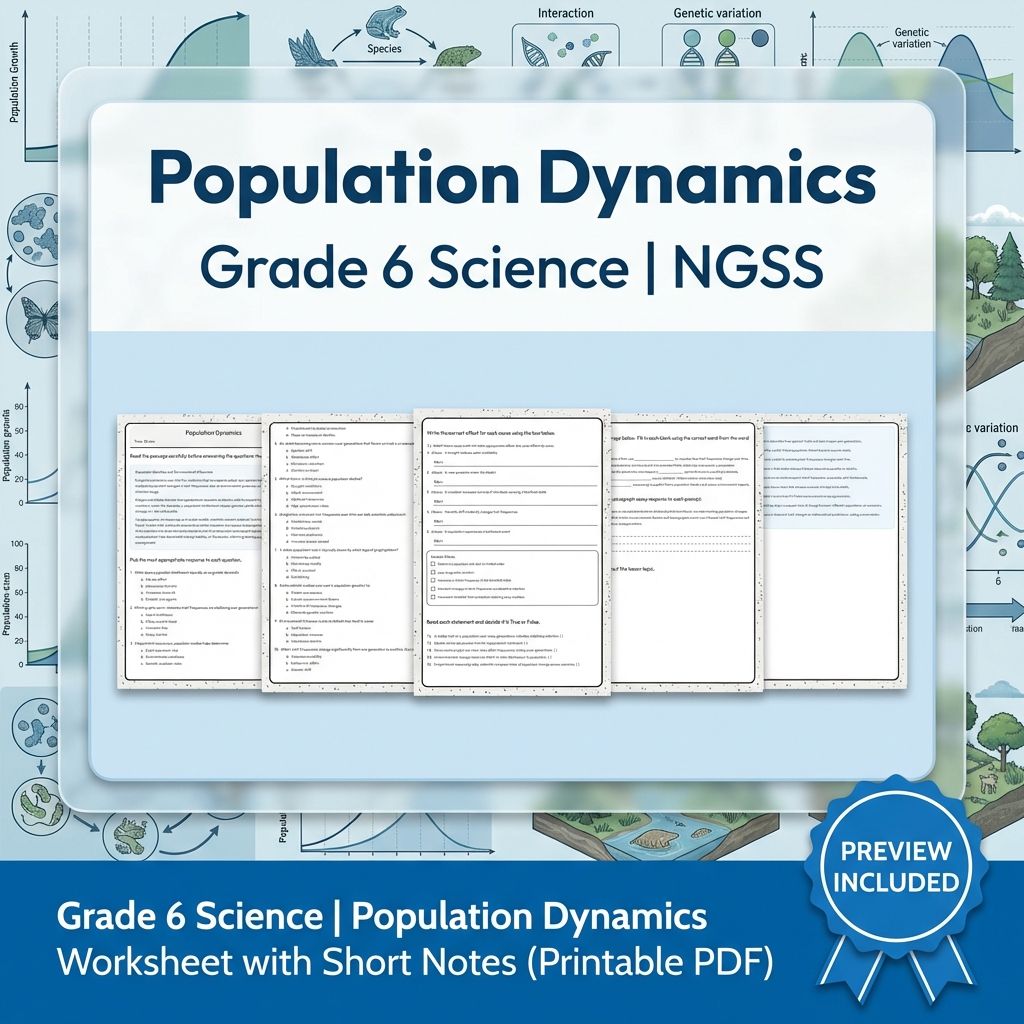
Grade 6 Science | Population Dynamics Worksheet with Short Notes (Printable PDF)
Created byMeadowlark WorksheetsLearning Objectives
- Understand how trait frequencies and population sizes change over generations in response to environmental factors.
- Interpret and analyze proportional reasoning, frequency charts, and time-series graphs in population studies.
- Connect empirical observations with mathematical models and predictions about population change.
Also included in: Grade 6 Science | Biological Evolution: Unity and Diversity Unit Bundle +1 more
Instant download
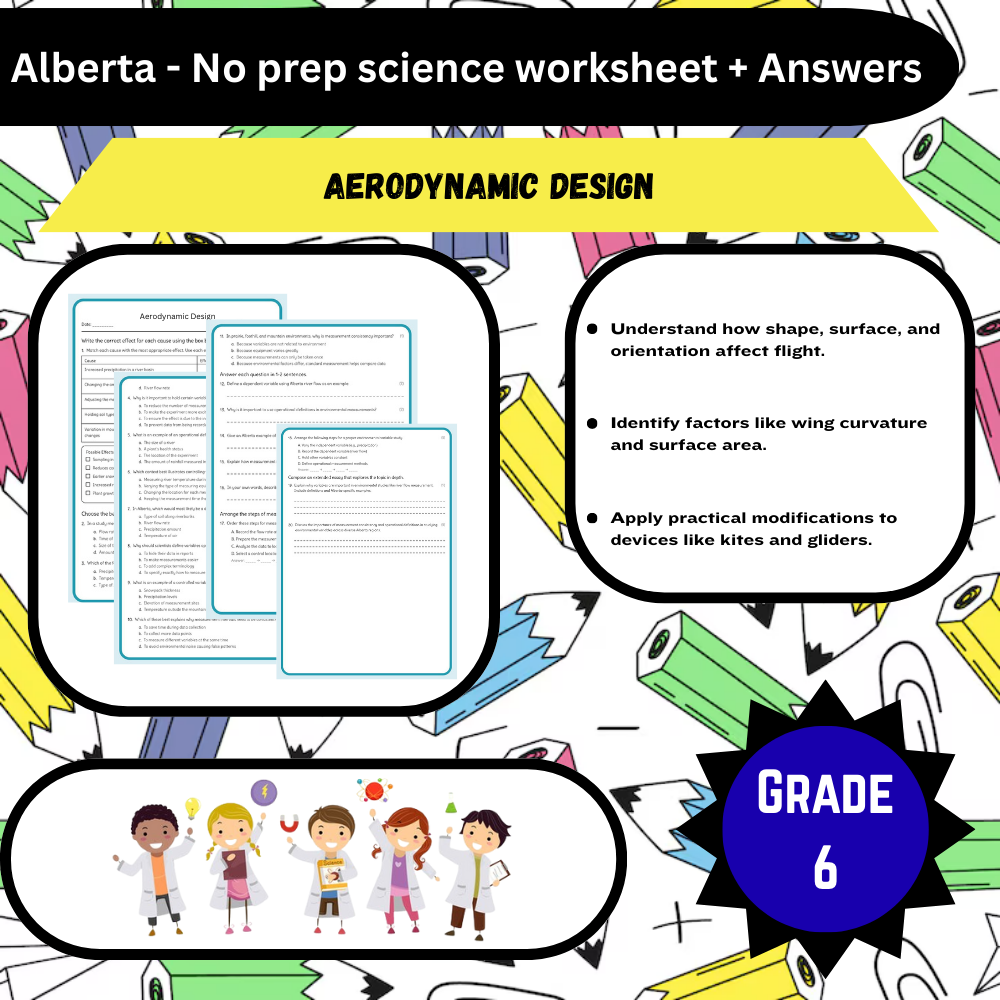
Grade 6 Science | Aerodynamic Design Worksheet (PDF) – Alberta Standards
Created byBright Mind ResourcesLearning Objectives
- Understand how shape, surface, and orientation affect flight through aerodynamic principles.
- Identify factors such as wing curvature and surface area that influence lift and drag in flight devices.
- Apply practical examples of aerodynamic modifications to devices like kites and gliders.
Instant download
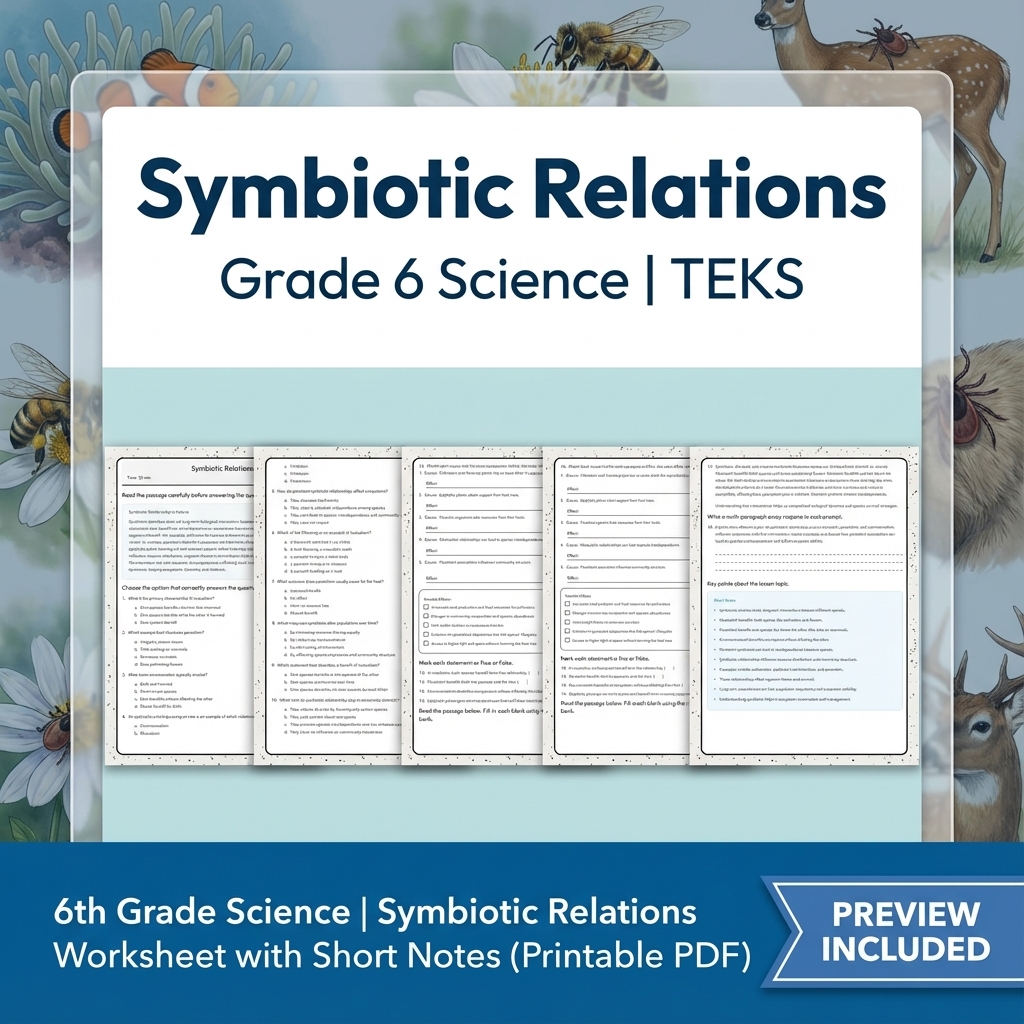
6th Grade Science Symbiotic Relations Worksheet with Short Notes (Printable PDF)
Created byMeadowlark WorksheetsLearning Objectives
- Understand the different types of symbiotic relationships: mutualism, commensalism, and parasitism.
- Identify and categorize real-world examples of symbiosis.
- Explain how symbiotic interactions influence organism fitness and community structure.
Instant download
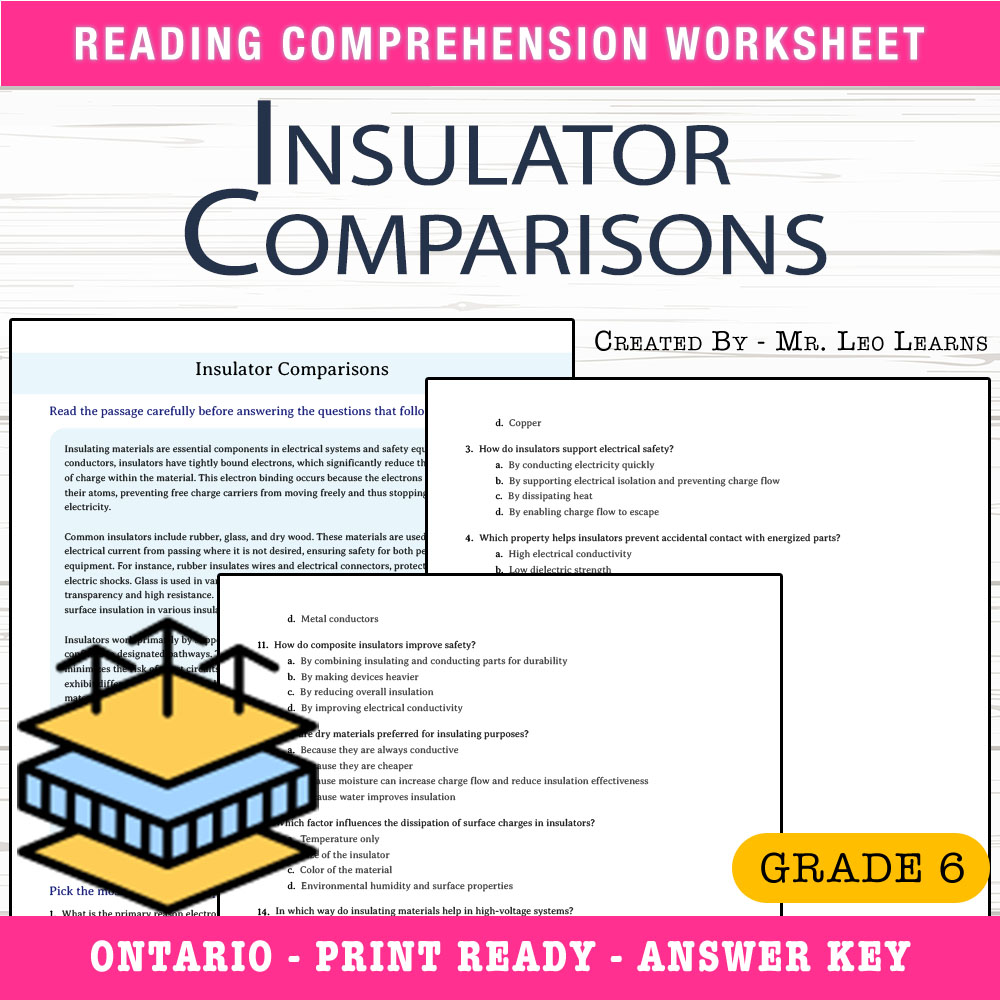
Grade 6 Science — Insulator Comparisons Worksheet for Mastery
 Created byThe Resource Hub
Learning Objectives
- Describe the properties of insulating materials and how they prevent electrical charge flow.
- Identify common insulating materials such as rubber, glass, and dry wood.
- Explain how insulators support electrical safety through isolation.
Also included in: Grade 6 Science Unit Bundle – Circuits, Electricity & Energy Worksheets +1 more
Instant download
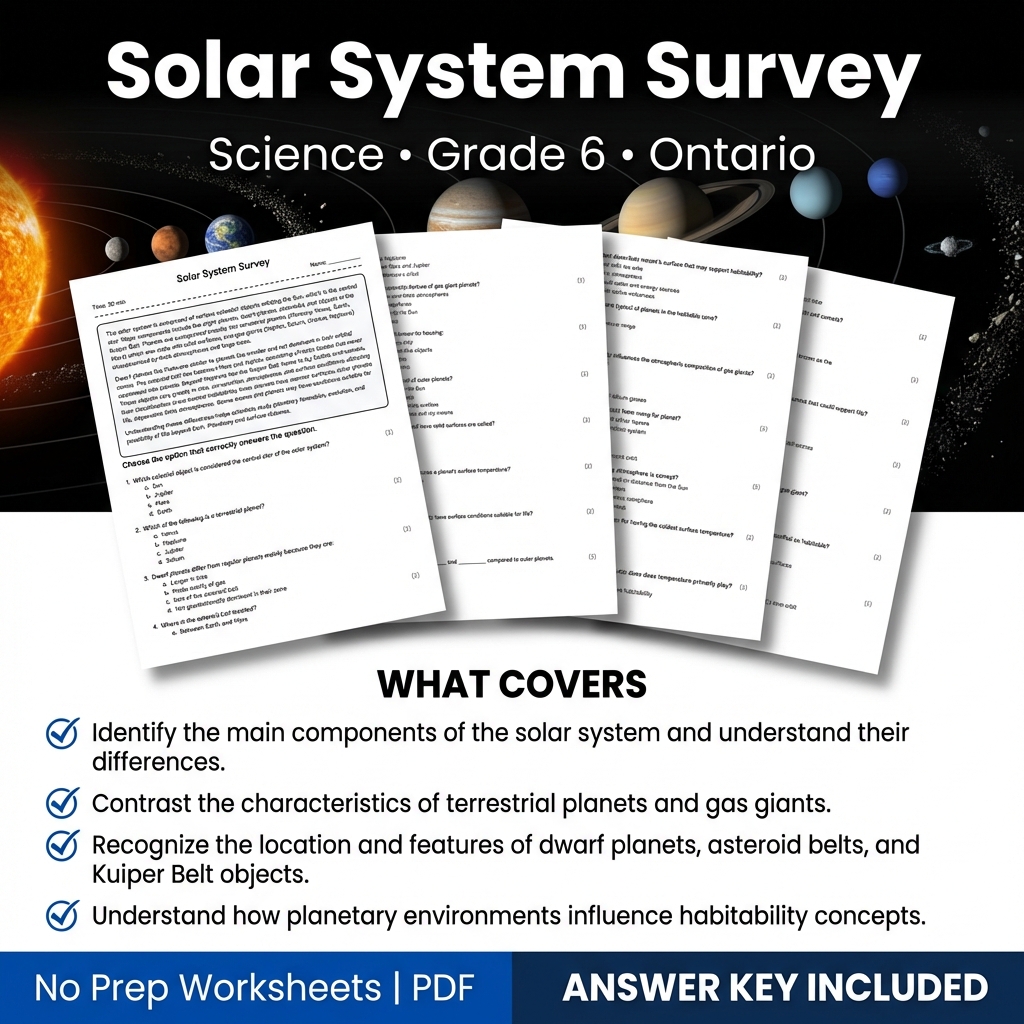
Grade 6 Science Worksheet Solar System Survey | Ontario Standards
Created byCoral Reef LearningLearning Objectives
- Identify the main components of the solar system and understand their differences.
- Contrast the characteristics of terrestrial planets and gas giants.
- Recognize the location and features of dwarf planets, asteroid belts, and Kuiper Belt objects.
Instant download

Grade 6 Seasonal | Halloween Day Worksheet for Comprehension | PDF + Answer Key
 Created byShaNova Worksheets
Learning Objectives
- Understand how Halloween is celebrated today around the world and recognize various modern customs.
- Describe how communities blend tradition with innovation during Halloween festivities.
- Analyze the significance of contemporary Halloween traditions and their social values.
Instant download

Grade 6 Biomass Building Worksheet | Practice & Assessment PDF
 Created byClear Sky Classroom
Learning Objectives
- Explain how photosynthesis helps plants build new biomass using carbon-based molecules.
- Describe how carbohydrates can become cellulose and how other molecules become proteins and fats.
- Use evidence to support the idea that plant growth requires a continuous supply of matter and energy.
Instant download

Reproductive Structures Worksheet Grade 6 Science | Practice
Created byPrism Point LearningLearning Objectives
- Explain how reproductive structures (flowers, cones, and seeds) support plant reproduction and regeneration
- Describe how seed dispersal mechanisms (wind, animals, gravity) influence colonization patterns
- Compare vegetative propagation with seed-based reproduction using Alberta examples
Also included in: Trees and Forests Lesson Bundle | Grade 6 Science | Alberta Framework
Instant download

Leaf Functions Worksheet | Grade 6 Science Assessments
Created byPrism Point LearningLearning Objectives
- Explain how leaf structure supports gas exchange, photosynthesis, and transpiration
- Compare broadleaf deciduous and needlelike conifer leaves in terms of water use and seasonal effects
- Describe how stomatal regulation, leaf area, and chlorophyll influence growth and carbon balance
Also included in: Trees and Forests Lesson Bundle | Grade 6 Science | Alberta Framework
Instant download

Symbiotic Relations Worksheet | TEKS-Aligned Grade 6 Science Practice
Learning Objectives
- Explain how symbiotic relationships describe interactions between two species.
- Categorize interactions as mutualism, commensalism, or parasitism using evidence from examples.
- Describe how symbiotic relationships affect organism fitness, resource distribution, and community composition.
Instant download
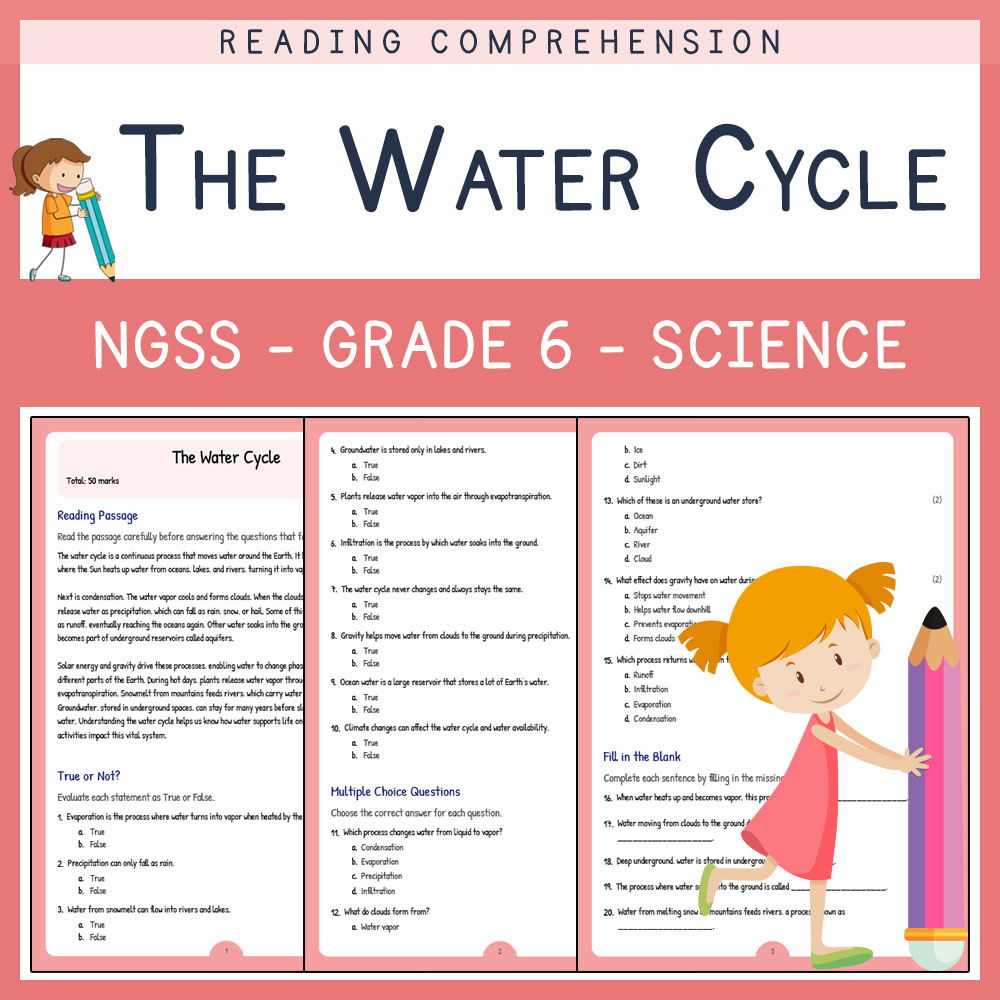
Grade 6 Science | The Water Cycle Worksheets (PDF) | NGSS Aligned
Created byLumora LearningLearning Objectives
- Understand the stages of the water cycle: evaporation, condensation, precipitation, runoff, infiltration, and groundwater storage.
- Identify how solar energy and gravity drive the water cycle processes.
- Recognize the importance of reservoirs like oceans, ice, and groundwater in storing water.
Instant download

Grade 6 Science | Measurement Uncertainty - Daily Reading Practice
Created byCoral Reef LearningLearning Objectives
- Identify different sources of measurement uncertainty in scientific data.
- Explain how environmental and human factors contribute to variability.
- Describe methods to estimate and reduce measurement uncertainty.
Also included in: Evidence and Investigation Lesson Bundle | Grade 6 Science | Alberta +1 more
Instant download

Grade 6 Science | Pattern Analysis in Climate Data - Daily Reading Comprehension
Created byCoral Reef LearningLearning Objectives
- Understand what long-term temperature trends are
- Learn how to identify patterns and cycles in temperature data
- Recognize the importance of linking observed data patterns to environmental factors
Also included in: Evidence and Investigation Lesson Bundle | Grade 6 Science | Alberta +1 more
Instant download

Grade 6 Science | Understanding Data Tables - Daily Reading Comprehension
Created byCoral Reef LearningLearning Objectives
- Identify column headings and units in data tables
- Understand the importance of clear labels and metadata
- Recognize examples of data tables in scientific observations
Also included in: Evidence and Investigation Lesson Bundle | Grade 6 Science | Alberta +1 more
Instant download
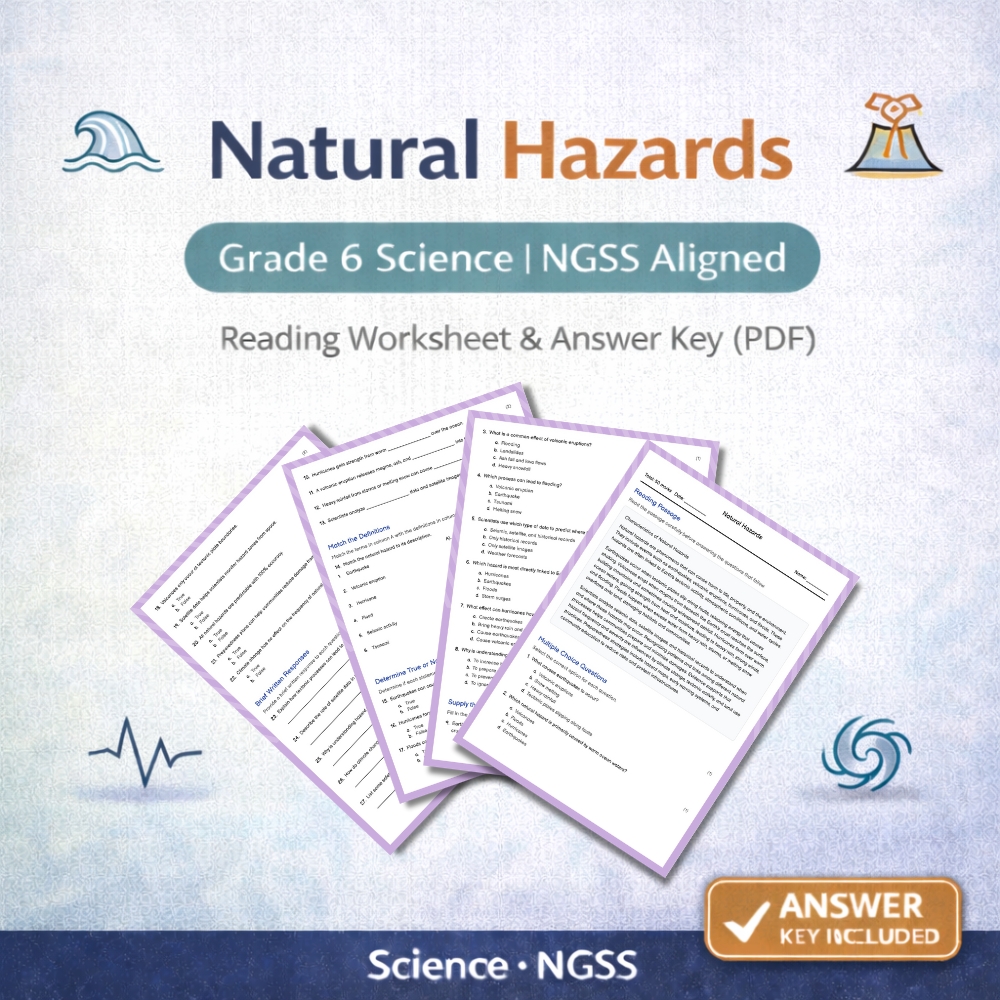
6th Grade Science | Natural Hazards Worksheet | NGSS Alignment
 Created byCedar Grove Learning
Learning Objectives
- Understand the causes and types of natural hazards such as earthquakes, volcanoes, hurricanes, and floods.
- Analyze patterns and effects of natural hazards on communities and infrastructure.
- Evaluate evidence from scientific data to explain hazard occurrences and severity.
Also included in: Grade 6 Science Bundle | Sustainability, Hazards & Earth Systems NGSS Worksheets +1 more
Instant download
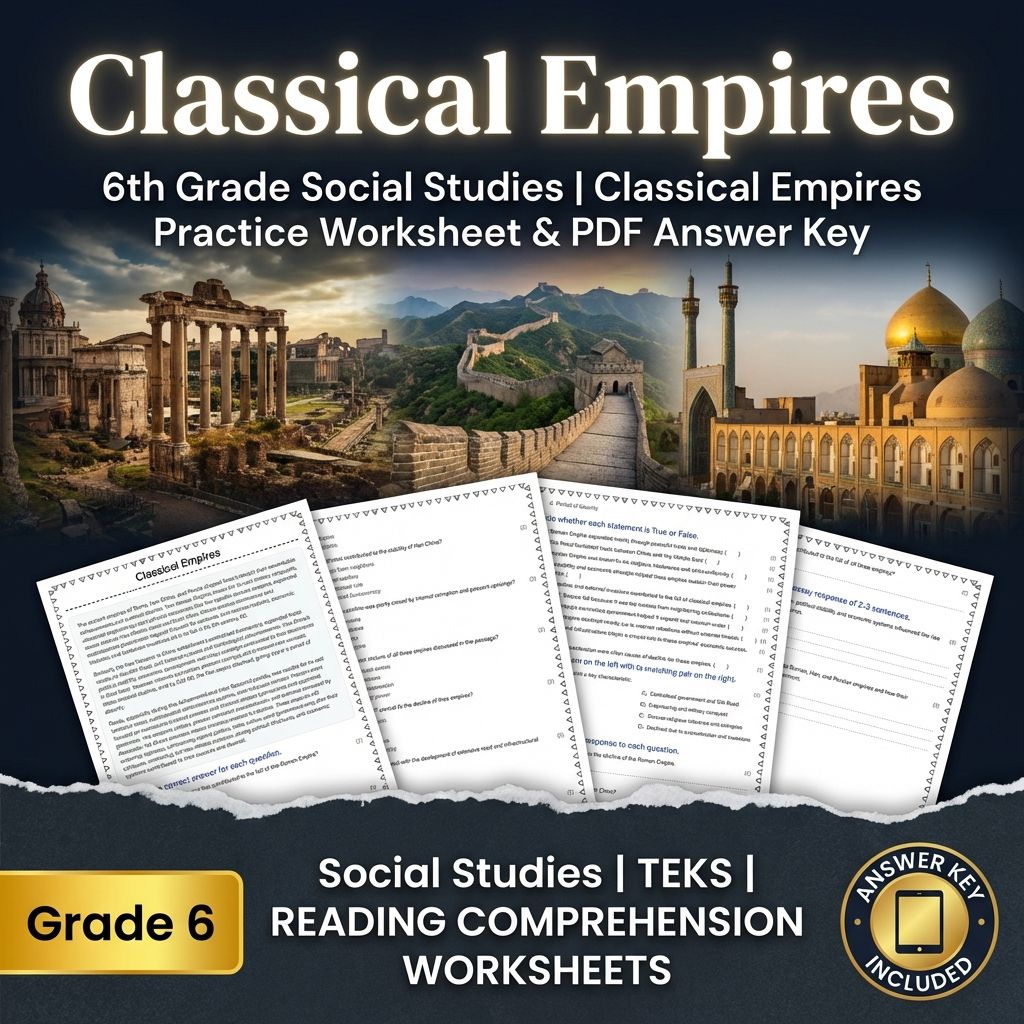
6th Grade Social Studies | Classical Empires Practice Worksheet & PDF Answer Key
Learning Objectives
- Understand the factors contributing to the rise of ancient empires like Rome, Han, and Persia.
- Identify key causes for the decline of these civilizations.
- Analyze how military, political, and economic systems influenced empire longevity.
Also included in: Grade 6 Social Studies Bundle – Ancient Empires & Cultural Diffusion +1 more
Instant download

Grade 6 Science | Limiting Factors - Daily Reading Comprehension Practice
Created byCoral Reef LearningLearning Objectives
- Understand what limiting factors are and how they affect populations
- Identify different abiotic and biotic limiting factors
- Analyze the impact of resource shortages on species survival
Instant download

6th Grade Science | Mass and Density Reading Worksheet (PDF + Rubric)
Learning Objectives
- Understand the concepts of mass and volume and how they relate through density.
- Learn how to calculate density using sample measurements.
- Interpret density values to distinguish between objects that sink or float.
Instant download
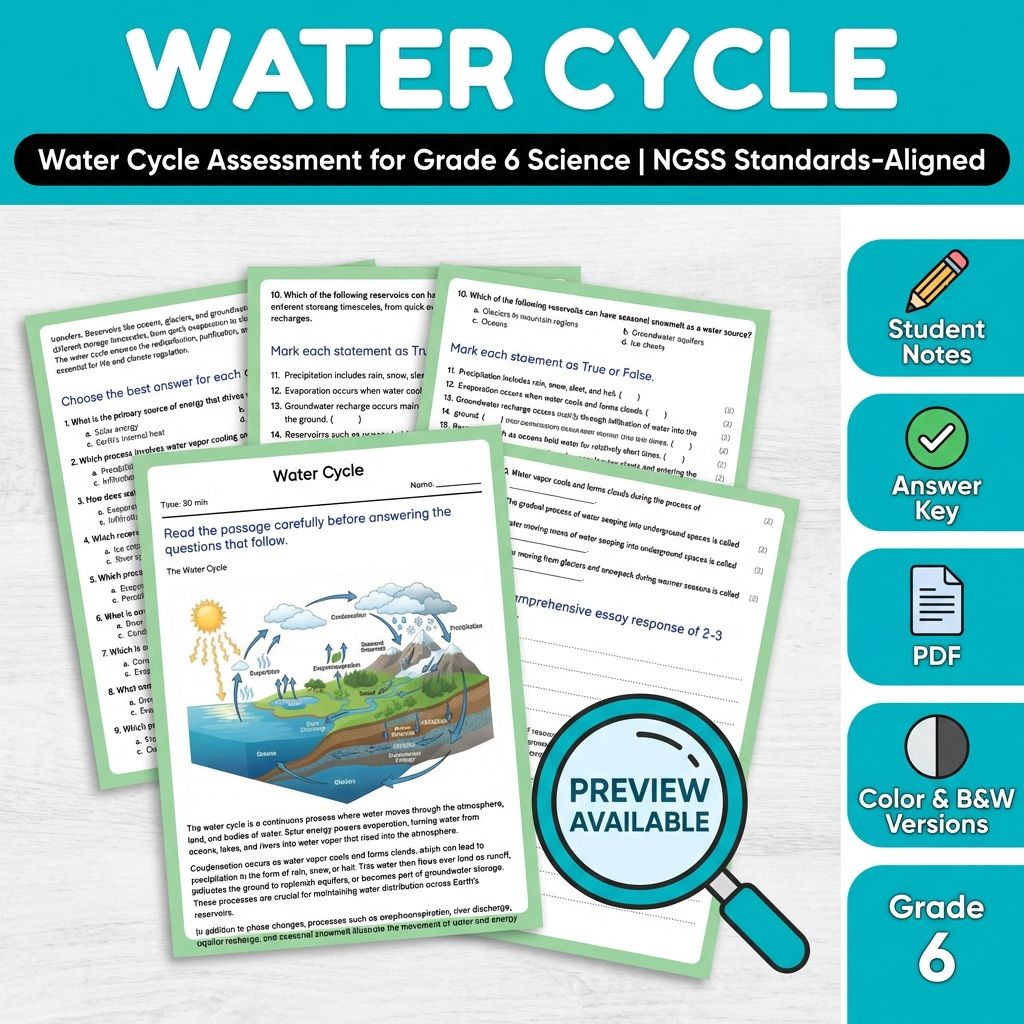
Water Cycle Assessment for Grade 6 Science | NGSS Standards-Aligned
Created byPrism Point LearningLearning Objectives
- Explain the processes involved in the water cycle, including evaporation, condensation, and precipitation.
- Identify the role of solar energy and gravity in water movement across the hydrosphere.
- Describe the cycling of water through different reservoirs such as oceans, ice, and groundwater.
Also included in: Grade 6 Science Mini Bundle – Earth's Systems NGSS Standards-Aligned +1 more
Instant download
Browse more categories
About Grade 6 Worksheets
Browse 8,761 printable Grade 6 worksheets across math, ELA, science, and social studies — each a ready-to-print PDF with optional answer keys.
MyTeachingSheets worksheets are made by real teacher-authors and checked before they go live. Download any as a print-ready PDF for lessons, homework, or independent practice — most include answer keys, and previews are always free.