
Grade 7 Science Worksheets
6,126 worksheets
Grade 7 Science – Cell Structure & Function | Daily Reading Worksheet
 Created byBright Mind Resources
Learning Objectives
- Identify major cell components and their functions.
- Differentiate between organelles such as nucleus, mitochondria, chloroplasts, and cell membrane.
- Explain how cellular structures support organismal roles and ecological interactions.
Also included in: Grade 7 Ecosystems & Adaptations Science Daily Reading Lesson Bundle | TEKS +2 more
Instant download
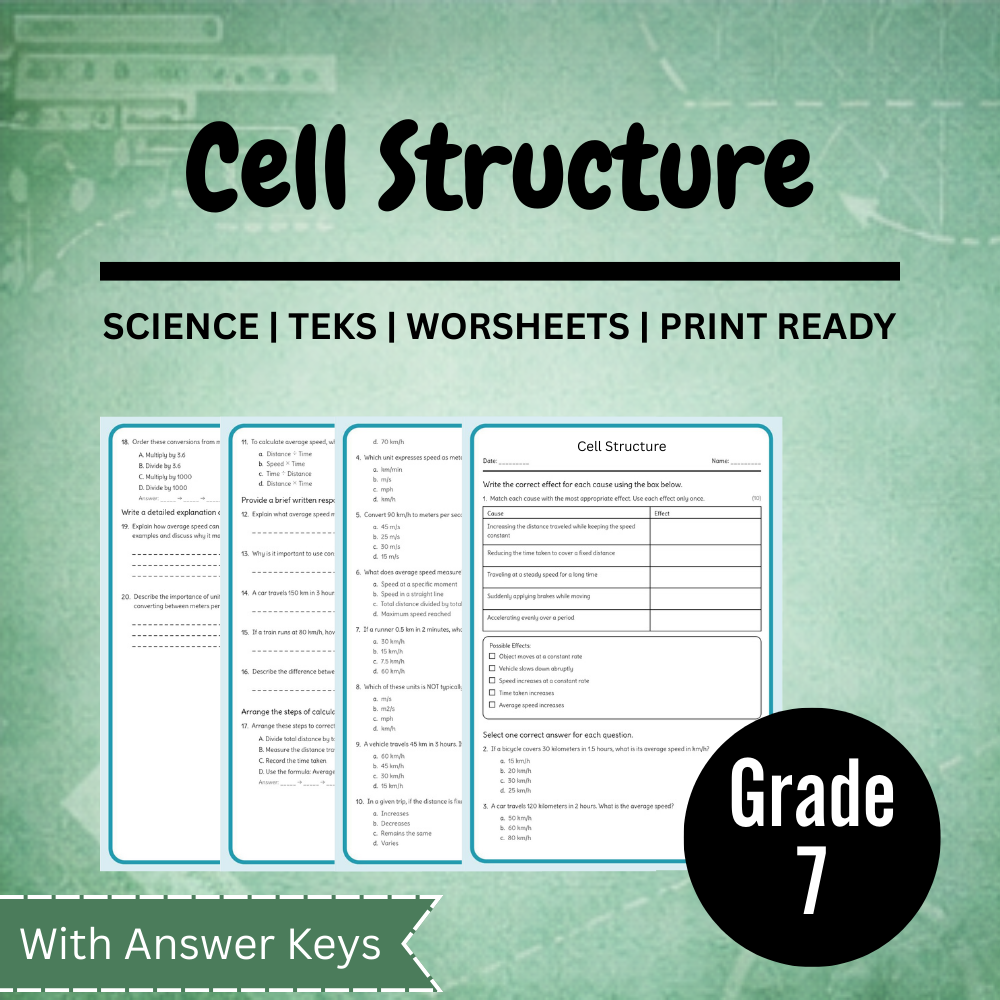
Grade 7 Science | Cell Structure Worksheet (Worksheet + Answer Key) – TEKS Aligned
Created byBright Mind ResourcesLearning Objectives
- Identify and describe major cell organelles and their functions.
- Compare cellular features of producers and consumers.
- Explain how organelle specialization supports survival and ecological interactions.
Also included in: Grade 7 Science Unit Bundle – Ecosystems, Adaptation & Environmental Impact +2 more
Instant download

Grade 7 Cell Structure Science Daily Reading Worksheet | TEKS Activity
 Created byBRIGHT PATH RESOURCES
Learning Objectives
- Identify key structures of a cell and what they do
- Explain the main function of the cell membrane
- Connect cell structure to how cells survive and communicate
Also included in: Grade 7 Ecosystems Science Daily Reading Worksheets Bundle | TEKS +1 more
Instant download

Grade 7 Science | Cell Structure - Daily Reading Comprehension
 Created byCoral Reef Learning
Learning Objectives
- Identify the major parts of a cell and their functions.
- Compare organelles such as nucleus, mitochondria, chloroplasts, and cell membranes.
- Explain how cellular structure relates to organ and tissue function.
Instant download

Cell Structure Worksheet | 7th Grade Science TEKS Practice & Assessment
Learning Objectives
- Identify major organelles (nucleus, mitochondria, chloroplasts, and cell membrane) and describe their primary functions
- Explain how organelles’ specialized structures support survival and overall cell performance
- Connect cellular energy capture (producers vs. consumers) to tissue and organ function in multicellular organisms
Instant download

Grade 7 Science Worksheet on Thermal Effects | Ontario Standards Practice
Created byCoral Reef LearningLearning Objectives
- Understand how temperature influences material properties such as expansion, contraction, and viscosity.
- Describe phase changes and relate microscopic particle motion to macroscopic effects.
- Analyze real-world examples of thermal effects in engineering and environmental contexts.
Instant download

Thermal Effects Worksheet | Grade 7 Science PDF Ontario Standards
 Created byCedar Grove Learning
Learning Objectives
- Explain how particle motion changes with temperature and how those changes lead to thermal expansion, contraction, phase changes, and viscosity variations.
- Describe how thermal effects connect microscopic behavior to macroscopic changes in volume, density, and pressure.
- Predict practical consequences of thermal cycling for material selection, engineering design, and environmental systems.
Also included in: Grade 7 Thermal Energy & Heat Transfer Science Lesson Bundle: Ontario +1 more
Instant download
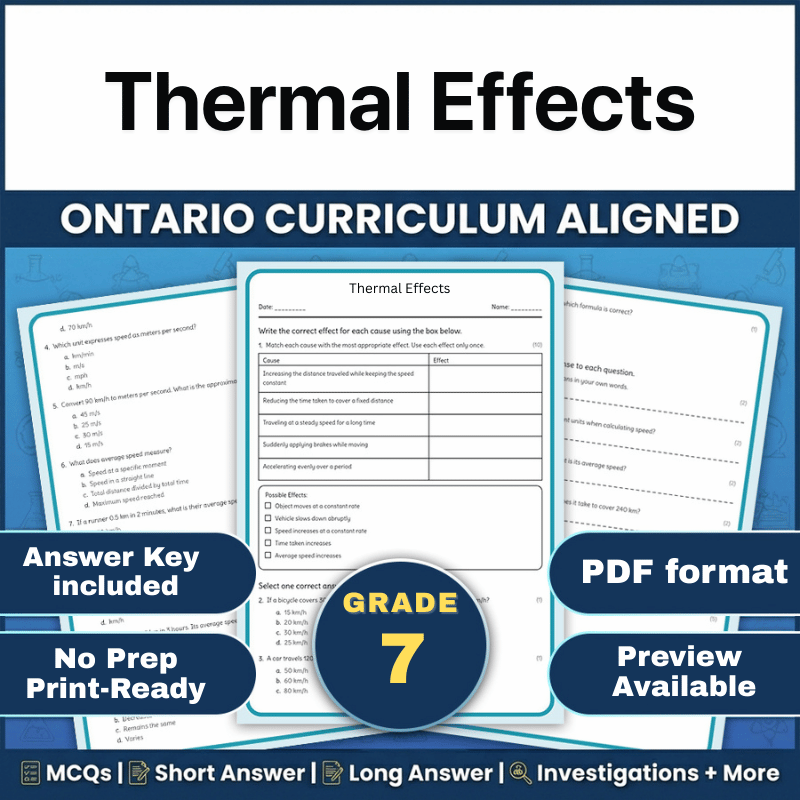
Grade 7 Science | Thermal Effects Worksheet (Ontario Standard) (PDF)
Created byBright Mind ResourcesLearning Objectives
- Understand how temperature changes affect material properties and systems.
- Explain concepts of thermal expansion, contraction, phase changes, and viscosity variations.
- Connect microscopic particle motion to macroscopic thermal effects such as volume and pressure changes.
Instant download

Thermal Effects on Materials Worksheets Grade 7 Science
 Created byPrism Point Learning
Learning Objectives
- Explain how particle motion changes material size with temperature
- Describe how thermal expansion affects structural design and safety
- Explain melting and freezing as temperature-dependent phase changes
Also included in: Thermal Energy & Heat Transfer Lesson Bundle | Grade 7 Science | Ontario +1 more
Instant download
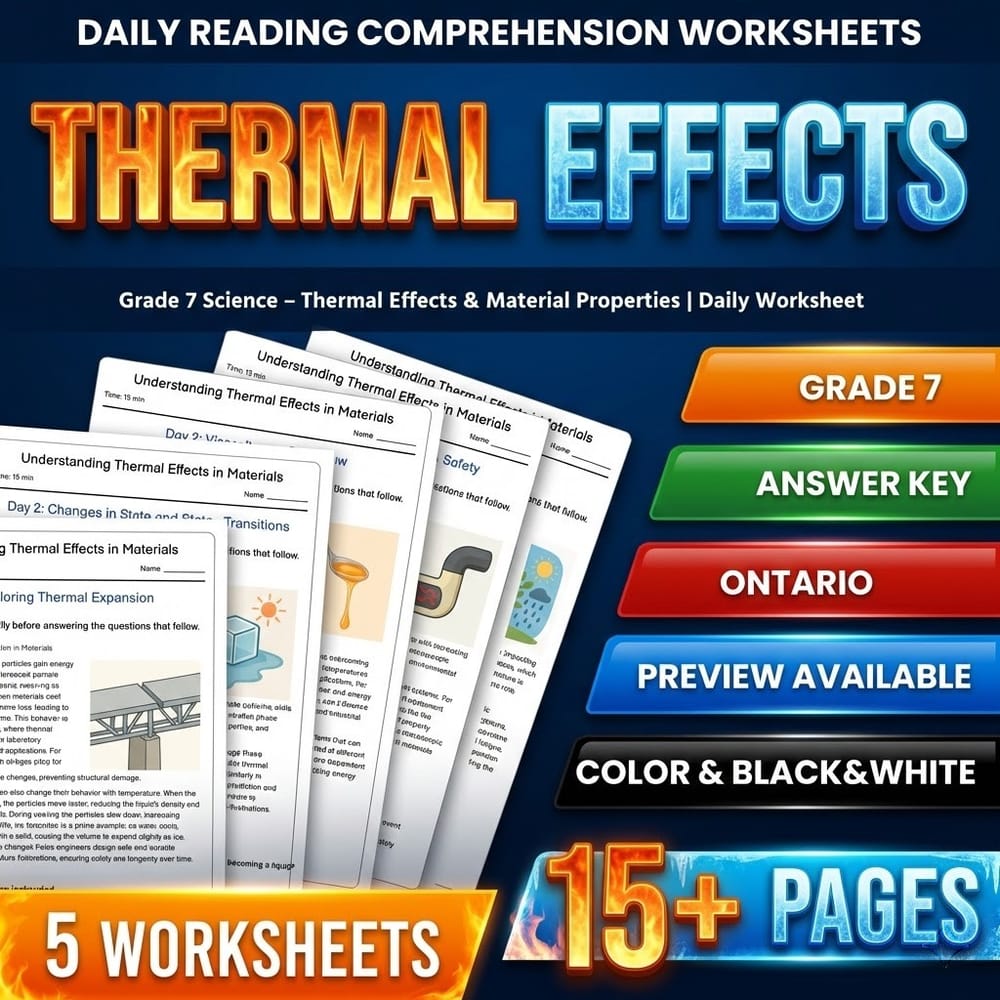
Grade 7 Science – Thermal Effects & Material Properties | Daily Worksheet
 Created byQuiet Forest Education
Learning Objectives
- Define thermal expansion and contraction
- Identify examples of thermal effects in everyday objects
- Explain how particle motion influences material properties
Also included in: Thermal Energy Grade 7 Science Daily Reading Worksheets Bundle | Ontario +1 more
Instant download

Thermal Effects Worksheet | Grade 7 Science | Ontario Standards
Learning Objectives
- Explain how temperature affects particle motion and connects it to changes in macroscopic properties like volume and pressure.
- Describe thermal expansion and contraction and give real-world examples of where they matter in engineering design.
- Model how phase changes and viscosity vary with temperature and predict impacts on systems during thermal cycling.
Instant download

Thermal Effects Science Worksheet Grade 7 Ontario Heat Transfer Activity
 Created byChalk and Compass
Learning Objectives
- Explain how heating and cooling affect material properties such as length, density, and viscosity.
- Connect microscopic particle motion to macroscopic changes in volume, pressure, and fluid behavior.
- Describe how phase changes (melting/freezing) depend on temperature and influence everyday systems.
Also included in: Grade 7 Science Heat Transfer and Thermal Energy Lesson Bundle | Ontario +1 more
Instant download

Grade 7 Science | Understanding Thermal Expansion - Daily Reading Comprehension
Created byCoral Reef LearningLearning Objectives
- Describe how materials change in size with temperature variations.
- Identify examples of thermal expansion and contraction in everyday objects.
- Explain the microscopic particle behavior that causes macroscopic property changes.
Instant download

Grade 7 Thermal Effects Worksheet | Ontario Science Review & Answer Key
 Created byClear Sky Classroom
Learning Objectives
- Explain how temperature changes cause thermal expansion, contraction, phase changes, and viscosity variations in materials.
- Connect microscopic particle motion to macroscopic changes such as volume, density, and pressure.
- Predict practical consequences of thermal cycling for material choice and engineering design.
Instant download
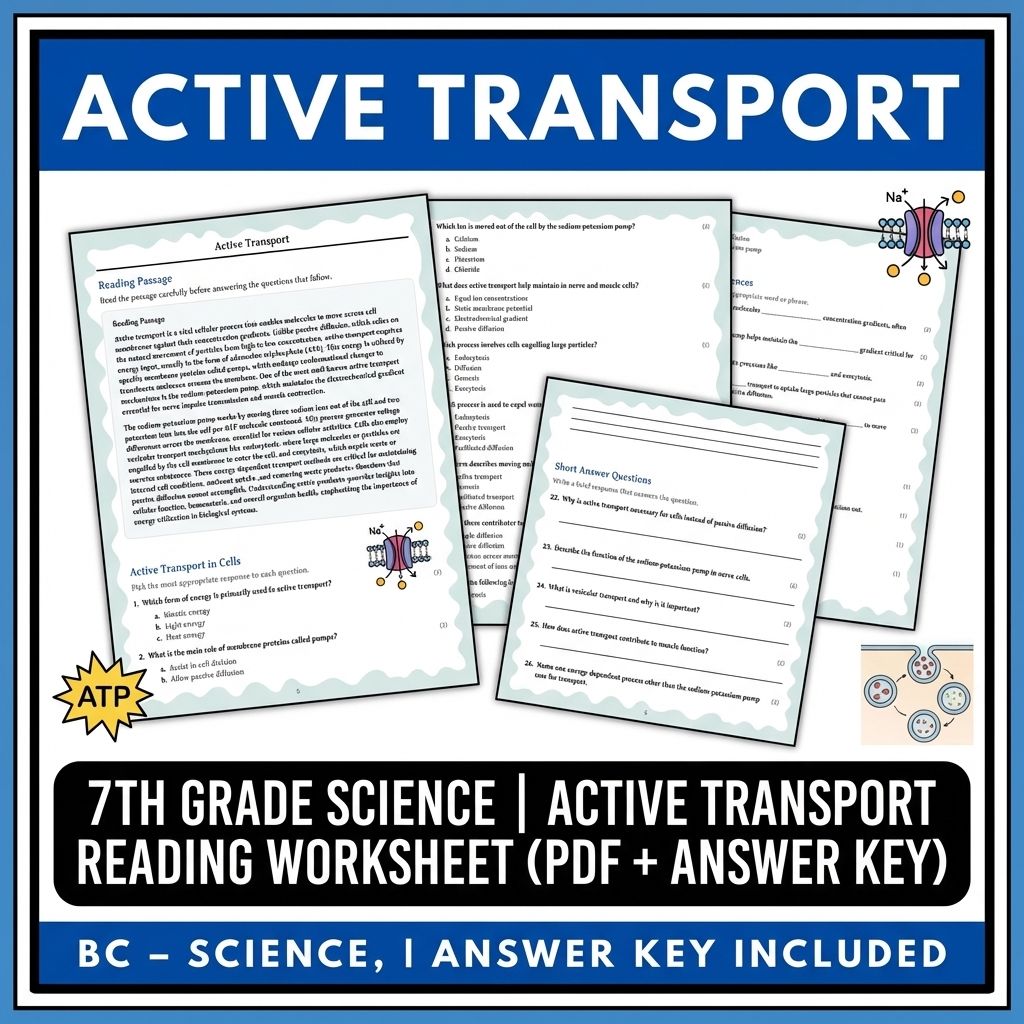
7th Grade Science | Active Transport Reading Worksheet (PDF + Answer Key)
Learning Objectives
- Understand the concept of active transport and how it moves molecules against concentration gradients.
- Identify the role of ATP and membrane proteins such as pumps in cellular transport.
- Explain the function of the sodium-potassium pump in maintaining electrochemical gradients.
Instant download

Grade 7 Science – Active Transport in Cells Daily Reading Worksheet + Answer Key
Learning Objectives
- Define active transport and explain its importance in cells.
- Identify key proteins involved in active transport, such as the sodium-potassium pump.
- Differentiate between active transport and passive diffusion.
Also included in: Grade 7 Science Lesson Group Bundle | Cell Structures and Processes +1 more
Instant download
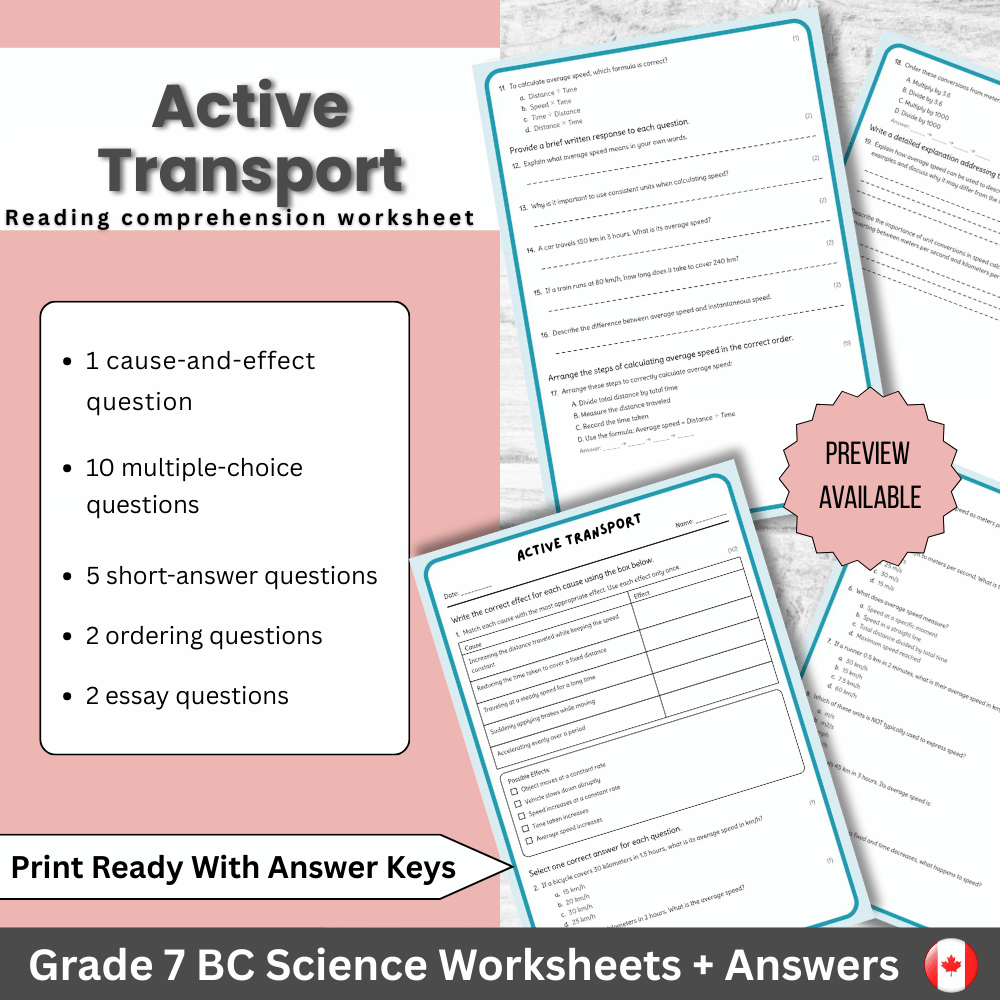
Grade 7 Science | Active Transport Worksheet + Answer Key (BC Standards)
Created byBright Mind ResourcesLearning Objectives
- Understand the concept of active transport and how it differs from passive diffusion.
- Identify the key types of active transport mechanisms in cells, including the sodium-potassium pump and vesicular transport.
- Explain how active transport contributes to cell functions like nutrient intake, waste removal, and maintaining electrochemical gradients.
Instant download

Grade 7 Science – Active Transport & Cell Membranes | Daily Reading Worksheet
Created byBright Mind ResourcesLearning Objectives
- Understand the concept of active transport and its importance in cell function
- Identify different mechanisms of active transport such as the sodium-potassium pump, endocytosis, and exocytosis
- Explain how active transport differs from passive diffusion
Also included in: Cell Function & Transport Grade 7 Science Daily Reading Worksheets Bundle | BC +1 more
Instant download
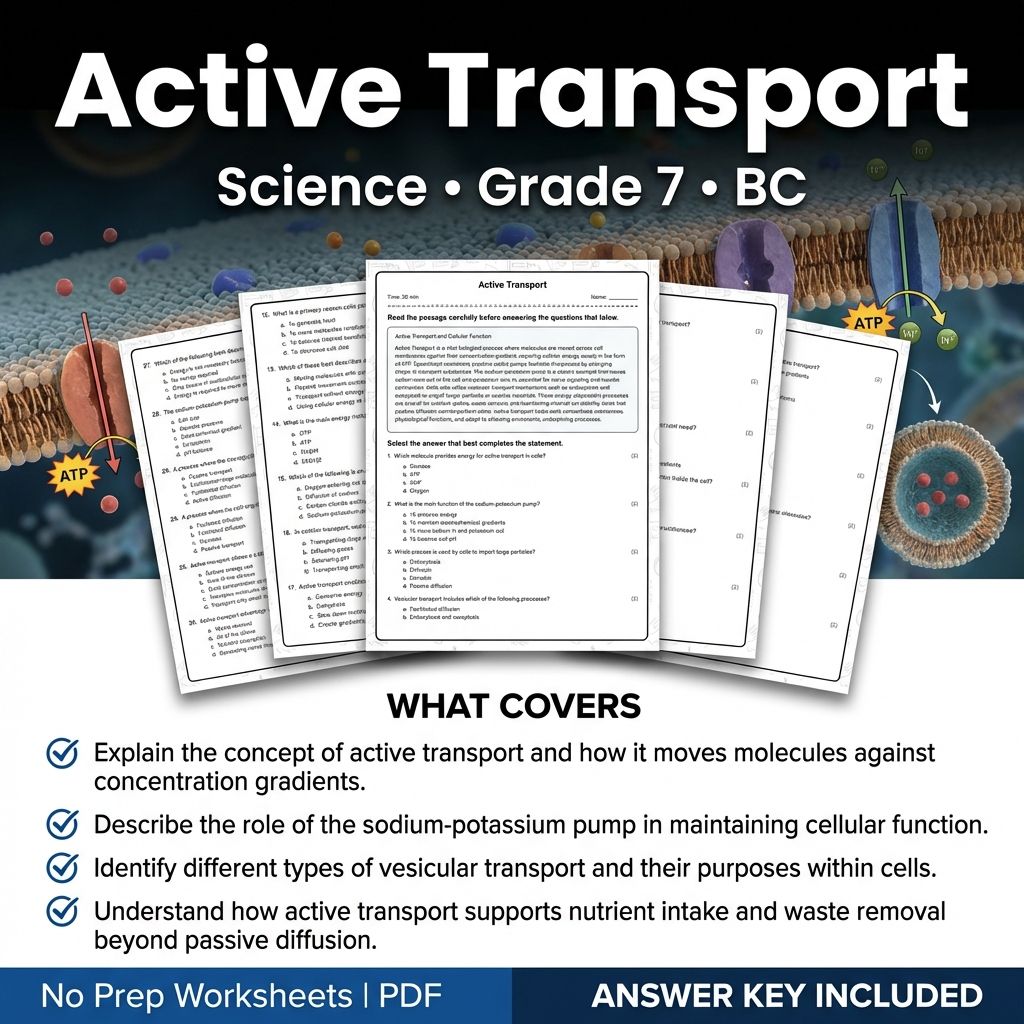
7th Grade Science | Active Transport Worksheet & Answer Key (Printable PDF)
Created byCoral Reef LearningLearning Objectives
- Explain the concept of active transport and how it moves molecules against concentration gradients.
- Describe the role of the sodium-potassium pump in maintaining cellular function.
- Identify different types of vesicular transport and their purposes within cells.
Instant download

Grade 7 Science Worksheet | Active Transport & Cell Movement (BC Standards) (PDF)
 Created byEvergreen Desk Education
Learning Objectives
- Explain how active transport moves substances against a concentration gradient using cellular energy and membrane proteins.
- Describe the sodium-potassium pump and its role in maintaining electrochemical gradients for nerve and muscle function.
- Compare active transport with passive diffusion and identify examples of vesicular transport (endocytosis and exocytosis).
Instant download

Grade 7 Science | Active Transport in Cells - Daily Reading Comprehension
Created byCoral Reef LearningLearning Objectives
- Understand the concept of active transport in cellular processes.
- Identify the role of cellular energy (ATP) in moving molecules against concentration gradients.
- Recognize the function of cellular pumps like the sodium-potassium pump.
Instant download
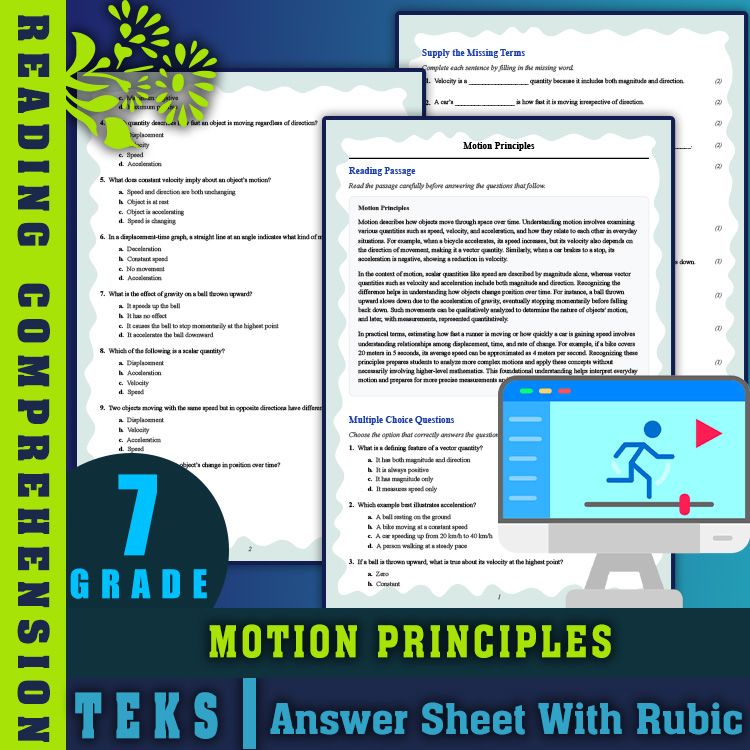
7th Grade Science | Motion Principles Reading Worksheet & Answer Key (PDF)
Learning Objectives
- Understand the difference between speed, velocity, and acceleration
- Identify scalar and vector quantities related to motion
- Interpret motion scenarios qualitatively, including constant and changing motion
Instant download

Motion Principles Assessment for Grade 7 Science – Standards-Aligned
Created byPrism Point LearningLearning Objectives
- Understand the basic concepts of speed, velocity, and acceleration in motion.
- Distinguish between scalar and vector quantities related to motion.
- Interpret motion scenarios qualitatively and relate them to displacement, time, and rate of change.
Also included in: Grade 7 Motion and Energy Science: Lesson Bundle TEKS Unit Assessment
Instant download

Grade 7 Science Worksheet on Motion Principles | TEKS Aligned
Created byCoral Reef LearningLearning Objectives
- Define and distinguish between speed, velocity, and acceleration using real-world examples.
- Identify the differences between scalar and vector quantities in motion.
- Explain how displacement, time, and rate of change relate in various motion scenarios.
Instant download

Grade 7 Science | Understanding Motion Principles - Daily Reading Comprehension
Created byCoral Reef LearningLearning Objectives
- Understand key concepts related to Science
- Apply knowledge through practice questions
- Demonstrate comprehension of the material
Instant download

7th Grade Science | Motion Principles Worksheet (TEKS & PDF)
Created byEvergreen Desk EducationLearning Objectives
- Distinguish speed, velocity, and acceleration using everyday motion examples.
- Classify quantities as scalars or vectors and explain why direction matters for velocity.
- Interpret motion scenarios qualitatively and relate displacement, time, and rate of change.
Instant download
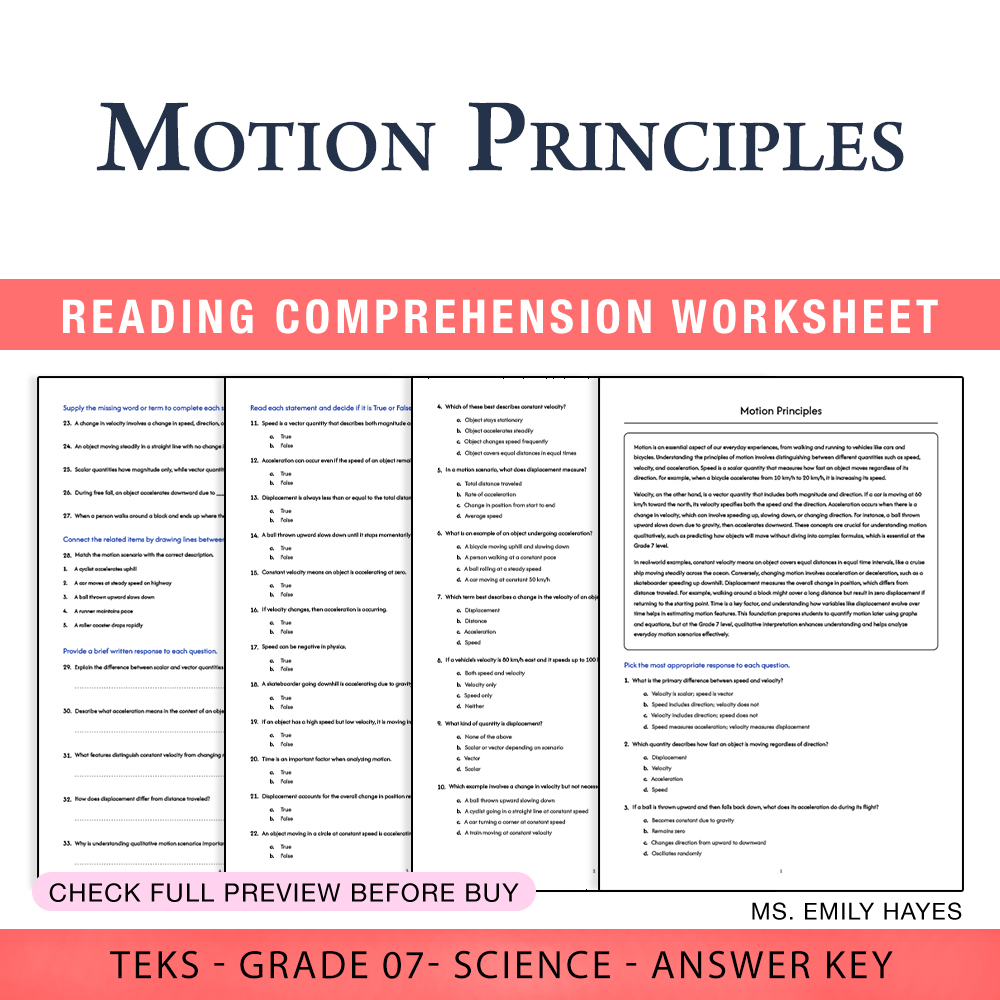
7th Grade Science | Motion Principles Worksheet (PDF+ Answer Key)
 Created byCopper Leaf Classroom
Learning Objectives
- Explain the difference between speed, velocity, and acceleration with examples.
- Identify scalar versus vector quantities in motion scenarios.
- Describe how displacement, time, and rate of change relate in motion.
Instant download

Motion Principles Worksheet | Grade 7 Science Practice
Created byPrism Point LearningLearning Objectives
- Distinguish speed and velocity, and explain how acceleration describes changing motion.
- Identify which motion quantities are scalar versus vector and interpret motion scenarios qualitatively.
- Relate displacement, time, and rate of change using simple, grade-appropriate examples.
Also included in: Grade 7 Motion, Forces & Energy Science Lesson Bundle for TEKS Practice
Instant download

Grade 7 Science – Thermal Effects & Materials | Daily Reading Worksheet
Created byBright Mind ResourcesLearning Objectives
- Understand how materials expand and contract when heated or cooled
- Identify examples of phase changes due to temperature variations
- Explain how microscopic particle motion influences macroscopic properties
Also included in: Heat Transfer Grade 7 Science Daily Reading Worksheets Lesson Bundle | Ontario +1 more
Instant download
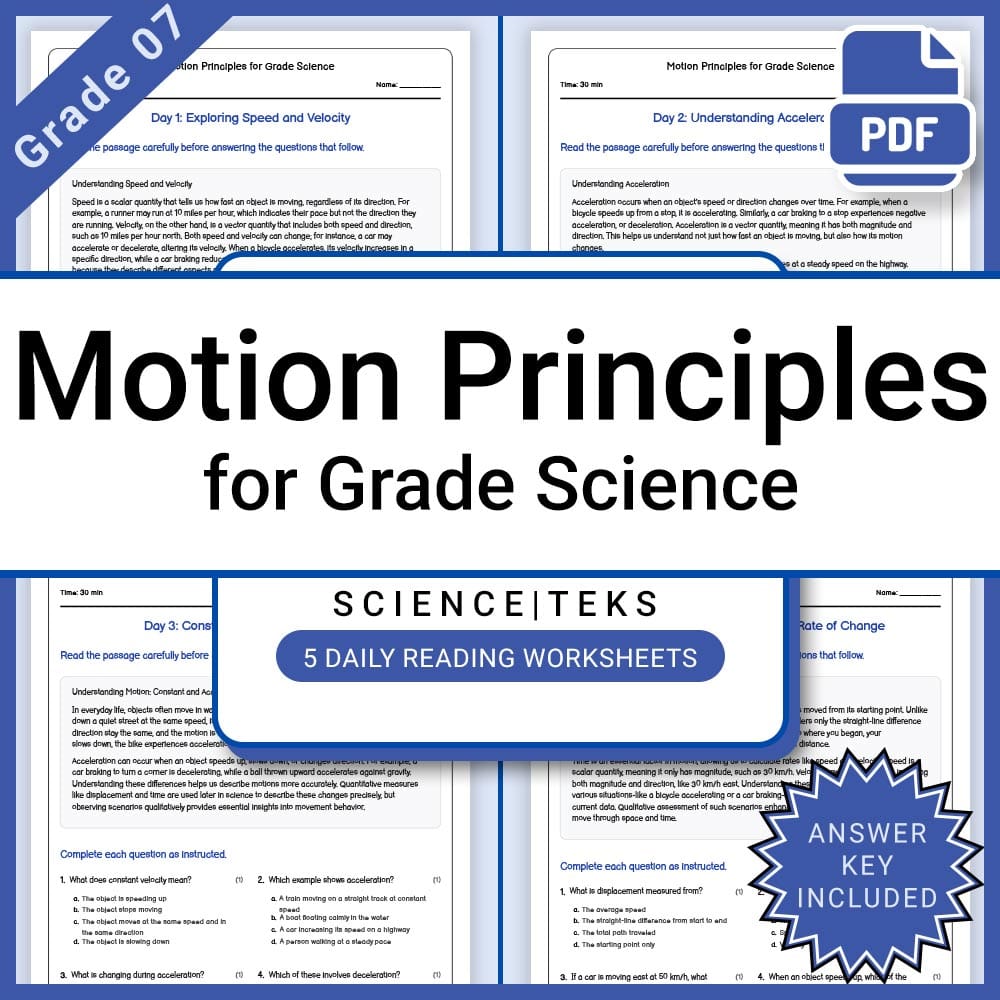
Grade 7 Science Motion Principles Daily Reading Worksheet with Answer Key
Learning Objectives
- Understand the difference between scalar and vector quantities in motion.
- Identify examples of speed, velocity, and acceleration in everyday life.
- Interpret motion scenarios qualitatively and prepare for quantitative analysis.
Also included in: Grade 7 Science Lesson Group Bundle with TEKS Framework +1 more
Instant download

Grade 7 Science | Thermal Effects Worksheet with Short Notes (Printable PDF)
 Created byMeadowlark Worksheets
Learning Objectives
- Understand how temperature influences material properties such as expansion, contraction, and viscosity.
- Connect microscopic particle motion to macroscopic changes in volume, density, and pressure.
- Identify practical applications and consequences of thermal effects in engineering and environmental systems.
Also included in: Grade 7 Science Lesson Group | Thermal Effects and Heat Transfer Worksheets +1 more
Instant download
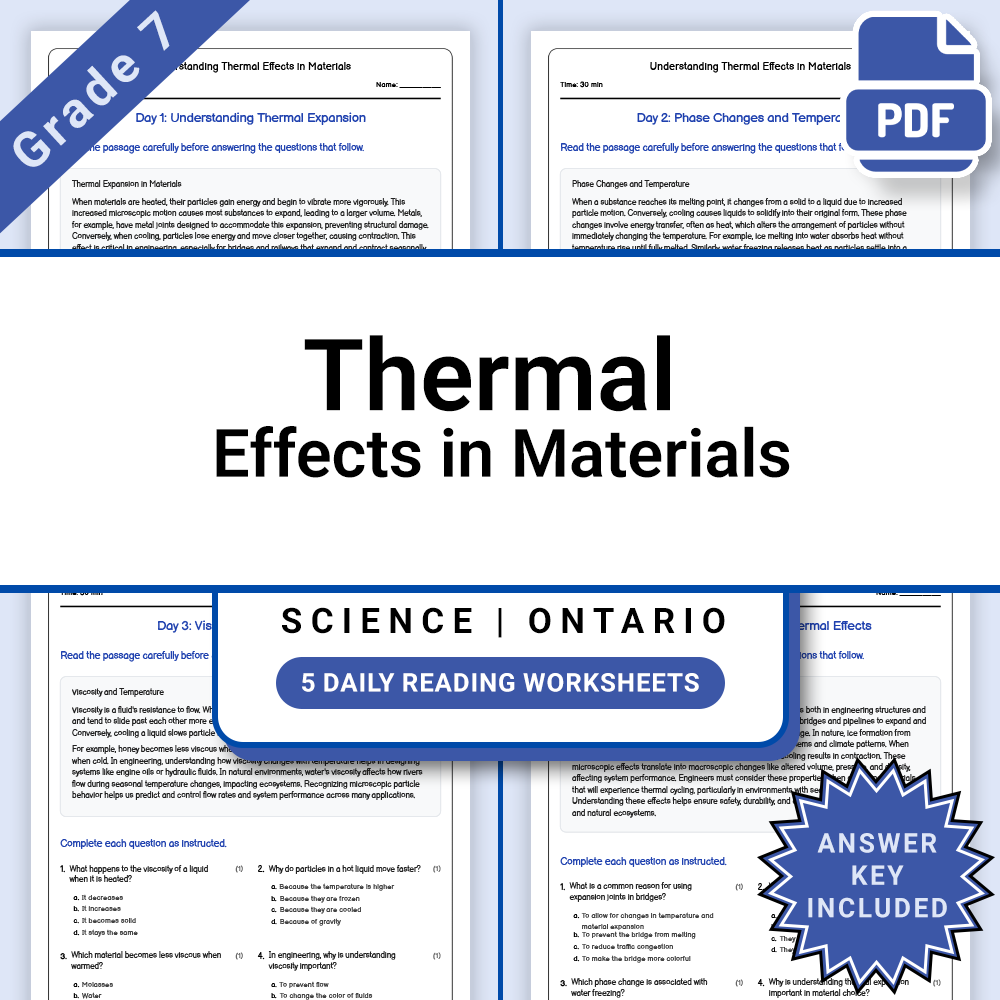
Grade 7 Science – Thermal Effects Daily Reading Worksheet + Answer Key
Learning Objectives
- Explain how temperature affects material properties like expansion, contraction, and viscosity.
- Describe phase changes such as melting and solidification in relation to temperature.
- Connect microscopic particle motion to macroscopic behaviors in materials and systems.
Also included in: Grade 7 Science Lesson Group: Ontario Curriculum | Thermal & Heat Transfer +1 more
Instant download

Grade 7 Science | Thermal Effects Worksheet (Ontario Standard) PDF
Created byEvergreen Desk EducationLearning Objectives
- Explain how temperature changes cause thermal expansion and contraction in solids and affect volume and density.
- Describe how phase changes (melting/freezing) depend on temperature and how they influence systems.
- Use particle motion to connect microscopic behavior to macroscopic changes such as pressure, volume, and flow.
Also included in: Grade 7 Thermal Heat Transfer Science Lesson Bundle: Ontario Framework +1 more
Instant download
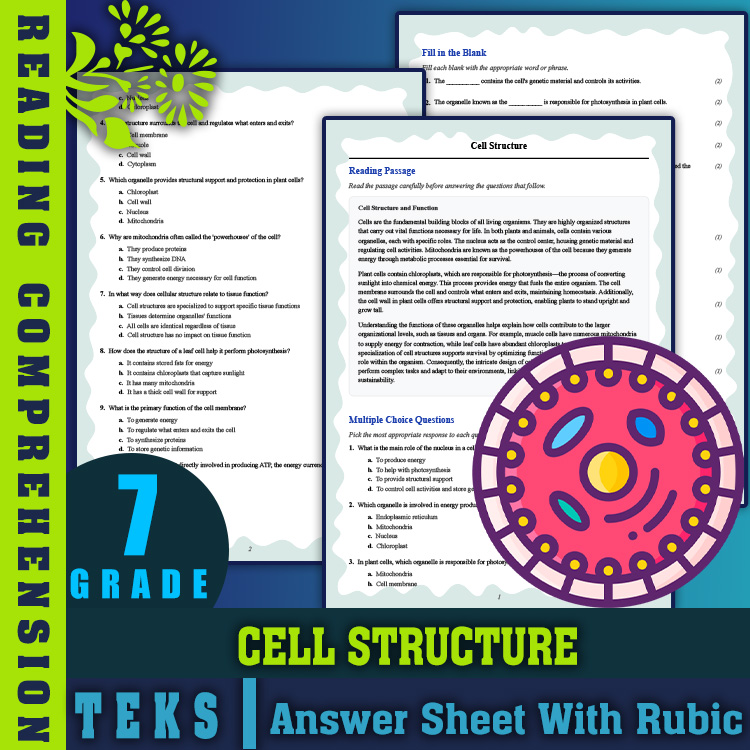
Grade 7 Science | Cell Structure Reading Worksheets (PDF + Answer Key)
Learning Objectives
- Describe the basic structures and functions of key cell organelles.
- Contrast the roles of nucleus, mitochondria, chloroplasts, and cell membranes in organisms.
- Explain how cellular structures support tissue, organ, and organismal functions.
Instant download

Grade 7 Science | Active Transport Worksheet | BC Aligned
 Created byLumora Learning
Learning Objectives
- Understand the mechanisms of active transport in cells and how molecules are moved against concentration gradients.
- Identify the role of membrane proteins like pumps in active transport.
- Describe vesicular transport processes such as endocytosis and exocytosis.
Instant download

Motion Principles Worksheet for Grade 7 Science | Standards-Aligned Practice
Learning Objectives
- Distinguish speed, velocity, and acceleration using real-life motion examples
- Identify scalar versus vector quantities and explain how direction affects velocity
- Use qualitative reasoning to interpret constant velocity versus changing motion
Instant download

Thermal Effects Test Prep Printables | Grade 7 Science
Created byPrism Point LearningLearning Objectives
- Explain how temperature changes affect material properties such as size, density, and viscosity.
- Describe how microscopic particle motion leads to macroscopic changes like expansion, contraction, and pressure changes.
- Predict how thermal cycling and phase changes can influence the performance and safety of real systems.
Instant download

Grade 7 Motion Basics & Rate of Change Science Reading Worksheet | TEKS
Created byBRIGHT PATH RESOURCESLearning Objectives
- Identify what is changing in a motion description and connect it to rate
- Distinguish speed from velocity and explain acceleration qualitatively
- Interpret motion scenarios using scalar and vector ideas
Also included in: Forces & Energy Grade 7 Science Daily Reading Worksheets Lesson Bundle | TEKS +1 more
Instant download

Grade 7 Science – Mitochondria Energy Daily Reading Worksheet with Answer Key
Learning Objectives
- Identify the parts of mitochondria and their functions
- Explain how mitochondria produce energy for cells
- Understand the structure and function relationship in mitochondria
Also included in: Grade 7 Science Lesson Group Bundle | Cell Structures and Processes +1 more
Instant download

Mitochondria Energy Review Practice Assessment | Grade 7 Science
Created byPrism Point LearningLearning Objectives
- Explain how mitochondria convert chemical energy into ATP during cellular respiration
- Describe how the electron transport chain and membrane gradients help power ATP synthesis
- Connect mitochondrial structure (such as inner membrane folds) to increased energy production
Also included in: Cellular Structure & Function Lesson Bundle | Grade 7 Science | Bc +1 more
Instant download

Grade 7 Mitochondria Energy Worksheet | BC Practice & PDF
Created byClear Sky ClassroomLearning Objectives
- Explain how mitochondria convert chemical energy from food into ATP using cellular respiration.
- Describe how mitochondrial structure (especially the inner membrane folds) supports energy-releasing reactions.
- Use evidence to identify correct statements about electron transport chains and ATP synthesis.
Instant download
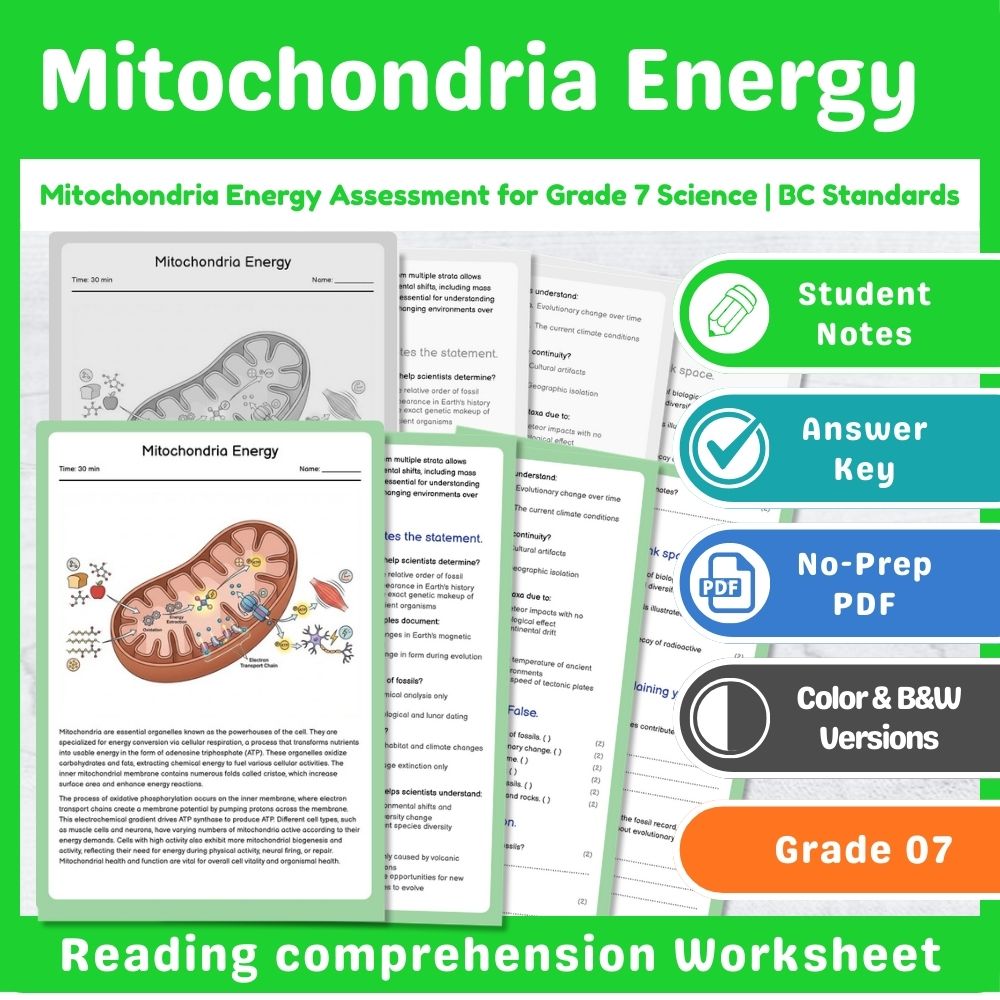
Mitochondria Energy Assessment for Grade 7 Science | BC Standards
Created byPrism Point LearningLearning Objectives
- Understand the structure and function of mitochondria in energy production.
- Explain how mitochondria oxidize nutrients to generate ATP.
- Describe the role of electron transport chains and membrane gradients in energy synthesis.
Instant download

Grade 7 Science | Mitochondria Energy Worksheet | BC Standards
Created byLumora LearningLearning Objectives
- Understand the structure and function of mitochondria in energy production.
- Explain the process of cellular respiration and how ATP is generated.
- Identify the role of the electron transport chain and membrane gradients in energy synthesis.
Instant download

Grade 7 Science | Mitochondria and Cell Energy - Daily Reading Comprehension
Created byCoral Reef LearningLearning Objectives
- Describe the structure of mitochondria and explain how it relates to their function.
- Explain the process of cellular respiration in mitochondria and how ATP is produced.
- Identify the role of mitochondria in different cell types with high energy demands.
Instant download
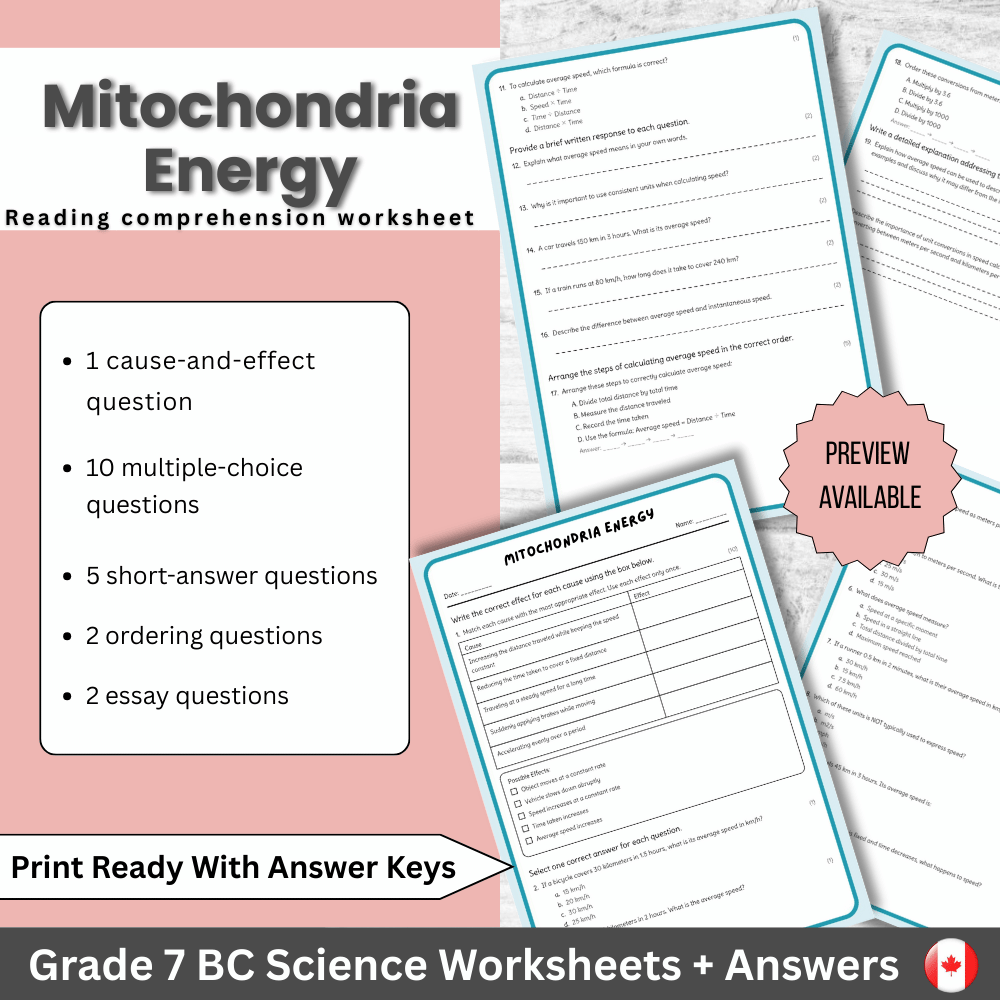
Grade 7 Science | Mitochondria Energy Concept Worksheet (Answers) – BC Standards
Created byBright Mind ResourcesLearning Objectives
- Explain the structure and function of mitochondria in energy production.
- Describe the process of cellular respiration and how mitochondria generate ATP.
- Identify the variations in mitochondrial activity in different cell types.
Instant download

Mitochondria Energy Worksheet | Standards-Aligned Science Practice Grade 7
Learning Objectives
- Understand the structure and function of mitochondria in energy production.
- Identify the processes involved in cellular respiration and ATP synthesis.
- Describe how mitochondrial activity reflects cellular energy demands.
Instant download

Grade 7 Science | Water Cycle Pathways - Daily Reading Comprehension
Created byCoral Reef LearningLearning Objectives
- Identify the different stages of the water cycle.
- Describe how water moves through Earth's systems.
- Understand the role of energy, gravity, and other forces in the water cycle.
Instant download

Water Cycle Pathways Worksheet | Standards-Aligned Science Practice for Grade 7
Learning Objectives
- Describe the main processes involved in the water cycle, including evaporation, condensation, precipitation, and runoff.
- Explain how energy from the Sun drives evaporation and how gravity influences precipitation and runoff.
- Identify the pathways water takes through Earth's systems and understand their connections to weather and climate.
Also included in: Grade 7 Engineering Tradeoffs & Optimization Science Lesson Bundle +1 more
Instant download
About Grade 7 Science Worksheets
Browse 6,126 printable Grade 7 Science worksheets — ready-to-print PDFs with answer keys where available.
Every worksheet on MyTeachingSheets is created by independent teacher-authors and reviewed before publication. All resources download as printable PDFs for classroom, homework, or at-home practice, and many include answer keys. Preview any worksheet free before buying.