
Grade 7 Science Worksheets
6,126 worksheets
Science Worksheet Digital Data Tools | Standard-Aligned Grade 7 Assessment
Learning Objectives
- Explain how digital tools capture, store, and format data for scientific investigation
- Identify key metadata elements such as timestamps, sampling rates, and tags that improve data interoperability
- Use spreadsheet-based thinking to describe basic data organization and preliminary cleaning steps
Instant download
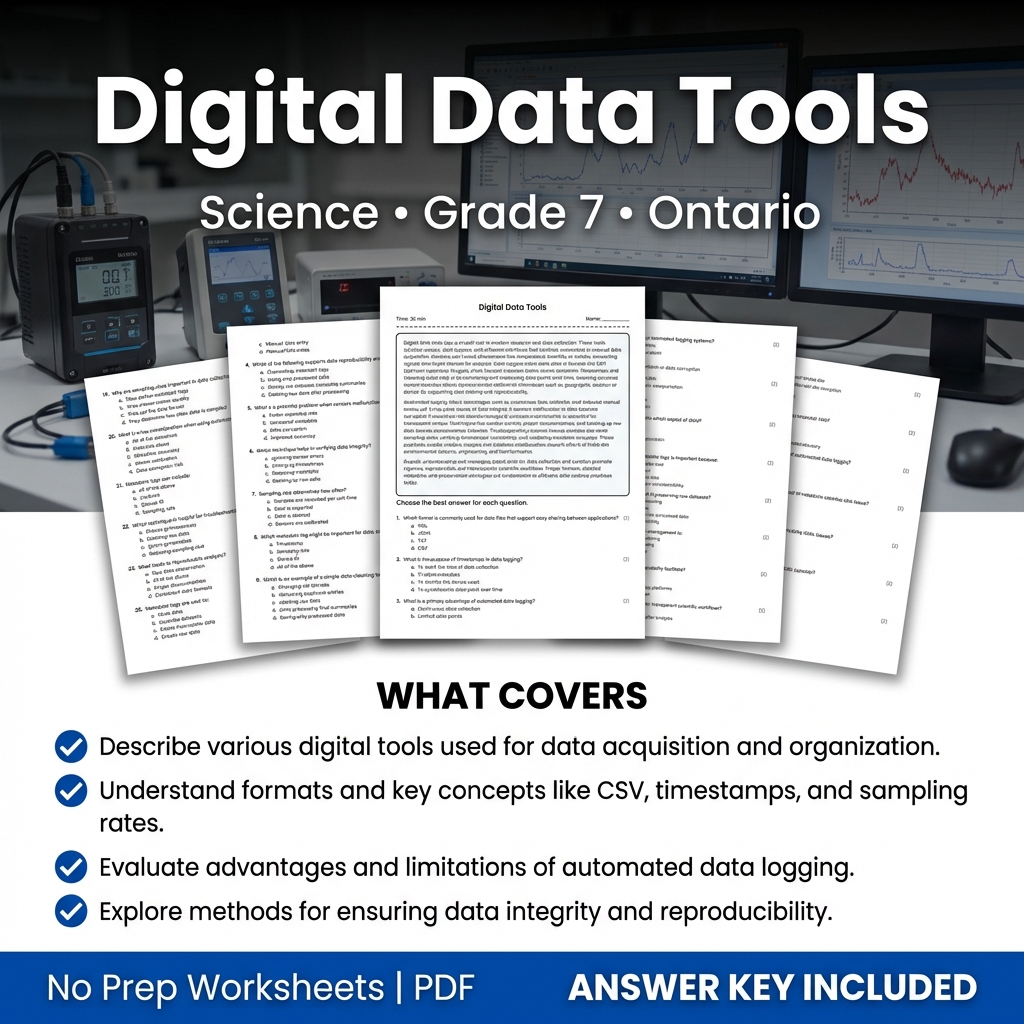
Grade 7 Science Worksheet on Digital Data Tools | Ontario Standards
 Created byCoral Reef Learning
Learning Objectives
- Describe various digital tools used for data acquisition and organization.
- Understand formats and key concepts like CSV, timestamps, and sampling rates.
- Evaluate advantages and limitations of automated data logging.
Instant download
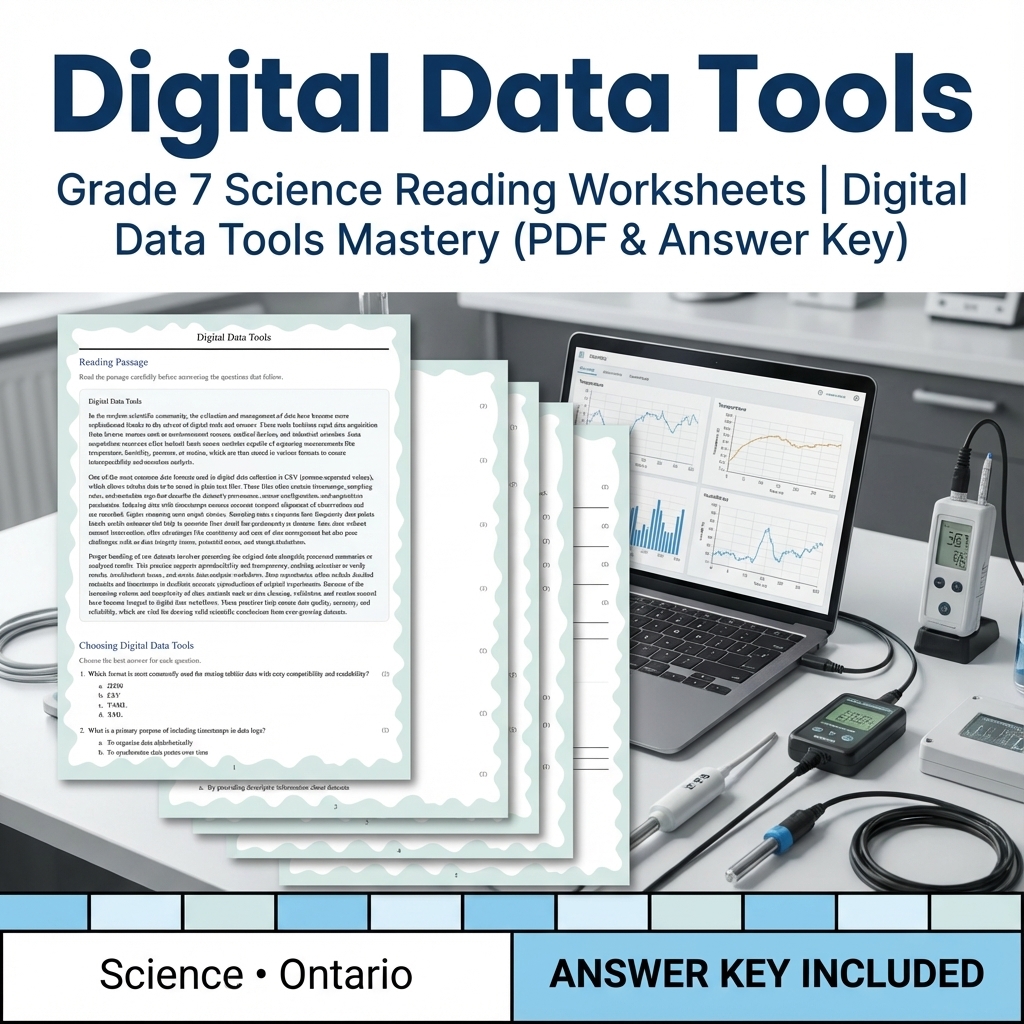
Grade 7 Science Reading | Digital Data Tools Mastery (PDF & Answer Key)
Learning Objectives
- Identify common digital tools used for data acquisition, organization, and preliminary analysis.
- Understand formats such as CSV, sampling rates, timestamps, and metadata tags to support data interoperability.
- Evaluate the advantages and limitations of automated logging and data integrity issues.
Also included in: Grade 7 Science Unit Bundle | Inquiry, Data & Modeling Skills +1 more
Instant download
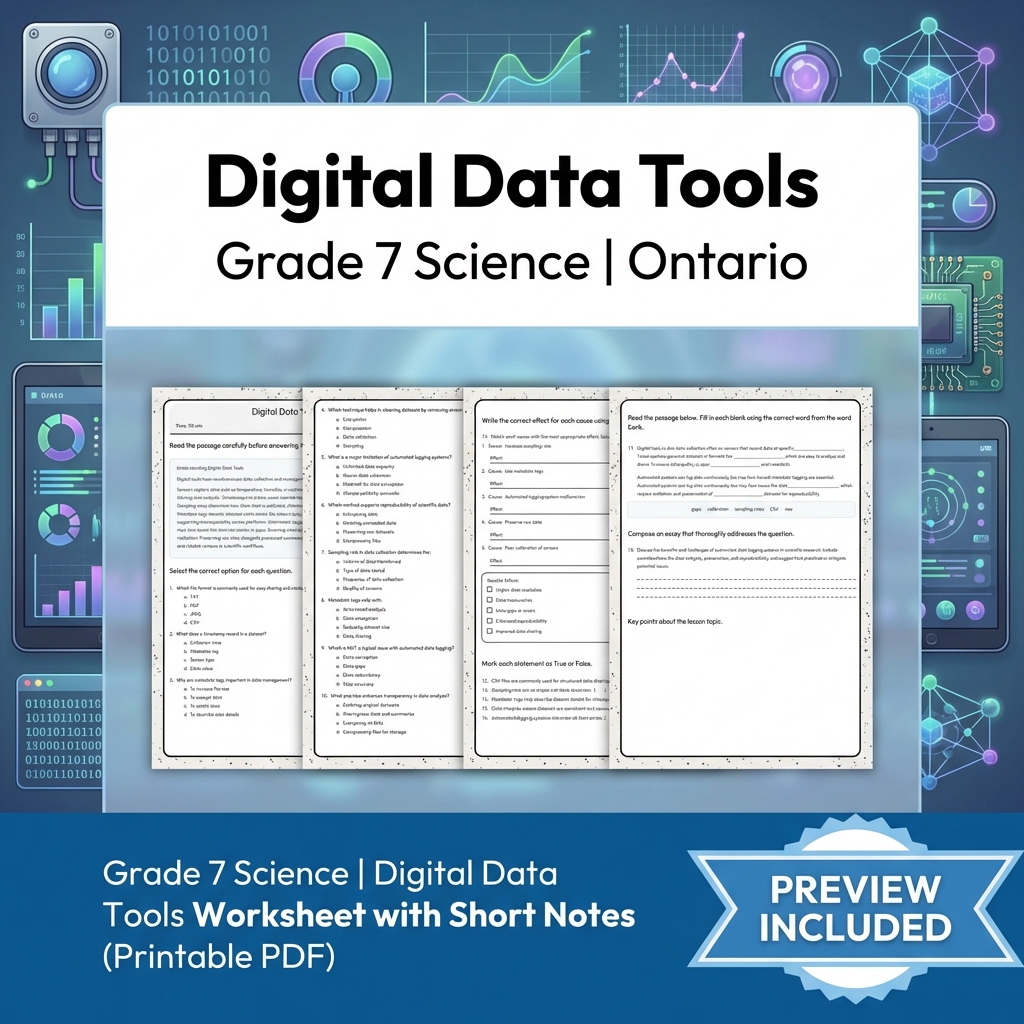
Grade 7 Science | Digital Data Tools Worksheet with Short Notes (Printable PDF)
 Created byMeadowlark Worksheets
Learning Objectives
- Understand different digital tools used for data acquisition, organization, and analysis.
- Identify formats such as CSV, timestamps, and metadata tags that facilitate data interoperability.
- Learn basic techniques for data cleaning, preservation, and reproducibility.
Also included in: Grade 7 Science Lesson Group Bundle – Ontario Framework Worksheets +1 more
Instant download

7th Grade Science | Digital Data Tools Worksheet (PDF+ Answer Key)
 Created byCopper Leaf Classroom
Learning Objectives
- Identify different digital tools used for data acquisition, organization, and preliminary analysis.
- Understand formats such as CSV, timestamps, and metadata tags that enhance data interoperability.
- Evaluate the advantages and limitations of automated data logging.
Instant download

Grade 7 Digital Data Tools Worksheet | Data Logging & Science Skills
 Created byChalk and Compass
Learning Objectives
- Explain how digital tools capture, organize, and analyze scientific data (sensors, spreadsheets, and file formats).
- Identify key data concepts such as timestamps, sampling rates, and metadata tags that support interoperability.
- Apply basic data-cleaning ideas (checking integrity, handling missing values, and preserving raw data for reproducibility).
Also included in: Grade 7 Science Scientific Inquiry & Data Analysis Lesson Bundle | Ontario +1 more
Instant download

Species Interactions Worksheet | Grade 7 NGSS Food Webs Ecology Activity
 Created byAmber Owl Education
Learning Objectives
- Explain how predation, competition, parasitism, mutualism, and commensalism affect populations in both terrestrial and aquatic ecosystems.
- Use food webs and interaction networks to trace direct and indirect (cascading) effects between species.
- Make evidence-based claims about interaction strength using examples such as predator-prey cycles and invasive species.
Also included in: Grade 7 Science Ecosystems and Food Webs Lesson Bundle | NGSS +1 more
Instant download

Species Interactions Worksheet | NGSS Grade 7 Science Assessment PDF
 Created bySkylark Worksheets
Learning Objectives
- Identify and describe major species interactions (predation, competition, parasitism, mutualism, commensalism) using examples from terrestrial and aquatic ecosystems.
- Explain how direct and indirect effects in food webs can cause cascading changes in community structure.
- Use evidence-based causal reasoning to connect species behavior and resource use (e.g., niche partitioning) to changes in interaction strength.
Also included in: Grade 7 Ecosystem Dynamics Science Lesson Bundle (NGSS) Worksheets +1 more
Instant download
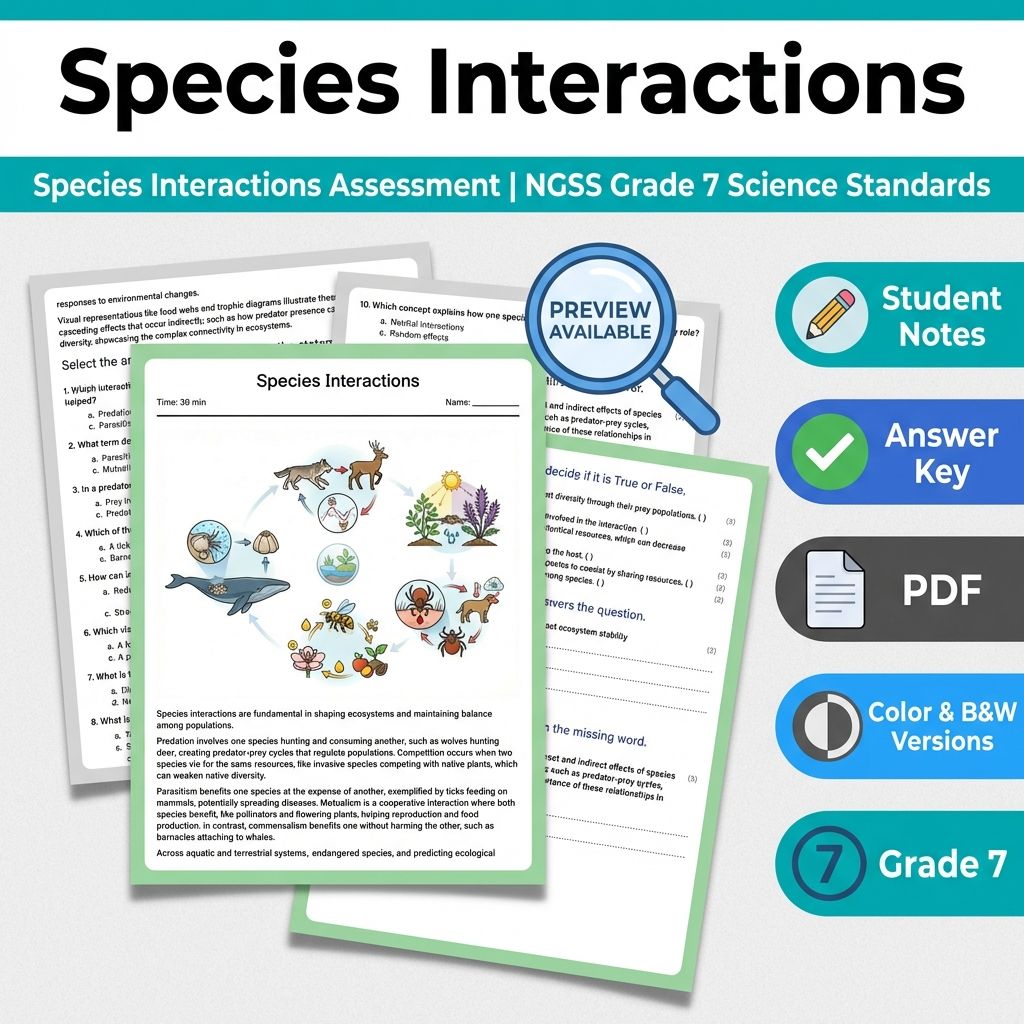
Species Interactions Assessment | NGSS Grade 7 Science Standards
 Created byPrism Point Learning
Learning Objectives
- Understand different types of species interactions such as predation, competition, parasitism, mutualism, and commensalism.
- Analyze influences of species behaviors on community structure and resource sharing in ecosystems.
- Interpret food webs, trophic diagrams, and interaction networks to evaluate direct and indirect effects.
Also included in: Grade 7 Science Mini Bundle | Ecosystems: Interactions & Energy – NGSS +1 more
Instant download
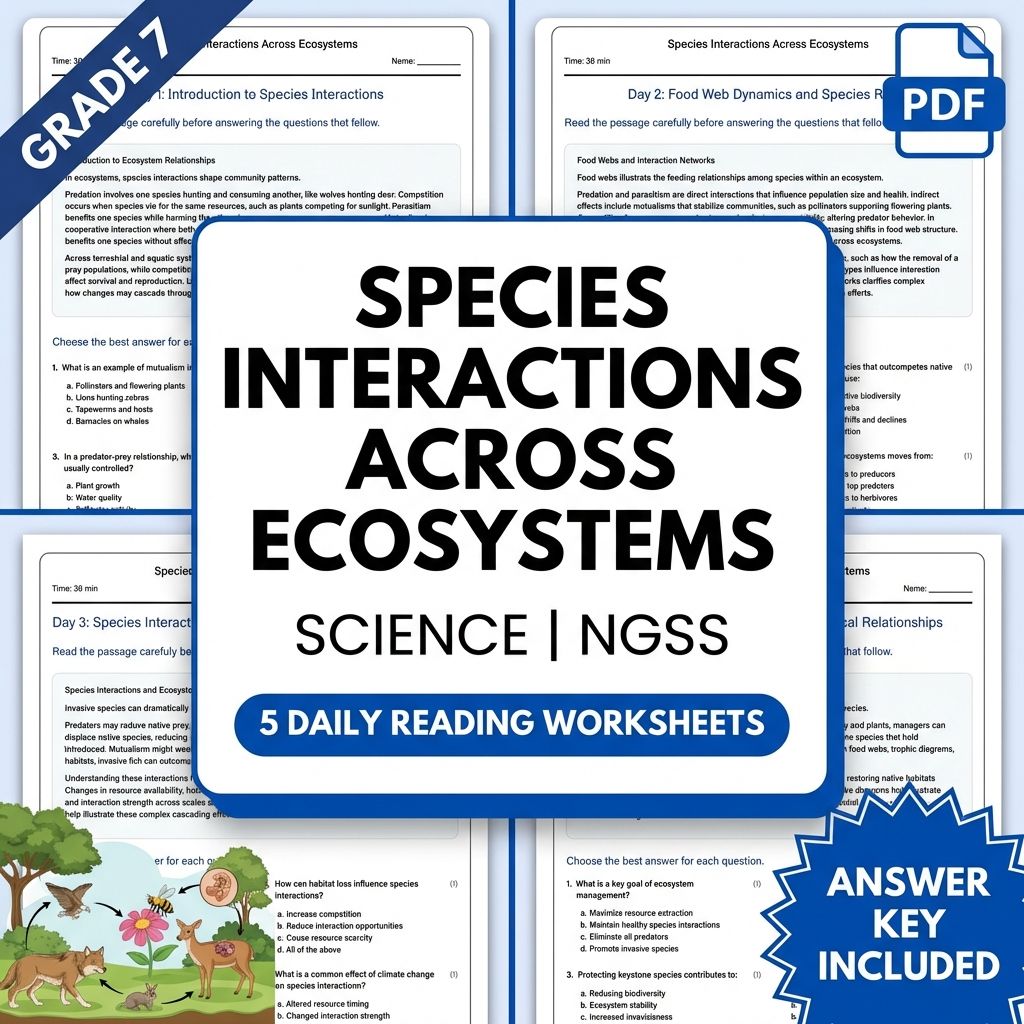
Grade 7 Science – Species Interactions Daily Reading Worksheet(PDF + Answer Key)
Created byCopper Leaf ClassroomLearning Objectives
- Understand different types of species interactions including predation, competition, parasitism, mutualism, and commensalism.
- Identify examples of species interactions in terrestrial and aquatic environments.
- Analyze food web relationships and their effects on community structure.
Instant download
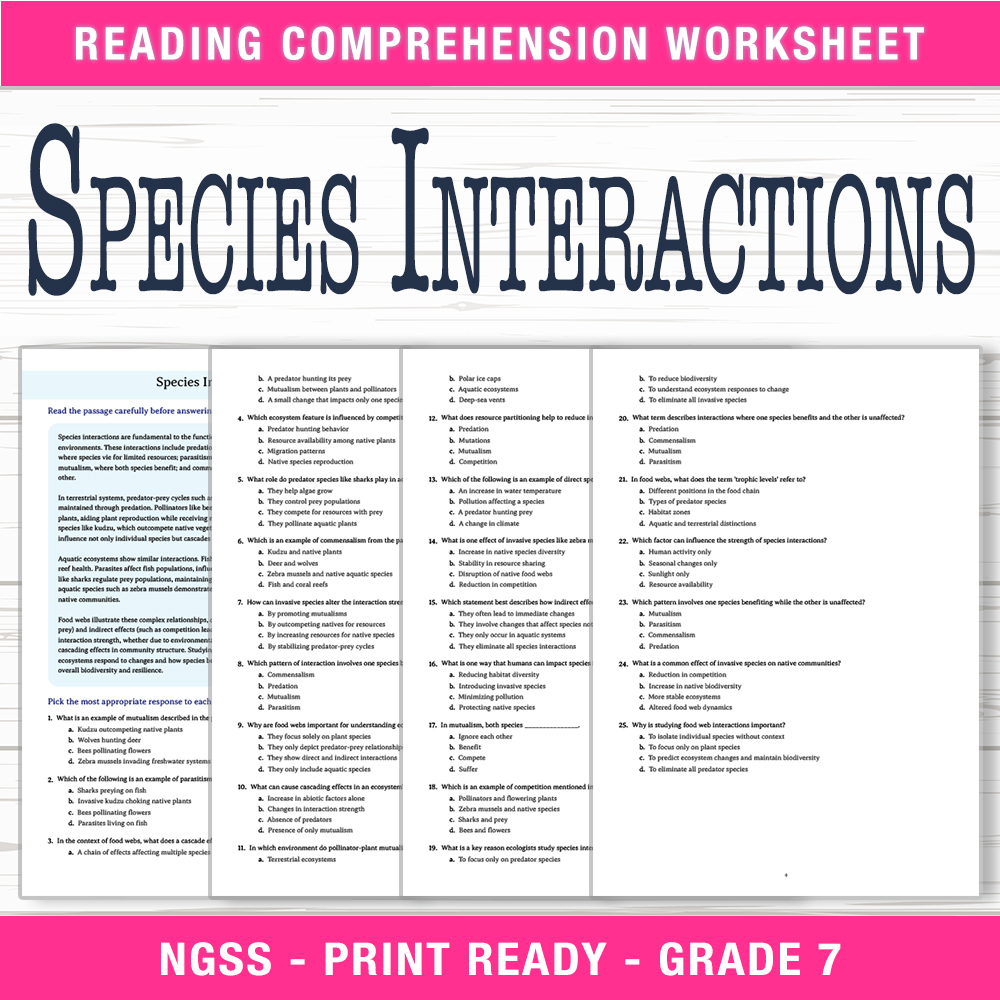
Grade 7 Science | Species Interactions Worksheet (PDF + Answer Key)
 Created byRiverstone Classroom
Learning Objectives
- Understand different patterns of species interactions such as predation, competition, parasitism, mutualism, and commensalism.
- Analyze how species interactions influence community structure and ecosystem dynamics in terrestrial and aquatic systems.
- Interpret food webs and trophic diagrams to identify direct and indirect effects among species.
Also included in: Grade 7 Science | Ecosystems & Biodiversity Unit Worksheet Pack
Instant download

Grade 7 Species Interactions in Ecosystems Worksheet | NGSS Life Science
 Created byBRIGHT PATH RESOURCES
Learning Objectives
- Understand different types of species interactions: predation, competition, parasitism, mutualism, and commensalism.
- Identify predator-prey relationships in forest ecosystems.
- Analyze how species interactions affect community structure and resource distribution.
Also included in: Ecosystems & Biodiversity Grade 7 Science Daily Reading Lesson Bundle | NGSS +2 more
Instant download
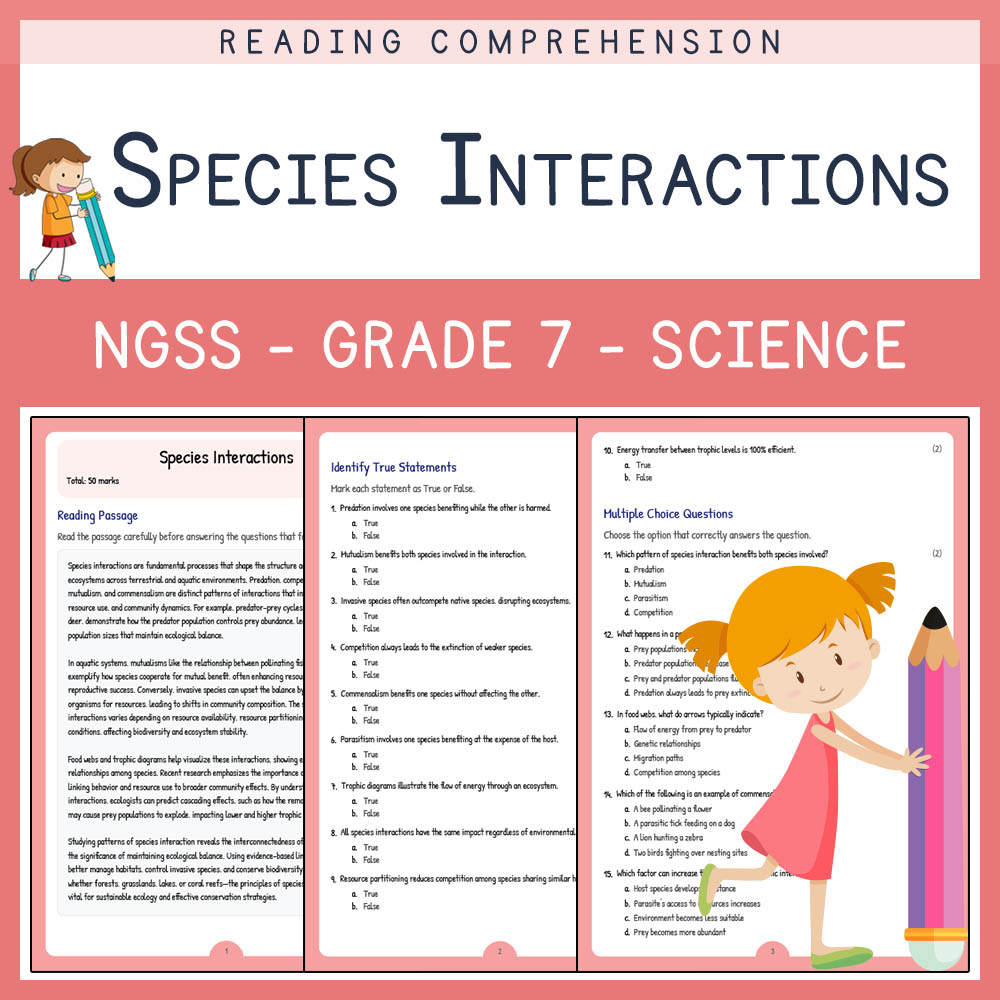
Grade 7 Science | Species Interactions Worksheet & Answer Key (NGSS Aligned)
 Created byLumora Learning
Learning Objectives
- Describe different patterns of species interactions such as predation, competition, parasitism, mutualism, and commensalism.
- Analyze how species interactions influence community structure and resource partitioning across terrestrial and aquatic ecosystems.
- Apply concepts of food webs and trophic diagrams to illustrate the effects of species interactions on ecosystems.
Instant download
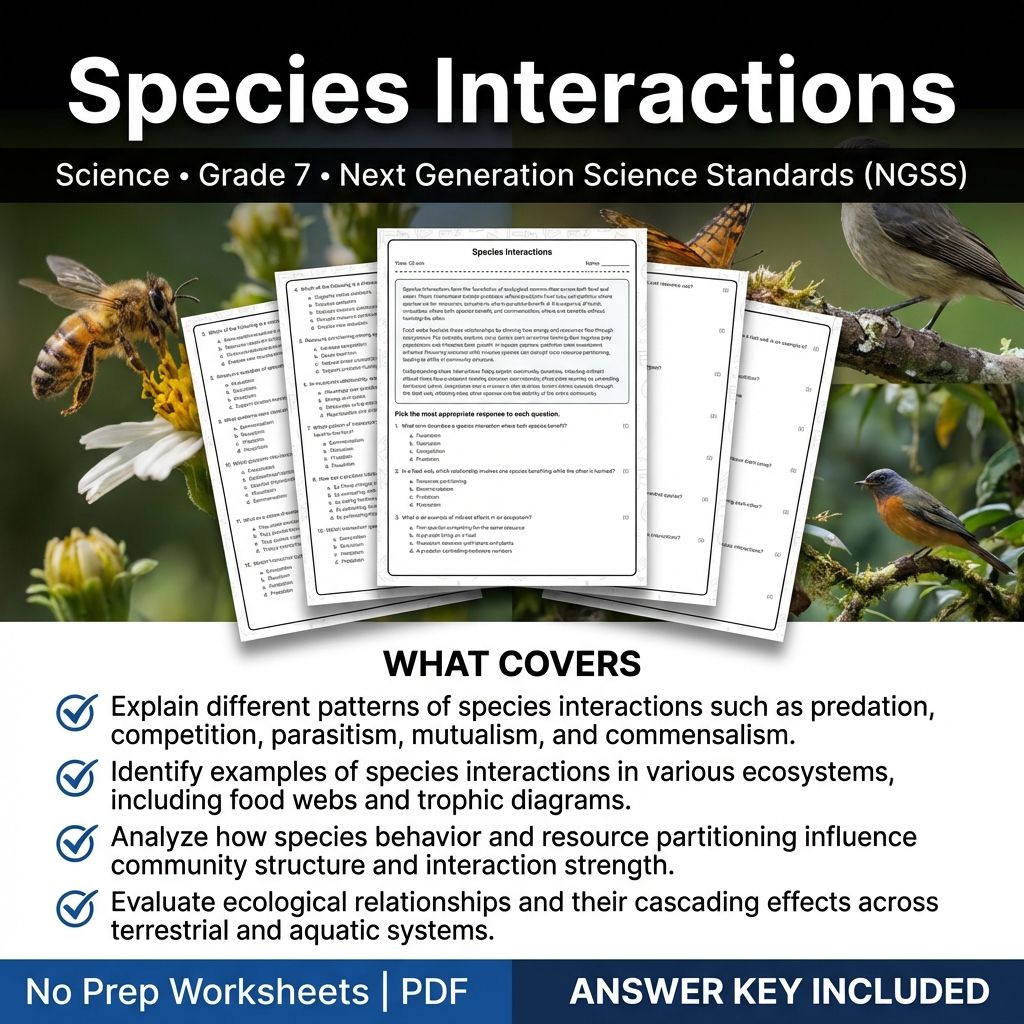
7th Grade Science | Species Interactions Worksheet & Answer Key (Printable PDF)
Created byCoral Reef LearningLearning Objectives
- Explain different patterns of species interactions such as predation, competition, parasitism, mutualism, and commensalism.
- Identify examples of species interactions in various ecosystems, including food webs and trophic diagrams.
- Analyze how species behavior and resource partitioning influence community structure and interaction strength.
Instant download

Grade 7 Species Interactions Worksheet | NGSS Ecosystems & Food Webs Activity
 Created byNorthstar Worksheets
Learning Objectives
- Explain how predation, competition, parasitism, mutualism, and commensalism affect populations in terrestrial and aquatic ecosystems.
- Use food webs and trophic diagrams to describe direct and indirect (cascading) effects of species interactions.
- Interpret evidence-based claims about interaction strength changes, including examples of predator–prey cycles and invasive species.
Also included in: Grade 7 Ecosystems & Food Webs Lesson Bundle | Science | ngss +1 more
Instant download
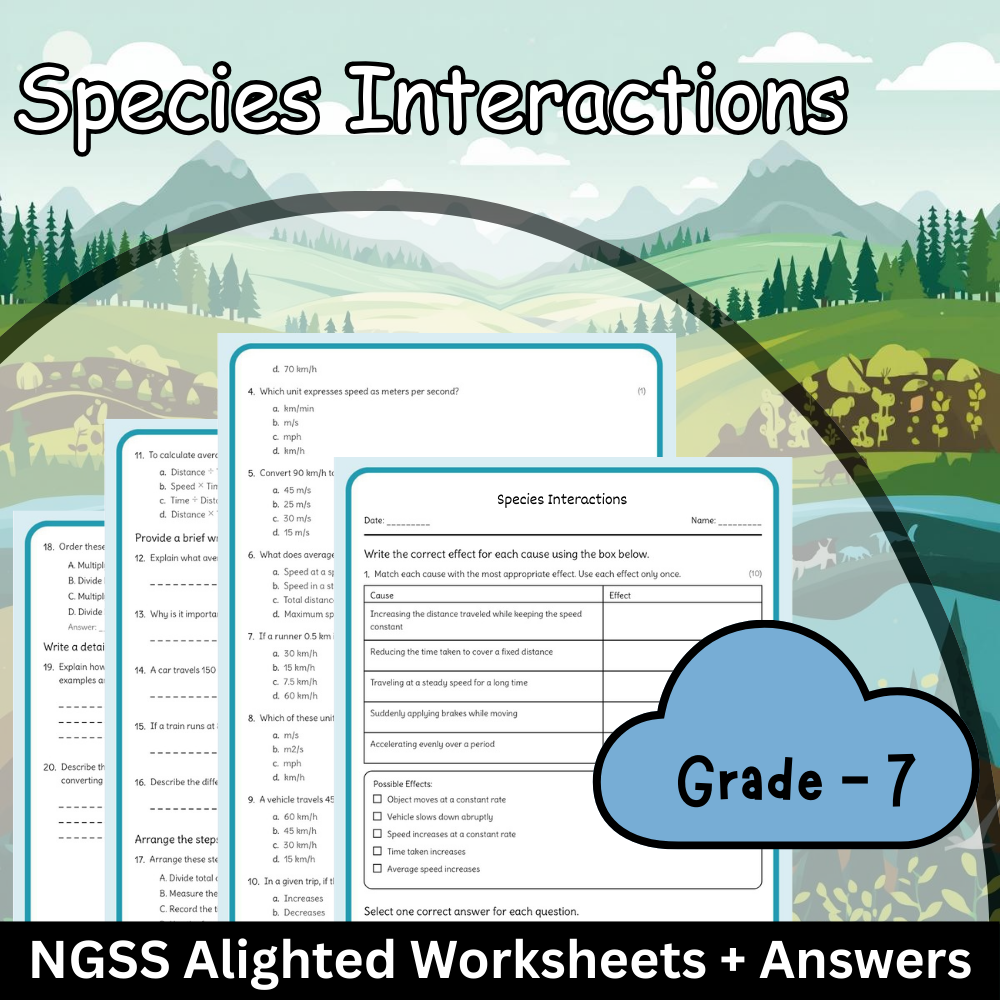
7th Grade Science | Species Interactions Worksheet (PDF) – NGSS Standards
 Created byBright Mind Resources
Learning Objectives
- Understand different patterns of species interactions such as predation, competition, parasitism, mutualism, and commensalism.
- Analyze the effects of species interactions on community structure and resource partitioning.
- Interpret food web diagrams and trophic networks to identify direct and indirect effects among species.
Instant download

Grade 7 Science | Species Interactions Worksheet with Short Notes (PDF)
Created byMeadowlark WorksheetsLearning Objectives
- Understand various patterns of species interactions such as predation, competition, parasitism, mutualism, and commensalism.
- Analyze how species interactions influence community structures and ecosystem processes.
- Identify examples of species interactions across terrestrial and aquatic environments.
Also included in: Grade 7 Science Ecosystems Unit | Interactions, Energy & Dynamics NGSS Bundle +1 more
Instant download

Grade 7 Science | Species Interactions & Food Webs - Daily Reading Comprehension
Created byCoral Reef LearningLearning Objectives
- Identify predator-prey relationships in various ecosystems.
- Understand the structure of food chains and food webs.
- Recognize different types of species interactions such as predation, competition, parasitism, mutualism, and commensalism.
Instant download
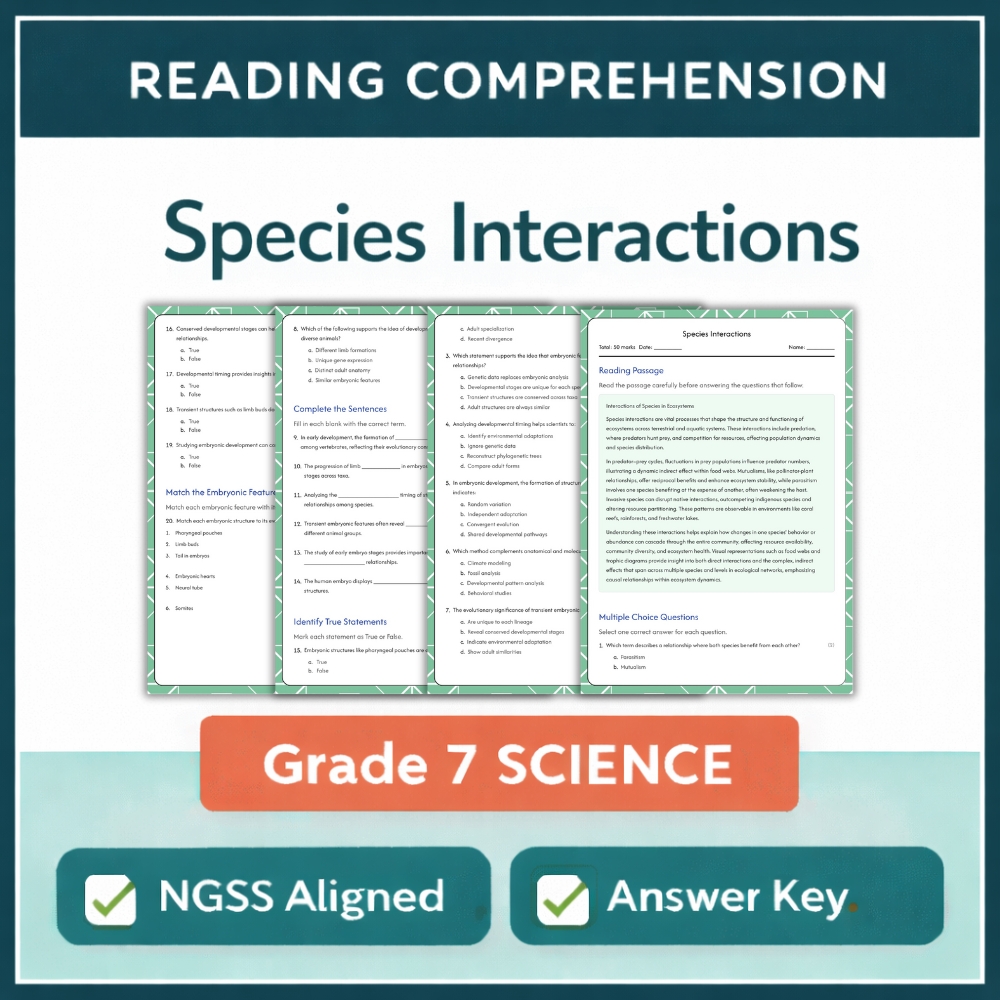
Grade 7 Science | Species Interactions Worksheet (NGSS-Aligned) with Answer Key
 Created byCedar Grove Learning
Learning Objectives
- Explain different patterns of species interactions such as predation, competition, parasitism, mutualism, and commensalism.
- Analyze how species interactions influence community structure and ecosystem dynamics.
- Use food webs and trophic diagrams to illustrate direct and indirect effects among species.
Instant download
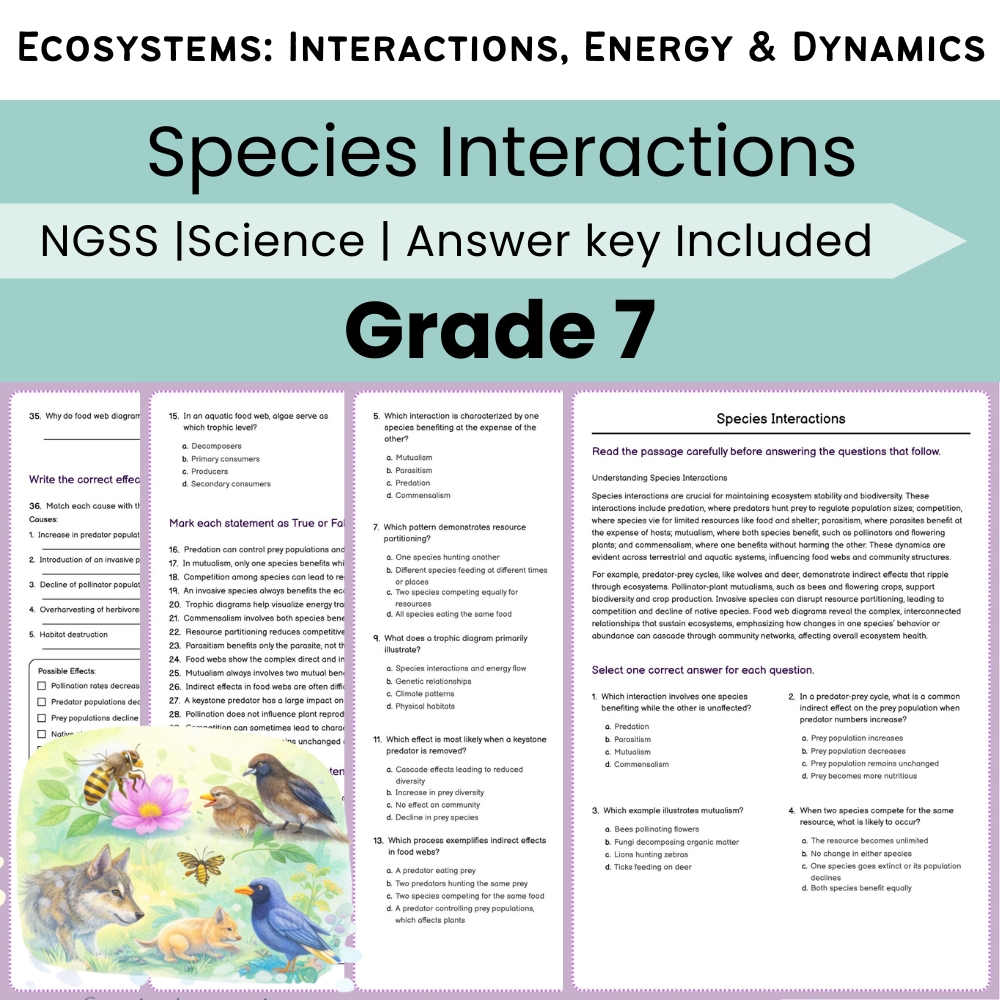
Species Interactions Worksheet | Grade 7 Science Assessment PDF
Learning Objectives
- Understand different patterns of species interactions such as predation, competition, parasitism, mutualism, and commensalism across ecosystems.
- Explain how direct and indirect effects influence food webs and community structure.
- Analyze examples like predator–prey cycles and pollinator-plant relationships to illustrate interaction dynamics.
Also included in: Grade 7 Science Ecosystems Lesson Bundle | NGSS Interactions & Energy +1 more
Instant download

Grade 7 Species Interactions Worksheet | NGSS Practice PDF
 Created byClear Sky Classroom
Learning Objectives
- Describe different types of species interactions such as predation, competition, parasitism, mutualism, and commensalism.
- Analyze food web diagrams to understand direct and indirect effects among species.
- Identify examples of species interactions in terrestrial and aquatic ecosystems.
Also included in: Grade 7 Ecosystems Interactions Energy Dynamics Science Lesson Bundle: NGSS +1 more
Instant download

Species Interactions Test Prep Worksheets | Grade 7 Science NGSS
Created byPrism Point LearningLearning Objectives
- Explain how predation, competition, parasitism, mutualism, and commensalism affect individual species and populations
- Describe direct and indirect effects in food webs using evidence-based causal reasoning
- Interpret interaction networks and trophic diagrams to predict cascading impacts across ecosystems
Also included in: Grade 7 Biodiversity & Ecosystem Stability Science Lesson Bundle | NGSS
Instant download
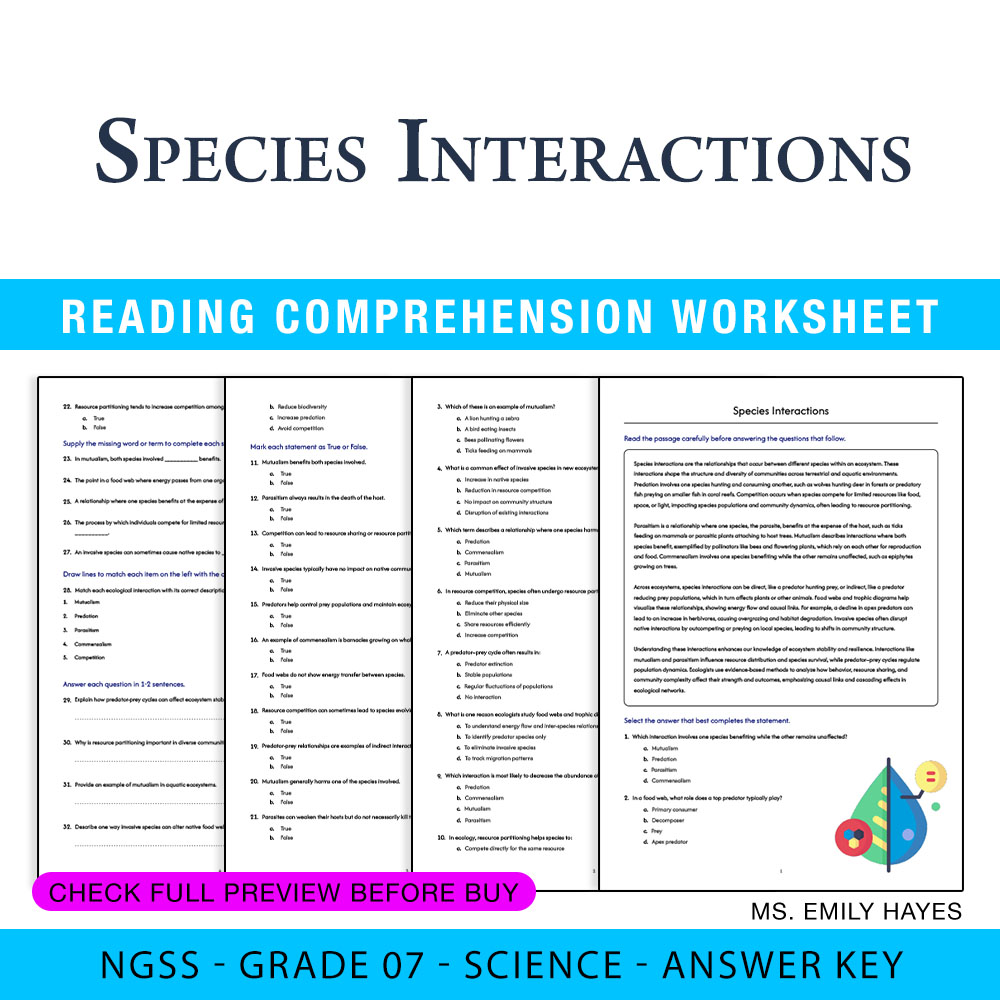
7th Grade Science | Species Interactions Worksheet (PDF +Answer Key)
Created byCopper Leaf ClassroomLearning Objectives
- Explain different types of species interactions such as predation, competition, parasitism, mutualism, and commensalism across various ecosystems.
- Analyze food web diagrams to identify direct and indirect effects among species.
- Describe how species behavior and resource partitioning influence community structure and interaction strength.
Instant download

Species Interactions and Food Webs Worksheets | Grade 7 Science
 Created byTeachers Club
Learning Objectives
- Explain how predation changes population size over time
- Explain how competition changes population size over time
- Distinguish parasitism, mutualism, and commensalism using evidence
Also included in: Grade 7 Science Ecosystems Worksheets | NGSS Unit Bundle +2 more
Instant download

Species Interactions in Ecosystems Worksheets | Grade 7 Science
 Created bythe curious pencil
Learning Objectives
- Identify predation, competition, parasitism, mutualism, and commensalism
- Explain how species interactions affect populations and communities
- Trace direct and indirect effects through food webs
Also included in: Ecosystems Worksheets Grade 7 Science | NGSS Unit Bundle +2 more
Instant download

Prototyping Methods Test Prep Worksheet | Grade 7 Science | Ontario
Created byPrism Point LearningLearning Objectives
- Compare scaled physical models, digital finite-element models, and laboratory load rigs for evaluating strength, stiffness, and failure modes.
- Explain how instrumentation such as strain gauges and displacement transducers help quantify structural response.
- Identify limitations of scaling, especially material heterogeneity and joint behavior, when using prototypes to guide design revisions.
Instant download
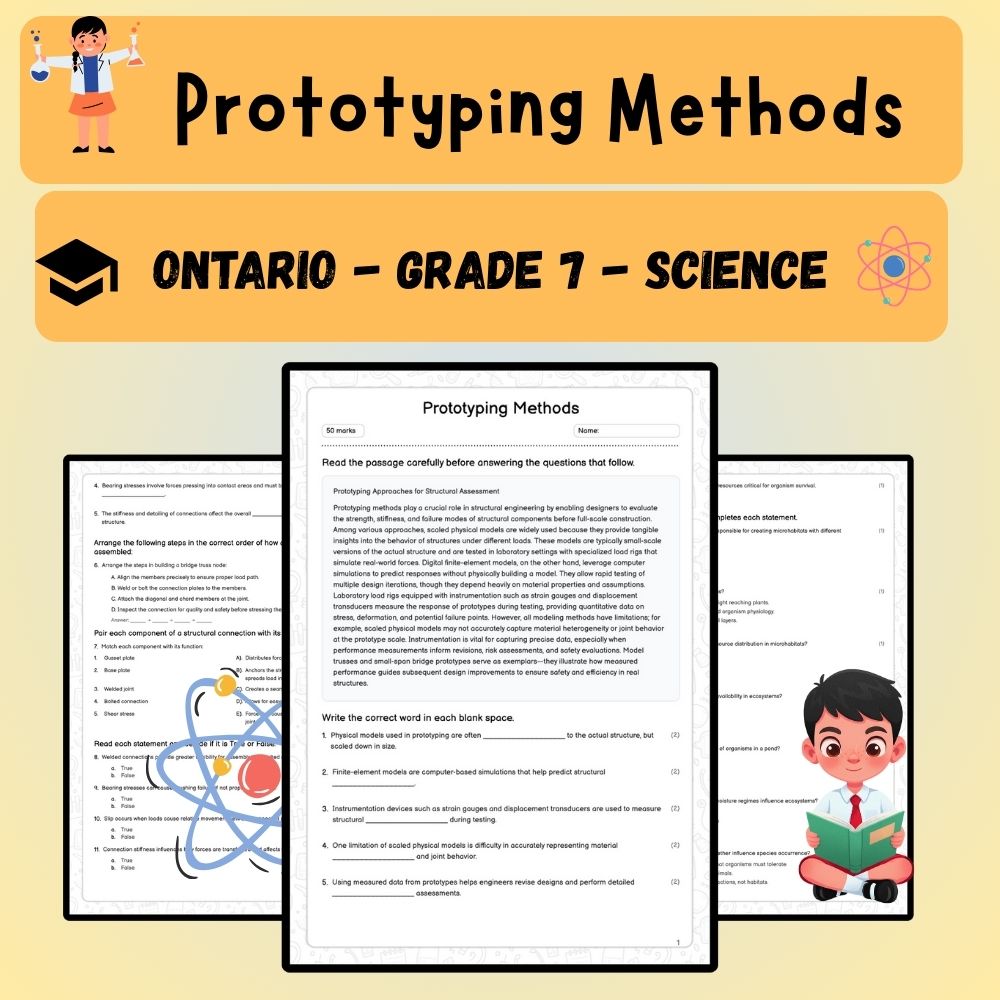
Grade 7 Science | Prototyping Methods Worksheet (PDF )
Created byPrism Point LearningLearning Objectives
- Understand different prototyping approaches including physical models, digital simulations, and laboratory rigs.
- Compare the advantages and limitations of each prototyping method for assessing structural performance.
- Identify instrumentation tools such as strain gauges and displacement transducers used in prototyping.
Also included in: Grade 7 Science Unit | Structural Engineering & Material Testing Worksheets Bundle +1 more
Instant download

Grade 7 Prototyping Methods Worksheet | Ontario Science PDF & Key
Created byClear Sky ClassroomLearning Objectives
- Compare scaled physical models, digital finite-element models, and laboratory load rigs for evaluating strength, stiffness, and failure modes.
- Explain how instrumentation such as strain gauges and displacement transducers measures structural response.
- Describe limitations of prototyping, especially scaling effects on joints and material heterogeneity.
Instant download
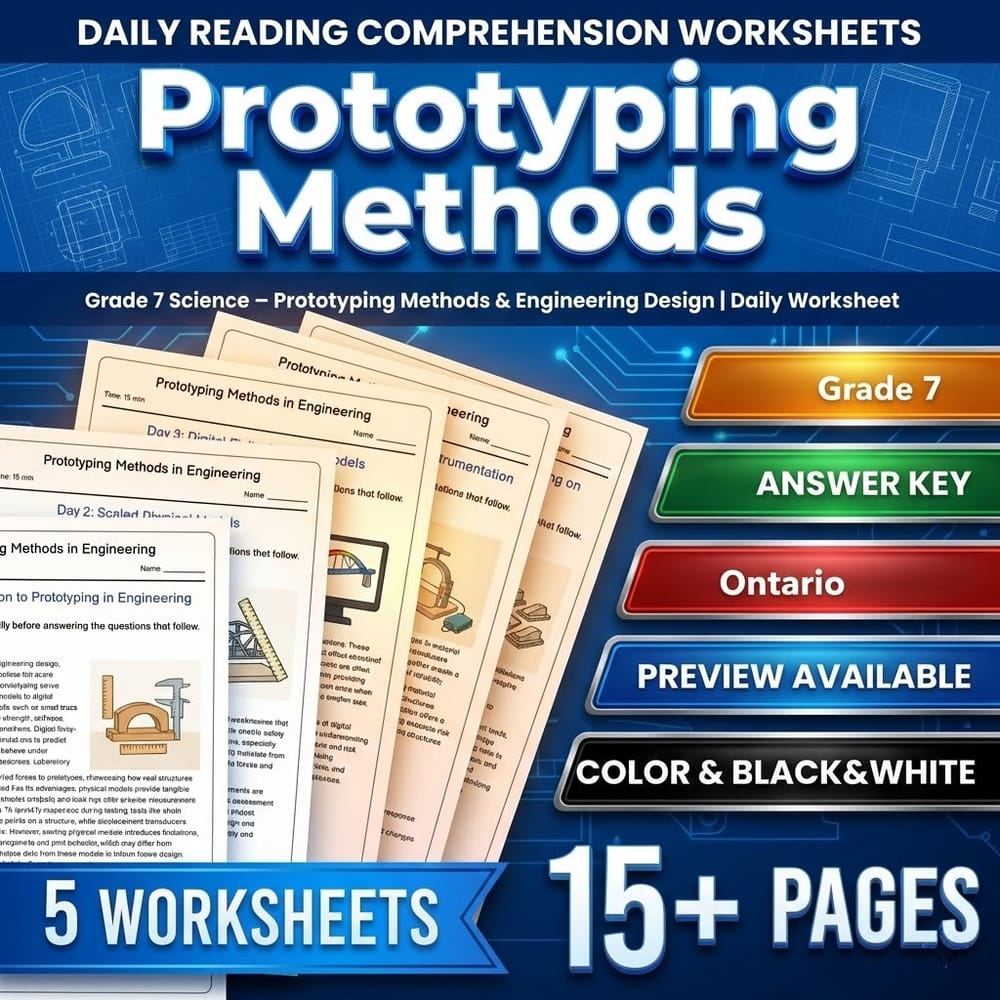
Grade 7 Science – Prototyping Methods & Engineering Design | Daily Worksheet
 Created byQuiet Forest Education
Learning Objectives
- Understand different prototyping approaches including scaled models, digital simulations, and laboratory rigs.
- Identify advantages and limitations of each prototyping method for structural assessment.
- Recognize instrumentation tools like strain gauges and displacement transducers used in prototyping.
Also included in: Structural Engineering Grade 7 Science Daily Reading Worksheets Bundle | Ontario +1 more
Instant download

Prototyping for Structural Performance Worksheets Grade 7 Science
Created byPrism Point LearningLearning Objectives
- Compare physical, digital, and laboratory prototyping methods
- Explain how strain gauges measure structural strain
- Describe how displacement transducers measure structural movement
Also included in: Grade 7 Structural Performance Lesson Bundle | Ontario Science +1 more
Instant download
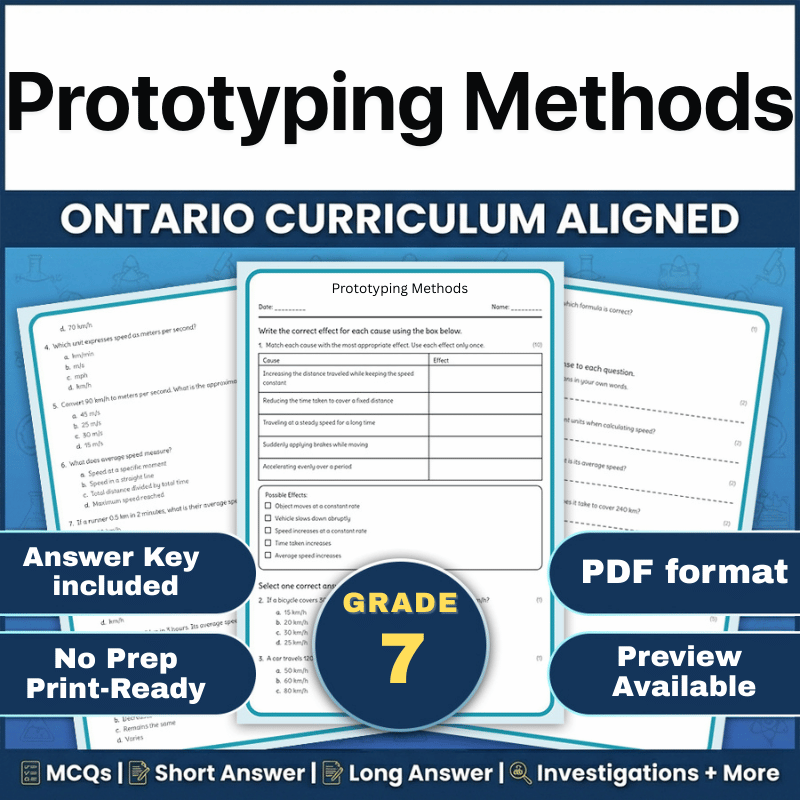
Grade 7 Science – Prototyping Methods Worksheet (PDF) aligned to Ontario
Created byBright Mind ResourcesLearning Objectives
- Understand different prototyping approaches including scaled physical models, digital models, and laboratory rigs.
- Compare advantages and limitations of each prototyping method for assessing structural response.
- Identify instrumentation like strain gauges and displacement transducers used to quantify prototype behavior.
Instant download

Grade 7 Science | Prototyping Methods in Engineering - Reading Comprehension
Created byCoral Reef LearningLearning Objectives
- Understand different prototyping approaches including scaled physical models, digital finite-element models, and laboratory load rigs
- Recognize the advantages and limitations of each prototyping method in assessing structural strength, stiffness, and failure modes
- Identify instrumentation techniques such as strain gauges and displacement transducers used to quantify responses
Instant download
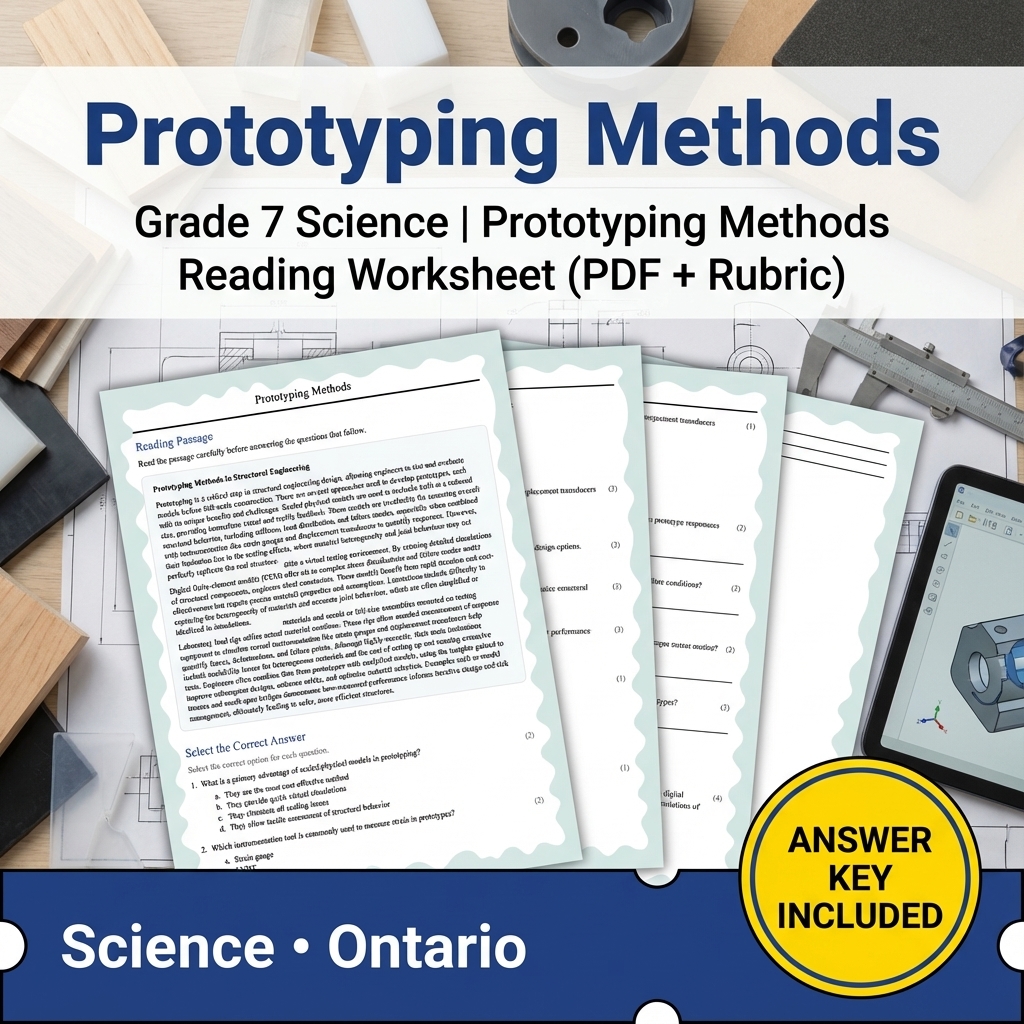
Grade 7 Science | Prototyping Methods Reading Worksheet (PDF + Rubric)
Learning Objectives
- Understand different prototyping approaches including scaled physical models, digital finite-element models, and laboratory load rigs.
- Compare the advantages and limitations of each prototyping method for assessing strength, stiffness, and failure modes.
- Identify instrumentation techniques such as strain gauges and displacement transducers used to quantify structural responses.
Also included in: Grade 7 Science Unit Bundle – Structural Engineering & Material Testing +1 more
Instant download
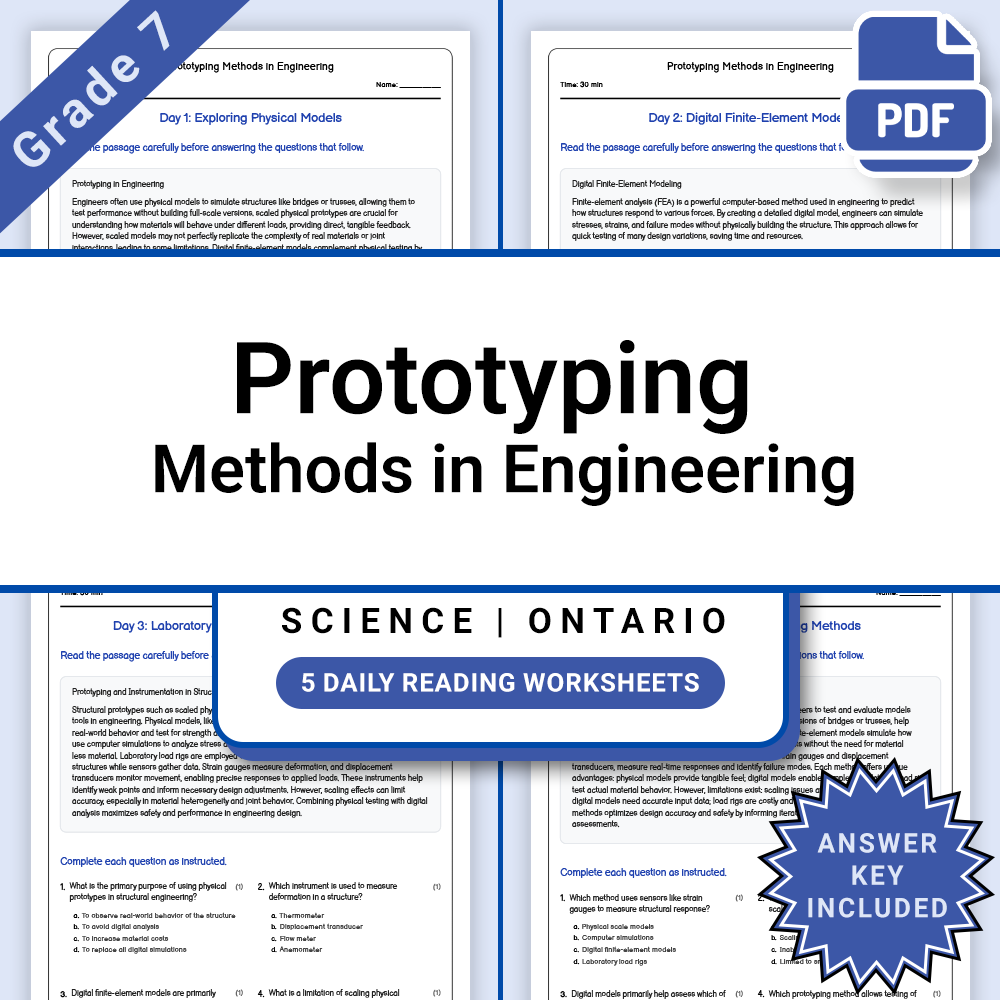
Grade 7 Science – Prototyping Methods in Engineering Worksheet + Answer Key
Learning Objectives
- Understand different prototyping approaches, including physical models, digital models, and laboratory rigs.
- Identify the advantages and limitations of each prototyping method for testing strength and failure modes.
- Recognize instrumentation tools used in prototyping, such as strain gauges and displacement transducers.
Also included in: Grade 7 Science Lesson Bundle: Engineering & Structural Materials Ontario +1 more
Instant download

Grade 7 Science Worksheet – Prototyping Methods (Ontario) Practice (PDF)
 Created byEvergreen Desk Education
Learning Objectives
- Compare scaled physical models, digital finite-element models (FEM), and laboratory load rigs for evaluating strength, stiffness, and failure modes.
- Explain how instrumentation such as strain gauges and displacement transducers are used to quantify structural response.
- Identify limitations of scaling and describe how prototype test results can guide design revisions and risk assessment.
Also included in: Grade 7 Engineering Design & Materials Science Lesson Bundle Ontario +1 more
Instant download
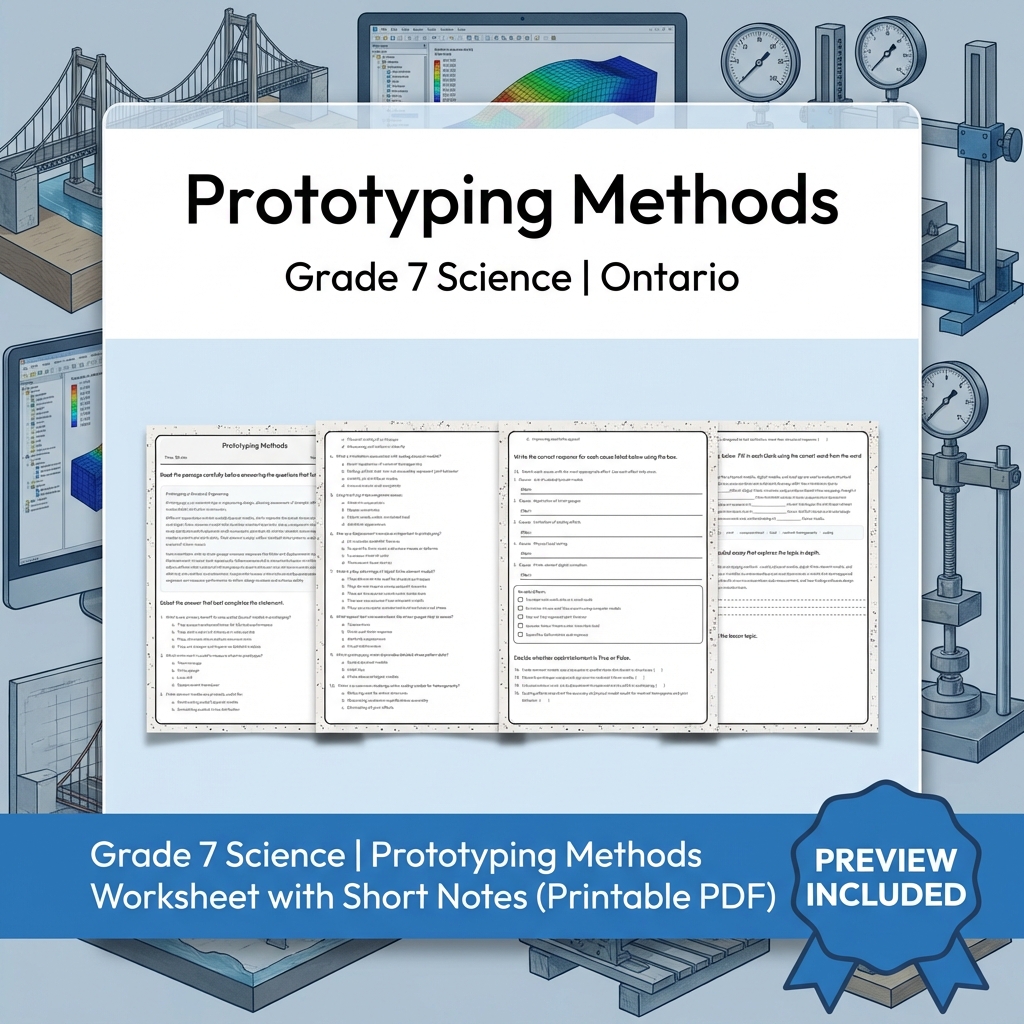
Grade 7 Science | Prototyping Methods Worksheet with Short Notes (Printable PDF)
Created byMeadowlark WorksheetsLearning Objectives
- Understand different prototyping techniques including physical models, digital analysis, and laboratory rigs.
- Compare the advantages and limitations of scaled physical models, finite-element digital models, and load rigs.
- Recognize instrumentation tools such as strain gauges and displacement transducers used to measure responses.
Also included in: Grade 7 Science Lesson Group | Ontario Curriculum Worksheets Bundle +1 more
Instant download

Science Grade 7: Prototyping Methods Worksheet | Grade 7 Science
Learning Objectives
- Compare scaled physical models, digital finite-element models, and laboratory load rigs for testing strength, stiffness, and failure modes
- Explain how instrumentation such as strain gauges and displacement transducers helps quantify structural response
- Describe limitations of prototyping, including scaling issues for material heterogeneity and joint behavior
Instant download

Grade 7 Science – Prototyping Methods & Engineering | Daily Reading Worksheet
Created byBright Mind ResourcesLearning Objectives
- Understand different prototyping approaches, including physical models, digital simulations, and laboratory rigs.
- Identify the advantages and limitations of each prototype type for assessing strength, stiffness, and failure modes.
- Learn about instrumentation like strain gauges and displacement transducers used in measuring prototype responses.
Also included in: Structural Eng. Grade 7 Science Daily Reading Worksheets Lesson Bundle | Ontario +1 more
Instant download

Grade 7 Science Design Criteria Worksheet PDF | California Standards STEM
Created byEvergreen Desk EducationLearning Objectives
- Explain the difference between design criteria and design constraints in a solution design.
- Write clear, testable design criteria using measurable success targets.
- Use constraints (materials, safety, cost, and science principles) to narrow possible solutions.
Instant download

Grade 7 Science – Design Criteria & Constraints Daily Reading Worksheet
Created byBright Mind ResourcesLearning Objectives
- Understand what design criteria are and why they are important.
- Identify various types of constraints that influence a design.
- Learn how to specify clear and precise design goals.
Also included in: Grade 7 Engineering Tradeoff Mapping Science Lesson Bundle California Standards +1 more
Instant download

Grade 7 Design Criteria Worksheet | NCSS Practice PDF
Created byClear Sky ClassroomLearning Objectives
- Explain how design criteria describe what a solution must achieve in measurable ways.
- Differentiate design criteria from constraints and identify common examples of each.
- Use criteria and constraints to evaluate whether a design is acceptable, safe, and effective.
Instant download

Design Criteria California Standards Assessment | Grade 7 Science
Created byPrism Point LearningLearning Objectives
- Explain how design criteria and constraints guide the success of a science/engineering solution.
- Identify examples of measurable criteria and relevant constraints in everyday design problems.
- Use criteria and constraints to evaluate whether a proposed solution is acceptable.
Also included in: Grade 7 Science Engineering Assessment Lesson Bundle: California Standards +1 more
Instant download

Design Criteria Worksheet for Grade 7 Science | Standards-Aligned Practice
Learning Objectives
- Understand the importance of clear criteria and constraints in the design process.
- Identify different types of design criteria and constraints.
- Analyze how criteria and constraints influence design choices.
Also included in: Grade 7 Engineering, Technology, and Applications of Science Lesson Bundle +1 more
Instant download

Grade 7 Science | Understanding Design Criteria - Daily Reading Comprehension
Created byCoral Reef LearningLearning Objectives
- Define what design criteria and constraints are
- Identify different types of criteria in a design
- Recognize constraints that limit design options
Instant download

Grade 7 Science Net Force Worksheet | NGSS Balanced & Unbalanced Forces
Created byNorthstar WorksheetsLearning Objectives
- Define net force as the vector sum of all forces acting on an object.
- Explain how unbalanced forces change an object's motion, including changes in speed and direction.
- Use free-body diagrams to identify forces and determine the direction of the net force.
Also included in: Grade 7 Science Forces & Motion Lesson Bundle | NGSS Equilibrium & Collisions +1 more
Instant download
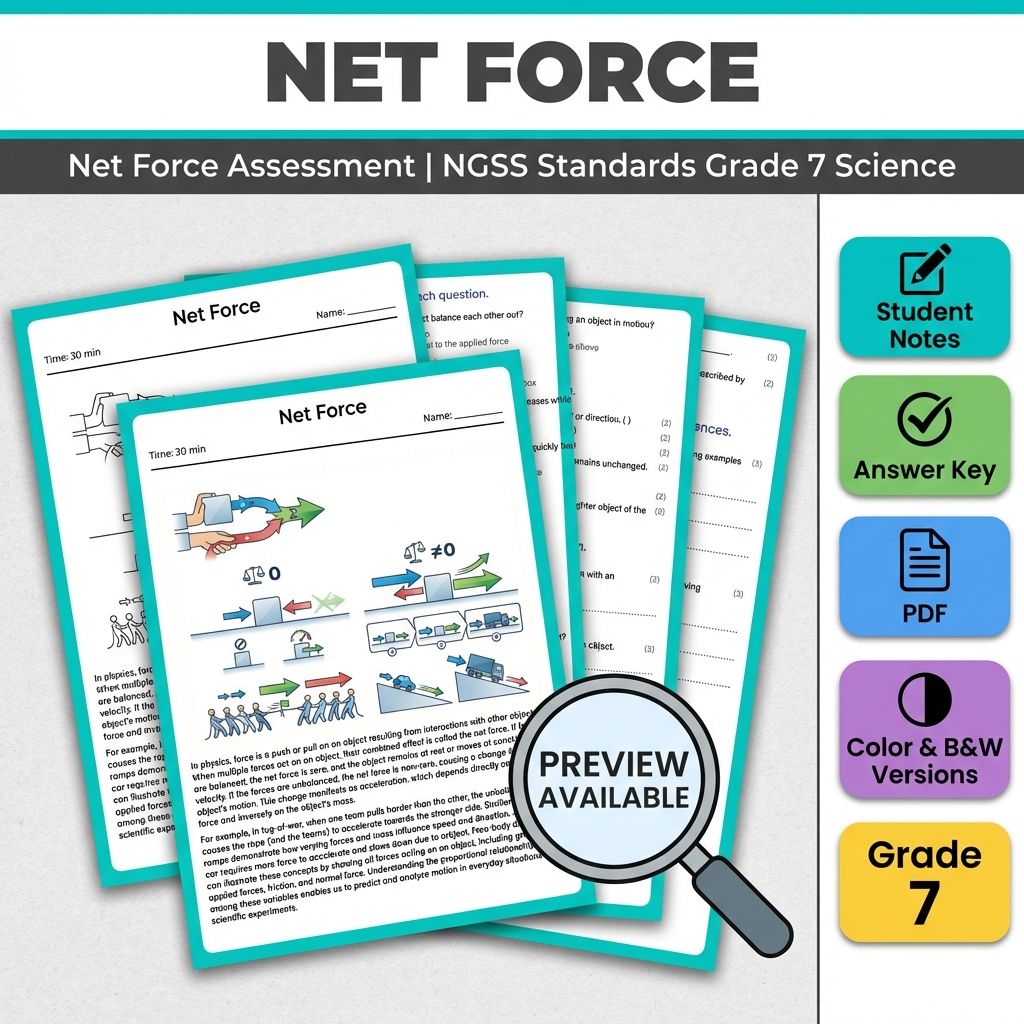
Net Force Assessment | NGSS Standards Grade 7 Science
Created byPrism Point LearningLearning Objectives
- Define net force as the vector sum of forces acting on an object.
- Explain how unbalanced forces cause changes in motion using free-body diagrams.
- Relate net force, mass, and acceleration proportionally through quantitative reasoning.
Also included in: Grade 7 Science Mini Bundle – Forces & Interactions NGSS Unit (Printable) +1 more
Instant download

Grade 7 Net Force Worksheet | NGSS Practice & PDF
Created byClear Sky ClassroomLearning Objectives
- Define net force as the vector sum of all forces acting on an object.
- Explain how unbalanced forces cause changes in motion.
- Describe the relationship between net force, mass, and acceleration using diagrams and reasoning.
Also included in: Grade 7 Net Force, Interactions, Collisions Science Lesson Bundle (NGSS) +1 more
Instant download

Grade 7 Science | Introduction to Net Force - Daily Reading Comprehension
Created byCoral Reef LearningLearning Objectives
- Understand the concept of net force as the vector sum of all forces acting on an object.
- Identify different types of forces such as frictional and applied forces.
- Explain how unbalanced forces cause changes in motion.
Instant download
About Grade 7 Science Worksheets
Browse 6,126 printable Grade 7 Science worksheets — ready-to-print PDFs with answer keys where available.
Every worksheet on MyTeachingSheets is created by independent teacher-authors and reviewed before publication. All resources download as printable PDFs for classroom, homework, or at-home practice, and many include answer keys. Preview any worksheet free before buying.