
Grade 7 Science Worksheets
6,126 worksheets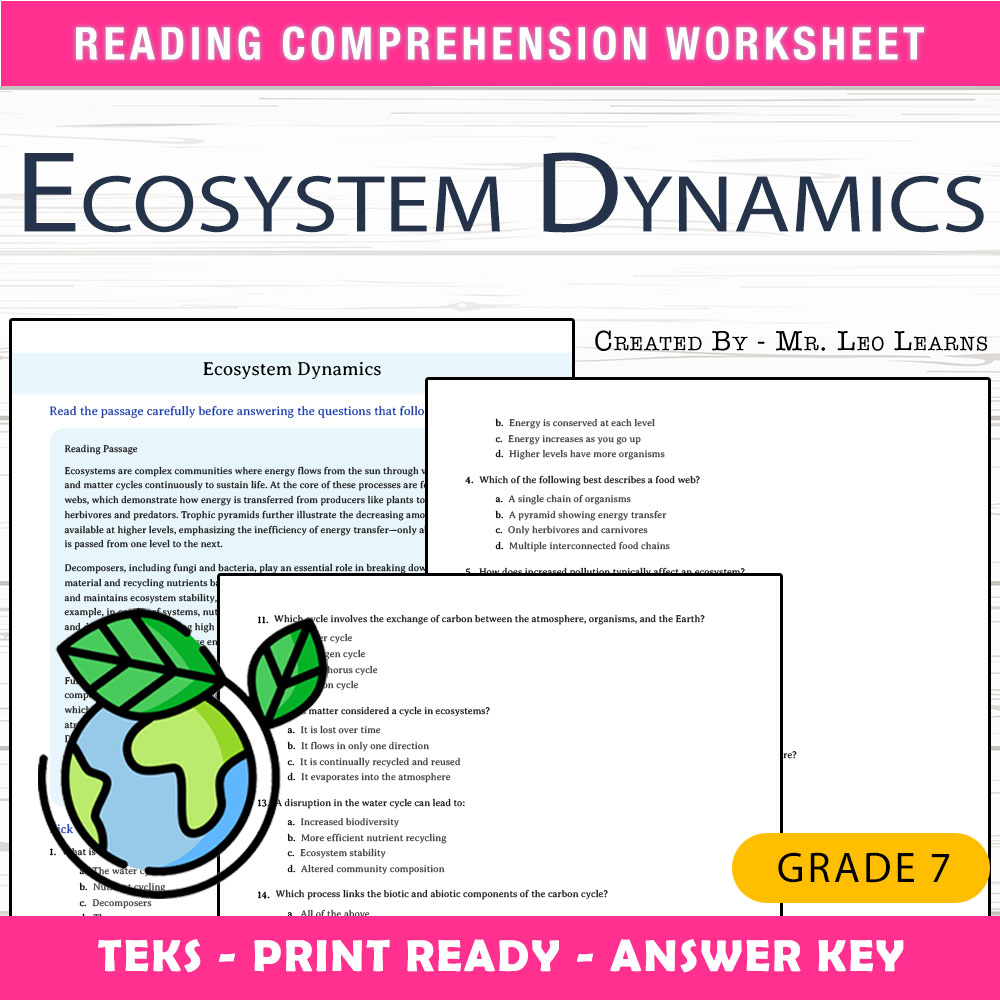
Grade 7 Science — Ecosystem Dynamics Worksheet for Mastery
 Created byThe Resource Hub
Learning Objectives
- Understand energy flow and matter cycling within ecosystems through food chains, webs, and trophic pyramids.
- Explain the roles of decomposers in nutrient recycling and how ecosystem processes are affected by changes in inputs or energy pathways.
- Describe how biotic and abiotic cycles like carbon and water interconnect ecosystems.
Also included in: Grade 7 Science Unit Bundle – Ecosystems, Cells & Adaptations Worksheet Pack +1 more
Instant download

Grade 7 Science | Trophic Energy Transfer - Daily Reading Comprehension
 Created byCoral Reef Learning
Learning Objectives
- Understand the concept of food chains and trophic levels
- Explain how energy transfers from producers to consumers in an ecosystem
- Identify the reasons why food chains have limited numbers of trophic levels
Instant download

Trophic Energy Transfer Assessment | California Standards Grade 7 Science
 Created byPrism Point Learning
Learning Objectives
- Explain how energy moves through trophic levels in a food chain or food web.
- Describe why only a few trophic levels are typically supported in ecosystems.
- Use energy transfer efficiency to predict how biomass changes across trophic levels.
Also included in: Grade 7 Energy Flow and Matter Cycling Science lesson bundle – California Standards +1 more
Instant download

Grade 7 Science – Understanding Trophic Energy Transfer | Reading Worksheet
 Created byBright Mind Resources
Learning Objectives
- Explain the concept of a food chain and how energy flows through it.
- Identify the different trophic levels in an ecosystem.
- Describe how energy is lost at each step of the food chain.
Also included in: Grade 7 Energy Transfer Science Daily Reading: Lesson Bundle | California Std. +1 more
Instant download

Grade 7 Science Trophic Energy Transfer Worksheet | CA Standards
 Created byEvergreen Desk Education
Learning Objectives
- Explain how energy flows through a food chain or food web using the idea of trophic levels.
- Describe why less energy and biomass are available at higher trophic levels.
- Use energy-transfer efficiency to predict how predator populations depend on prey energy.
Instant download

Grade 7 Science | Trophic Energy Transfer Worksheet | California Standards
 Created byLumora Learning
Learning Objectives
- Explain how energy is transferred through trophic levels in a food web
- Describe why energy loss limits the number of trophic levels in food chains
- Use the idea of trophic energy transfer efficiency to predict effects on predator populations
Instant download

Trophic Energy Transfer Worksheet | Standards-Based Practice for Grade 7 Science
Learning Objectives
- Understand how energy is transferred through food webs and the limitations of energy transfer between trophic levels.
- Explain why food chains typically have only a few trophic levels due to energy loss.
- Describe the role of biomass and energy transfer efficiency in predator-prey relationships.
Also included in: Grade 7 Ecosystem Energy & Matter Cycles Science Lesson Bundle +1 more
Instant download

Grade 7 Trophic Energy Transfer Worksheet | NGSS Practice PDF
 Created byClear Sky Classroom
Learning Objectives
- Explain how energy moves through trophic levels in a food web and food chain.
- Describe why only a fraction of energy becomes biomass at each step.
- Interpret how energy transfer efficiency affects the size of predator populations.
Instant download

Trophic Energy Transfer Worksheet Grade 7 Science Food Web Activity
Created byPrism Point LearningLearning Objectives
- Explain how energy transfers through trophic levels in a food web.
- Describe why only a few trophic levels can be supported by available energy and biomass.
- Distinguish between producers, consumers, and how energy transfer efficiency affects predator populations.
Also included in: Life Science - Grade 7 Bundle
Instant download

Grade 7 Science Instrumentation Accuracy Worksheet & Doodle Note
 Created byChalk and Compass
Learning Objectives
- Explain how calibration and traceable reference points improve temperature measurement accuracy.
- Describe how sensor response time, placement, shielding, and thermal contact affect measured temperature in environmental settings.
- Interpret temperature readings using uncertainty, resolution limits, and an uncertainty budget.
Also included in: Grade 7 Science Heat Transfer and Thermal Energy Lesson Bundle | Ontario +1 more
Instant download
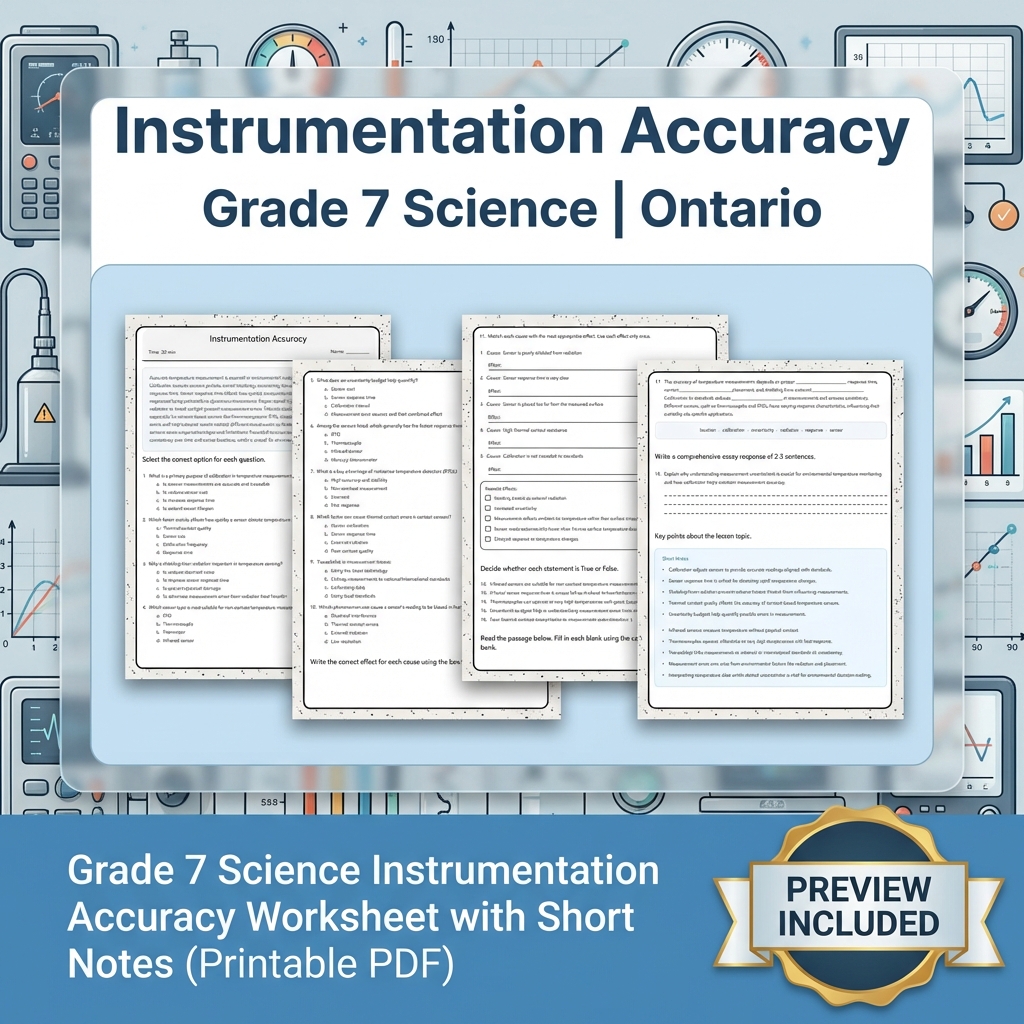
Grade 7 Science Instrumentation Accuracy Worksheet with Short Notes (PDF)
 Created byMeadowlark Worksheets
Learning Objectives
- Understand the concepts of instrumentation calibration and measurement uncertainty in temperature sensing.
- Identify different types of temperature sensors and their performance characteristics.
- Interpret temperature measurements within stated uncertainties and recognize common error sources.
Also included in: Grade 7 Science Lesson Group | Thermal Effects and Heat Transfer Worksheets +1 more
Instant download

Grade 7 Science – Temperature Sensors Daily Reading Worksheet with Answer Key
Learning Objectives
- Identify different types of temperature sensors used in environmental monitoring
- Explain the basic functions of thermocouples, resistance temperature detectors, and infrared sensors
- Describe factors affecting sensor accuracy such as response time, placement, and shielding
Also included in: Grade 7 Science Lesson Group: Ontario Curriculum | Thermal & Heat Transfer +1 more
Instant download
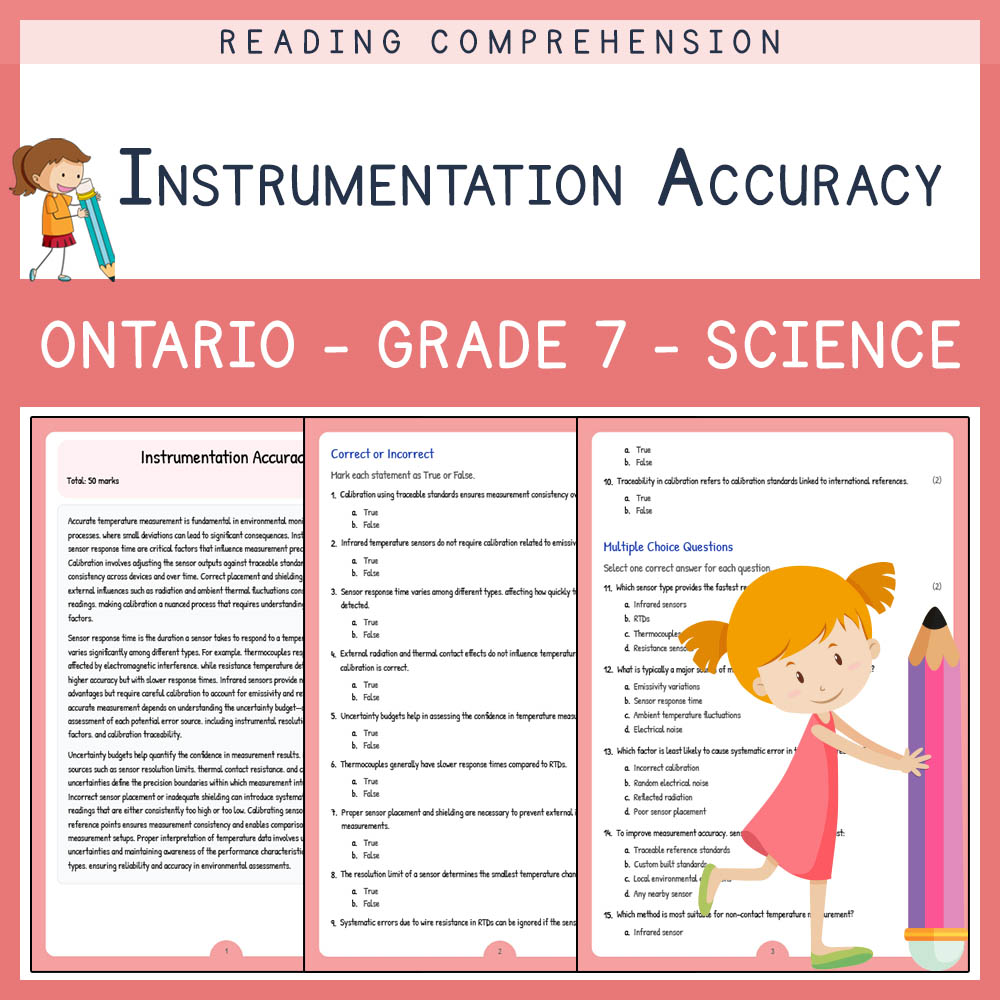
Grade 7 Science Assessment | Instrumentation Accuracy Worksheet | Ontario
Created byLumora LearningLearning Objectives
- Analyze the concepts of sensor response time, spatial placement, and shielding in temperature measurement accuracy.
- Evaluate the differences between thermocouples, resistance temperature detectors, and infrared sensors.
- Understand the role of uncertainty budgets, resolution limits, and error sources in calibration.
Instant download

Grade 7 Science Worksheet: Instrumentation Accuracy | Ontario Standards
Learning Objectives
- Explain how calibration and traceable reference standards improve the accuracy of temperature measurements.
- Identify common sources of measurement error, including response time, spatial placement, radiation effects, and thermal contact.
- Use uncertainty and resolution concepts to interpret temperature readings appropriately.
Instant download

Grade 7 Science – Instrumentation Accuracy Worksheet (Ontario Standards) (PDF)
Created byEvergreen Desk EducationLearning Objectives
- Explain how calibration, traceable reference points, and uncertainty affect temperature measurements.
- Identify common sources of temperature error, including sensor response time, spatial placement, shielding, and thermal contact effects.
- Compare thermocouples, resistance temperature detectors (RTDs), and infrared (IR) sensors for environmental temperature monitoring.
Also included in: Grade 7 Thermal Heat Transfer Science Lesson Bundle: Ontario Framework +1 more
Instant download
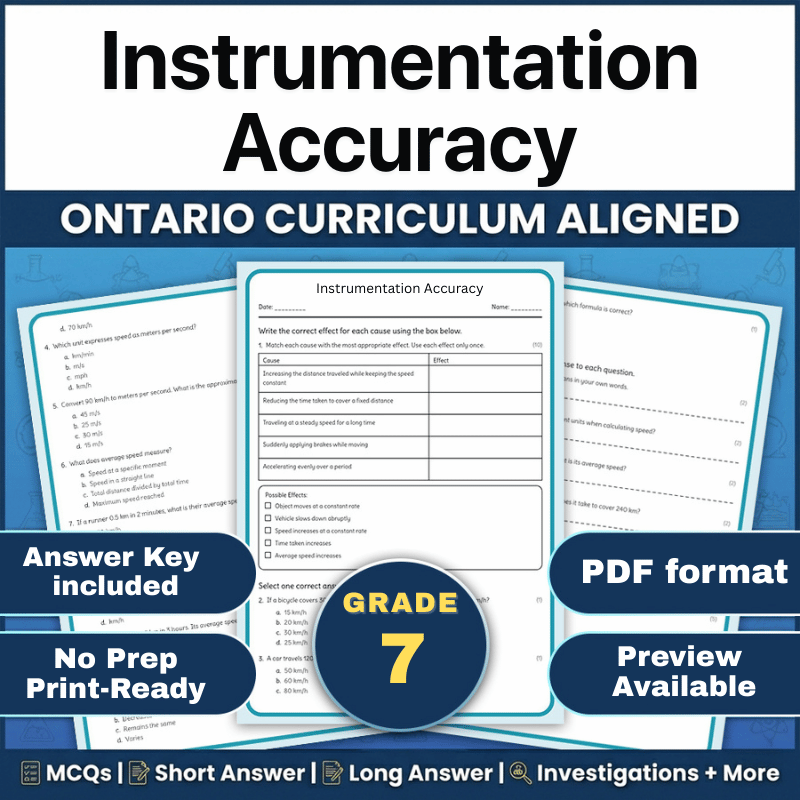
Grade 7 Science | Instrumentation Accuracy Worksheet (PDF) Ontario Standards
Created byBright Mind ResourcesLearning Objectives
- Understand how sensor response time influences temperature measurement accuracy.
- Compare different temperature sensing technologies and their calibration needs.
- Identify common error sources and ways to minimize measurement uncertainty.
Instant download

Grade 7 Instrumentation Accuracy Worksheet | Ontario Science PDF
Created byClear Sky ClassroomLearning Objectives
- Explain how calibration and traceable reference points improve temperature measurement accuracy.
- Identify common sources of error (sensor placement, radiation shielding, thermal contact, and response time) and how they affect readings.
- Interpret temperature results using uncertainty, resolution limits, and error budgets.
Instant download
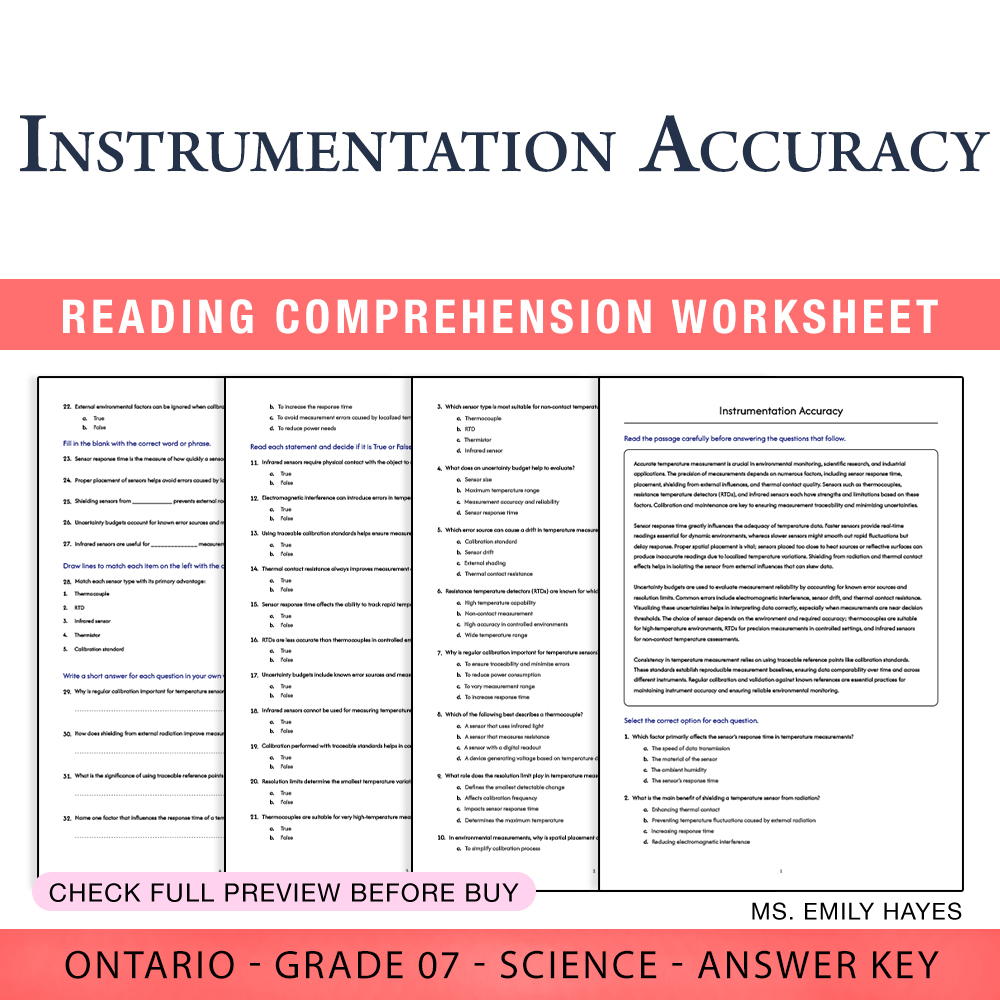
Grade 7 Science | Instrumentation Accuracy Worksheet (PDF+ Answer Key)
 Created byCopper Leaf Classroom
Learning Objectives
- Understand the principles of sensor response time and how it affects temperature measurements in environmental contexts.
- Evaluate the impact of spatial placement, shielding, and thermal contact effects on instrument accuracy.
- Describe how uncertainty budgets, resolution limits, and common error sources influence temperature measurement reliability.
Instant download
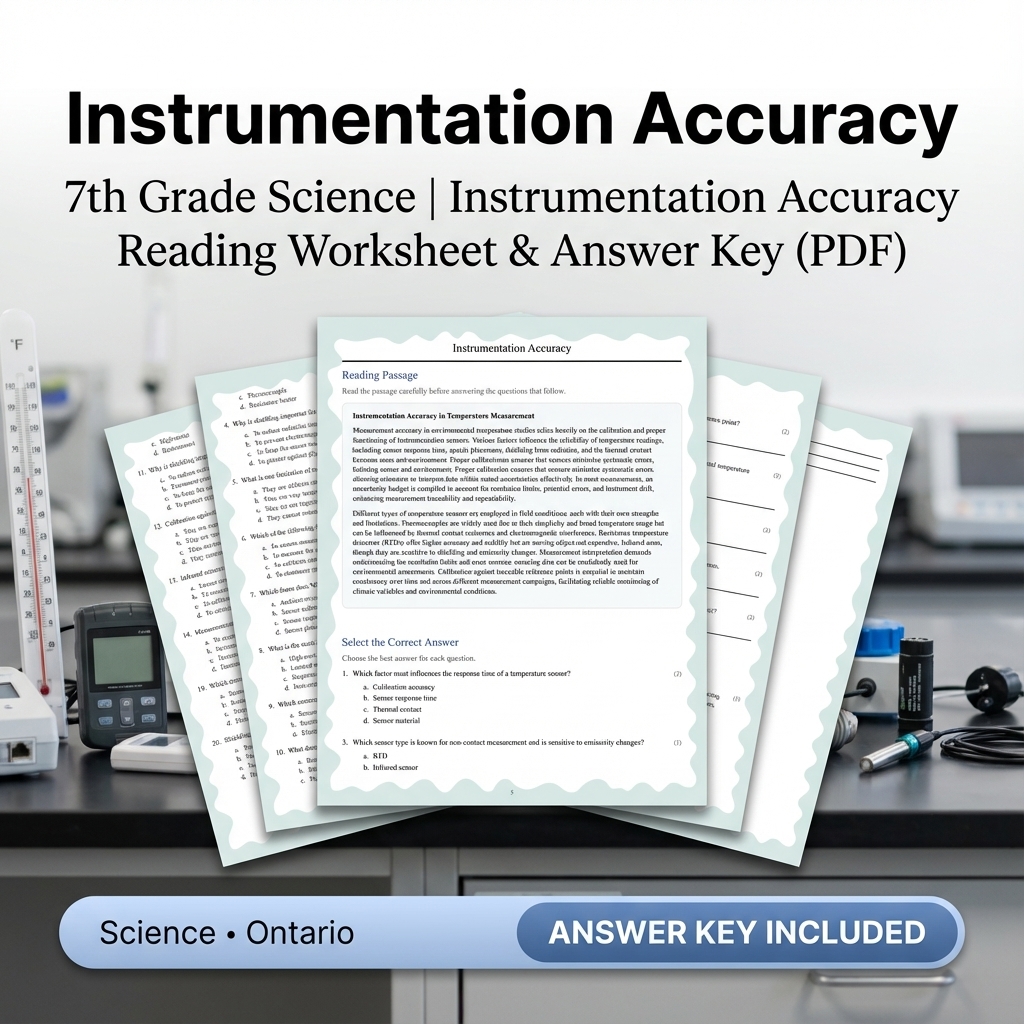
7th Grade Science | Instrumentation Accuracy Reading Worksheet & Answer Key
Learning Objectives
- Understand the principles of calibration and sensor response in temperature measurement
- Identify sources of measurement uncertainty and how to interpret data within error bounds
- Compare the performance characteristics of thermocouples, resistance temperature detectors, and infrared sensors
Also included in: Grade 7 Science | Thermal Energy & Transfer Worksheet Bundle +1 more
Instant download

Temperature Measurement Accuracy Worksheets Grade 7 Science
Created byPrism Point LearningLearning Objectives
- Explain how calibration and uncertainty affect temperature measurement accuracy
- Describe how sensor response time affects changing temperature measurements
- Explain how spatial placement changes the temperature a sensor reports
Also included in: Thermal Energy & Heat Transfer Lesson Bundle | Grade 7 Science | Ontario +1 more
Instant download
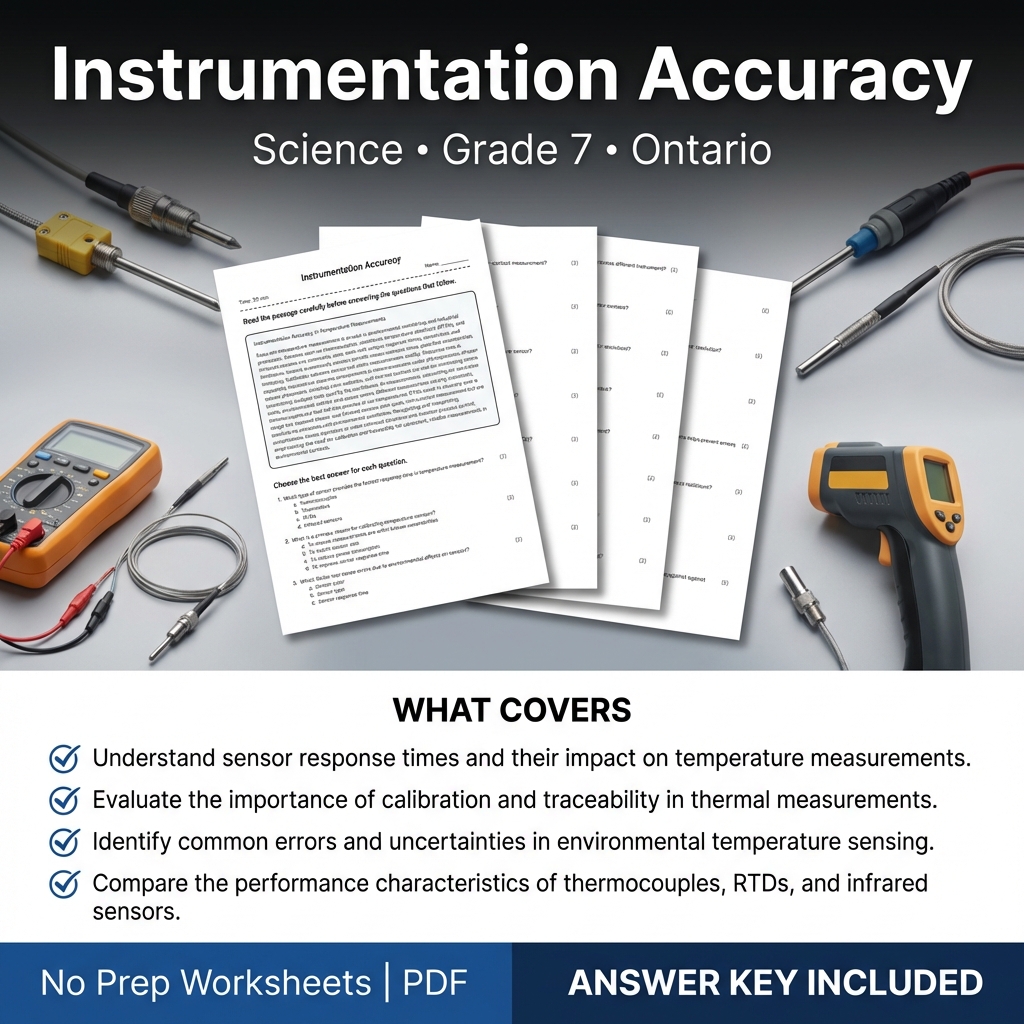
Instrumentation Accuracy Worksheet | Grade 7 Science | Ontario Standards
Created byCoral Reef LearningLearning Objectives
- Understand sensor response times and their impact on temperature measurements.
- Evaluate the importance of calibration and traceability in thermal measurements.
- Identify common errors and uncertainties in environmental temperature sensing.
Instant download
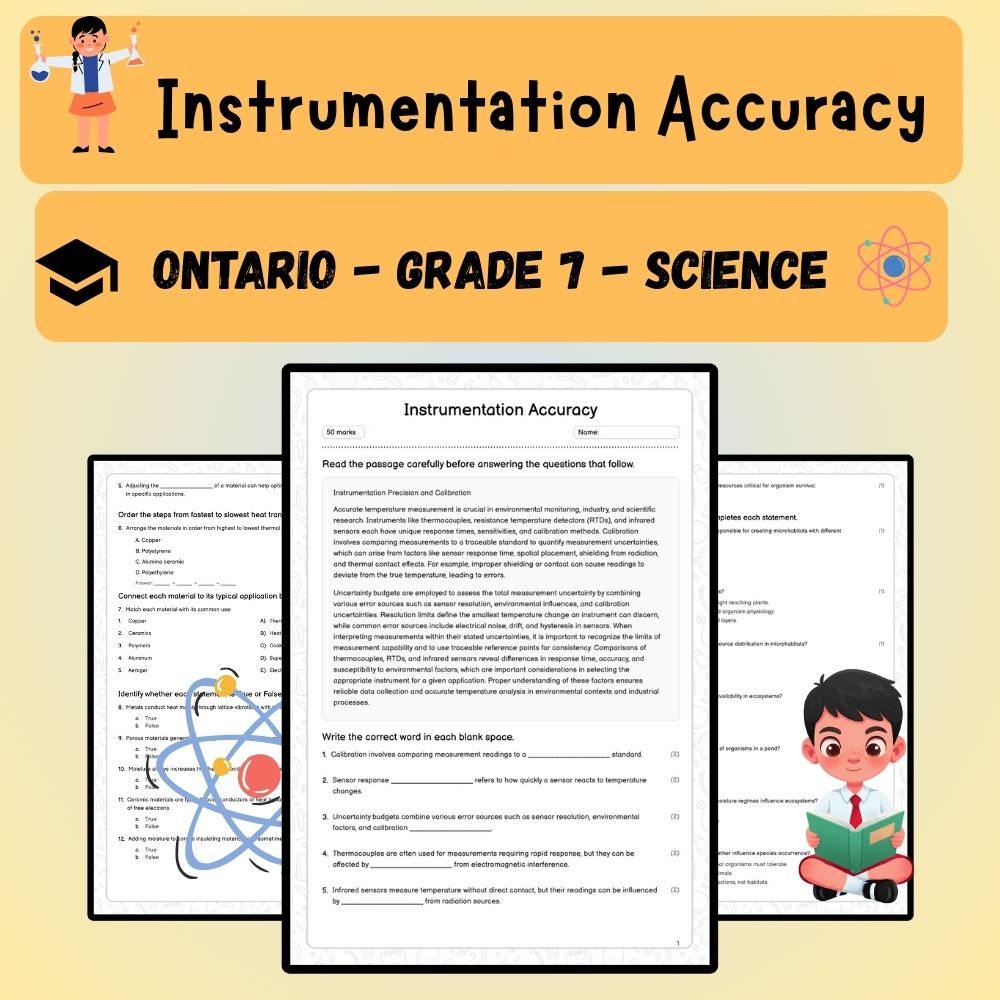
Grade 7 Science | Instrumentation Accuracy Worksheet (PDF)
Created byPrism Point LearningLearning Objectives
- Understand key concepts of instrumentation calibration and measurement uncertainties.
- Identify factors affecting temperature sensor responses and accuracy.
Also included in: Grade 7 Science – Heat Transfer & Insulation Unit Worksheet Bundle +1 more
Instant download

Instrumentation Accuracy Worksheet | Ontario Grade 7 Science Assessment
 Created byCedar Grove Learning
Learning Objectives
- Explain how calibration, resolution, and uncertainty affect the accuracy of temperature measurements.
- Identify common sources of error in temperature sensors, including response time, spatial placement, and radiation/thermal-contact effects.
- Compare how thermocouples, resistance temperature detectors (RTDs), and infrared sensors perform in different environmental conditions.
Also included in: Grade 7 Thermal Energy & Heat Transfer Science Lesson Bundle: Ontario +1 more
Instant download

Grade 7 Science | Calorimetry Basics - Daily Reading Comprehension
Created byCoral Reef LearningLearning Objectives
- Understand the concepts of heat and temperature and how they differ.
- Learn about units of measurement for heat and temperature.
- Explore how calorimetry measures energy exchange during thermal processes.
Also included in: Energy, Heat and Thermal Processes Lesson Bundle: Grade 7 Science Alberta +1 more
Instant download

Geologic Processes Worksheet | Grade 7 Earth Science Practice Activity
Created byPrism Point LearningLearning Objectives
- Explain how tectonic activity, weathering, erosion, and deposition shape Earth’s surface.
- Describe how geologic processes can both build up and break down landforms over long time periods.
- Use correct science vocabulary to compare erosion and deposition.
Also included in: Grade 7 Weather & Climate Science Lesson Bundle | Florida NGSSS
Instant download

Geologic Processes Grade 7 Science Worksheet | Standards-Aligned Practice
Learning Objectives
- Explain how tectonic activity can form mountain ranges and basins.
- Describe weathering, erosion, and deposition and how they change rocks and landforms.
- Identify how sediments move and where they accumulate in real-world landscapes.
Also included in: Grade 7 Weather, Climate, and Earth Processes Science Lesson Bundle +1 more
Instant download

Grade 7 Science | Geologic Processes Worksheet | Florida NGSSS Aligned
Created byLumora LearningLearning Objectives
- Explain how tectonic activity, weathering, erosion, and deposition work together to shape Earth’s surface
- Identify how different agents (water, wind, ice, and gravity) transport weathered material
- Use evidence from landforms and rock layers to describe how landscapes can appear stable while still changing
Instant download

Grade 7 Science | Geologic Processes - Daily Reading Comprehension
Created byCoral Reef LearningLearning Objectives
- Identify different landforms created by tectonic activity
- Understand how tectonic movements shape Earth's surface
- Learn about the processes of weathering, erosion, and deposition
Instant download

Geologic Processes Assessment | NGSSS Standards Grade 7 Science
Created byPrism Point LearningLearning Objectives
- Explain how tectonic activity, weathering, erosion, and deposition shape Earth’s surface.
- Identify how transporting agents and energy changes lead to deposition.
- Use geologic vocabulary (tectonic activity, weathering, erosion, deposition) to describe landform change over time.
Also included in: Grade 7 Earth and Climate Systems Science Lesson Bundle: Florida NGSSS
Instant download

Mass Wasting and Coasts Worksheet Grade 7 NGSSS Earth Science
Created byEvergreen Desk EducationLearning Objectives
- Explain how tectonic activity, weathering, erosion, and deposition shape Earth’s surface.
- Distinguish between weathering and erosion using examples from real landscapes.
- Describe how deposition can change the location of sediments over time.
Instant download

7th Grade Science | Abiotic Influences Worksheet with Short Notes(Printable PDF)
Created byMeadowlark WorksheetsLearning Objectives
- Understand how nonliving factors like temperature, light, water, soil, and salinity influence species distributions and ecosystems.
- Explain how gradients and microclimate affect organisms' physiological tolerances and seasonal behaviors.
- Relate abiotic variability to habitat suitability and community composition in terrestrial and aquatic environments.
Instant download
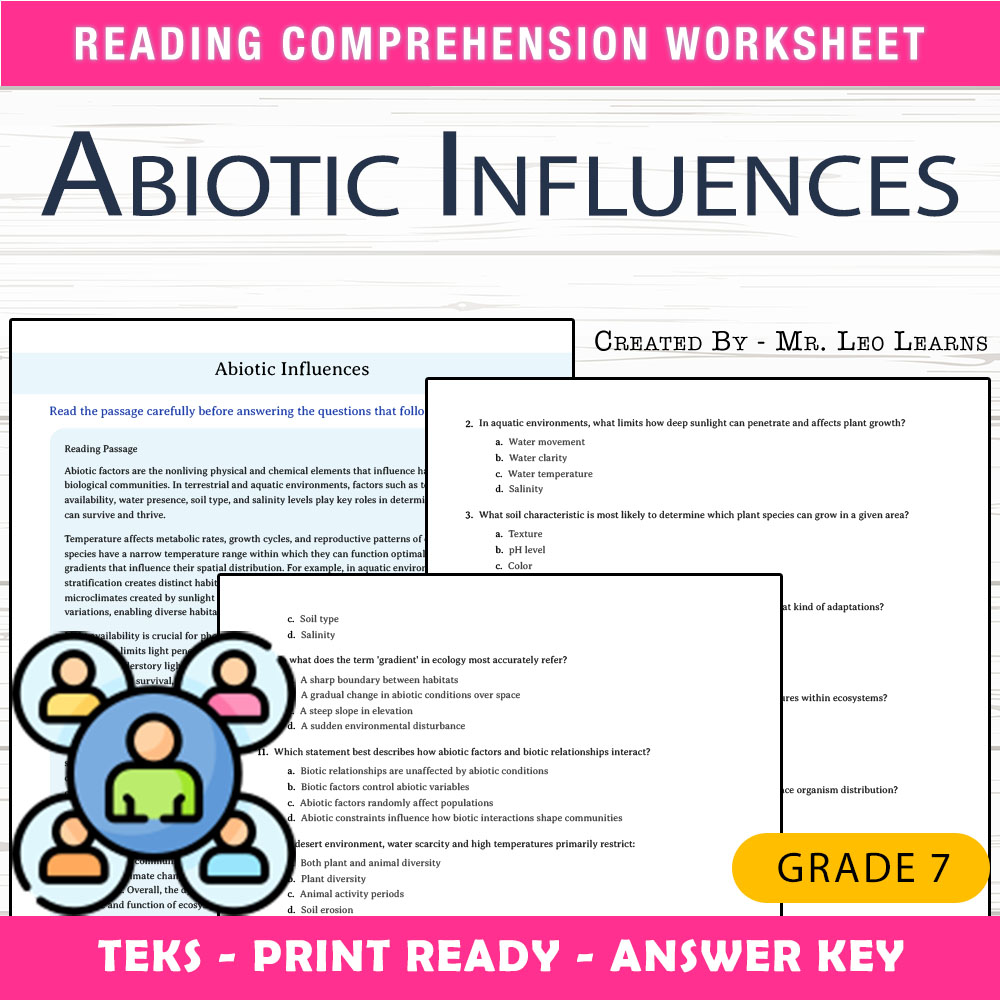
Grade 7 Science — Abiotic Influences Worksheet for Mastering Ecosystem Factors
Created byThe Resource HubLearning Objectives
- Understand how temperature, light, water, soil, and salinity affect species distributions.
- Explain the concepts of gradients, microclimates, and their effects on ecosystems.
- Analyze how abiotic factors interact with biological relationships to shape biodiversity and ecosystem functions.
Also included in: Grade 7 Science Unit Bundle – Ecosystems, Cells & Adaptations Worksheet Pack +1 more
Instant download
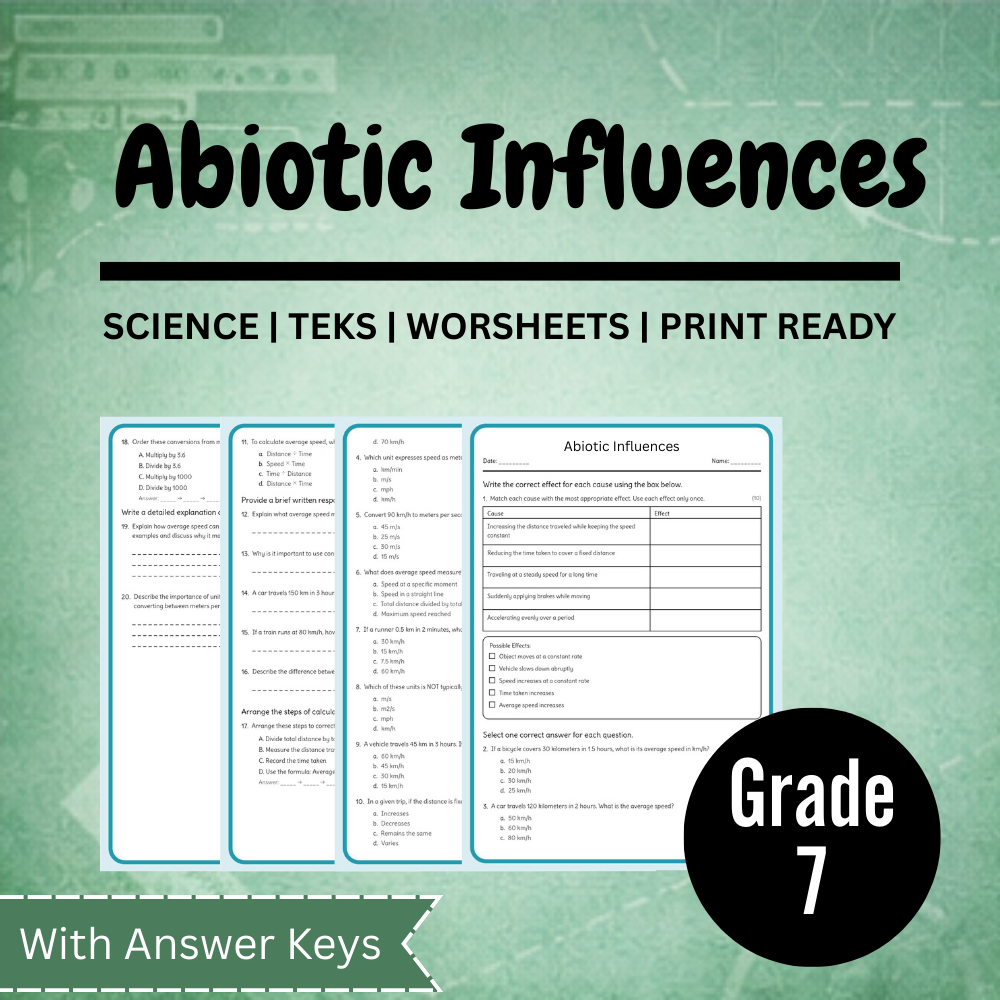
Grade 7 Science – Abiotic Influences Worksheet (Worksheet + Answer Key) – TEKS Aligned
Created byBright Mind ResourcesLearning Objectives
- Understand how nonliving factors like temperature, water, light, soil, and salinity affect species distribution and ecosystems.
- Describe how gradients and microclimates influence organism tolerances and seasonal patterns.
- Explain the interactions between abiotic factors and biotic relationships in shaping biodiversity and ecosystem function.
Also included in: Grade 7 Science Unit Bundle – Ecosystems, Adaptation & Environmental Impact +2 more
Instant download

Grade 7 Science – Abiotic Influences in Ecology | Daily Reading Worksheet
Created byBright Mind ResourcesLearning Objectives
- Understand how temperature influences species distribution.
- Describe the impact of abiotic factors like water, soil, and light on ecosystems.
- Analyze how temperature gradients affect organism survival and adaptations.
Also included in: Grade 7 Ecosystems & Adaptations Science Daily Reading Lesson Bundle | TEKS +2 more
Instant download
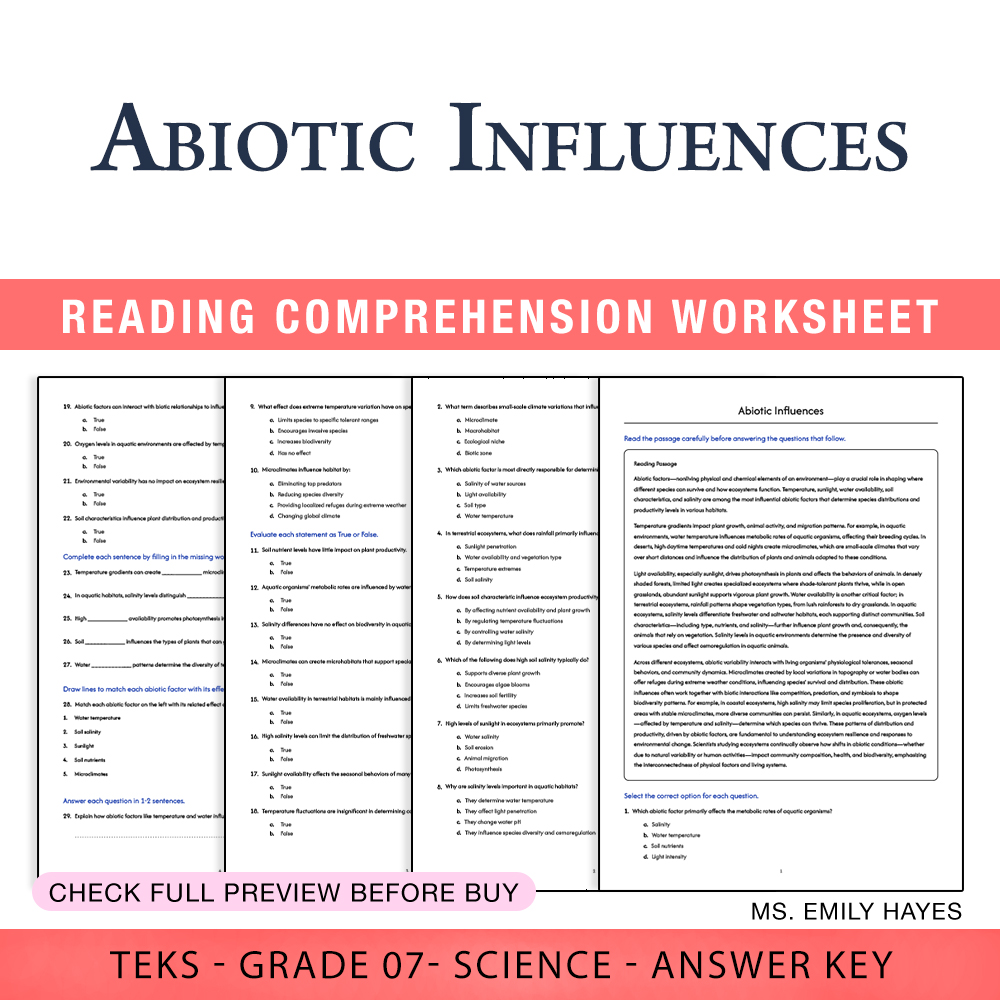
7th Grade Science | Abiotic Influences Worksheet (PDF+ Answer Key)
Created byCopper Leaf ClassroomLearning Objectives
- Understand how nonliving factors such as temperature, light, water, soil, and salinity influence species distribution and ecosystem productivity.
- Describe how gradients and microclimates affect organism adaptations and seasonal patterns.
- Analyze the interaction between abiotic factors and biotic relationships in shaping biodiversity and ecosystem functions.
Instant download

Grade 7 Science – Abiotic Influences Worksheet (TEKS) (PDF)
Created byEvergreen Desk EducationLearning Objectives
- Explain how nonliving factors (temperature, light, water availability, soil characteristics, and salinity) limit which species can survive in an area
- Describe how gradients and microclimates affect organisms’ physiological tolerances and seasonal patterns
- Use terrestrial and aquatic examples to connect abiotic variability to habitat suitability and community composition
Instant download

Grade 7 Science | Abiotic Influences in Ecosystems - Daily Reading Comprehension
Created byCoral Reef LearningLearning Objectives
- Understand how temperature impacts species distribution and habitat conditions.
- Identify various abiotic factors influencing ecosystems.
- Explain the concept of microclimates and their effects on organisms.
Instant download

Grade 7 Abiotic Influences Science Daily Reading Worksheet | TEKS Activity
 Created byBRIGHT PATH RESOURCES
Learning Objectives
- Identify abiotic factors and explain how they limit where organisms can live.
- Describe how light and temperature shape habitat suitability along gradients.
Also included in: Grade 7 Ecosystems Science Daily Reading Worksheets Bundle | TEKS +1 more
Instant download
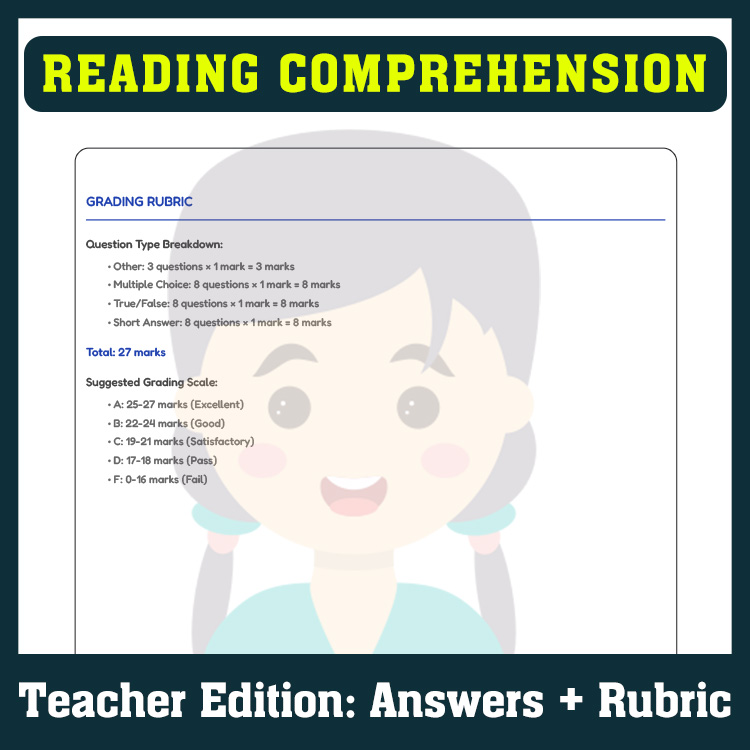
7th Grade Science | Abiotic Influences Reading Worksheet + Answer Key (PDF)
Learning Objectives
- Understand how nonliving factors such as temperature, light, water, soil, and salinity influence species distribution and ecosystem productivity.
- Explain gradients and microclimates and their effects on organisms' physiological tolerances and seasonal behaviors.
- Describe how abiotic variability interacts with biotic relationships to shape biodiversity and community composition in different habitats.
Instant download

Abiotic Influences Worksheet | Grade 7 Science Practice Activities
Created byPrism Point LearningLearning Objectives
- Explain how abiotic factors (nonliving conditions) such as temperature, light, and water availability affect where organisms can live.
- Describe how gradients and microclimates create variation in habitat suitability across an ecosystem.
- Use terrestrial and aquatic examples to link abiotic constraints to species distribution and ecosystem productivity.
Also included in: Ecosystems & Adaptations Grade 7 Science Lesson Bundle TEKS Worksheets
Instant download

Abiotic Influences Worksheet for Grade 7 Science | Standards-Aligned Practice
Learning Objectives
- Explain how nonliving abiotic factors (temperature, light, water availability, soil characteristics, and salinity) limit where organisms can live
- Describe how environmental gradients and microclimates influence species tolerances and seasonal patterns
- Connect abiotic variability to habitat suitability, ecosystem productivity, and community composition
Instant download
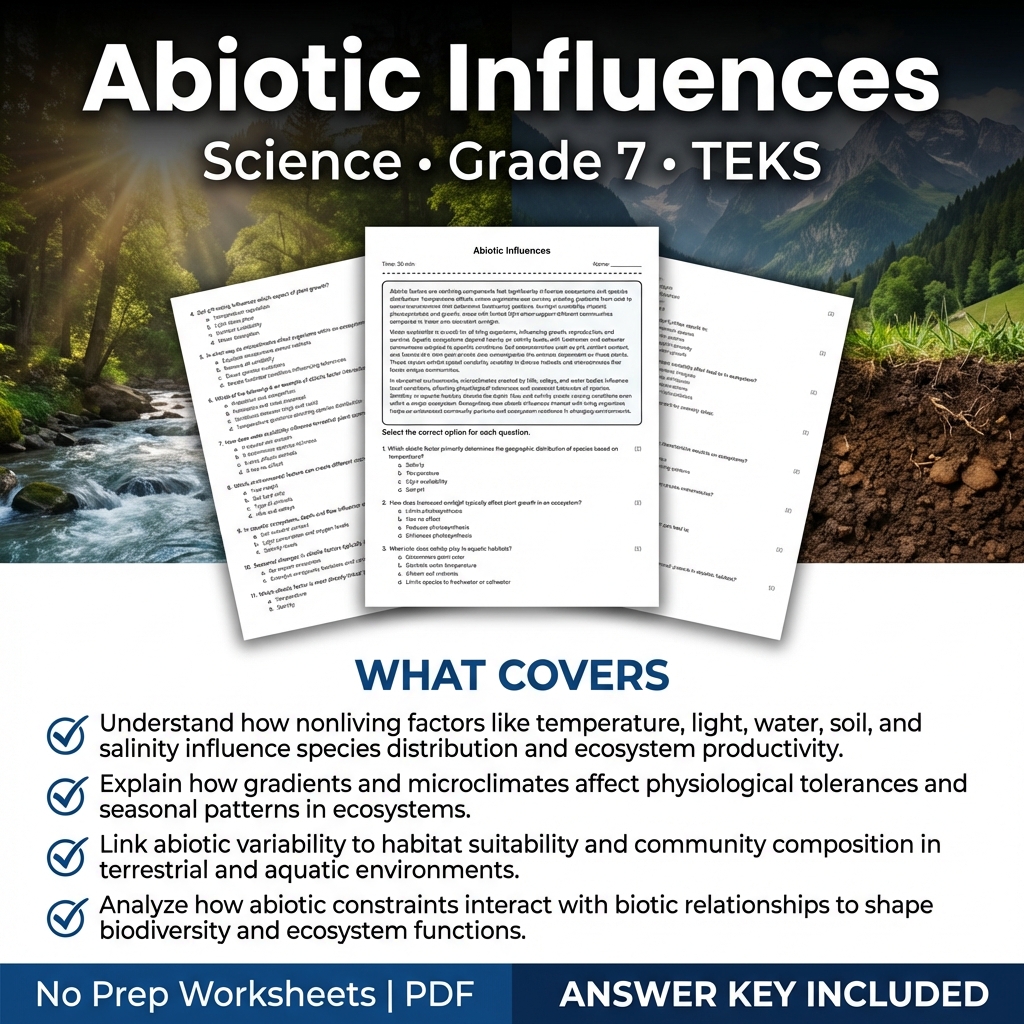
Grade 7 Science Worksheet on Abiotic Influences | TEKS Standards Practice
Created byCoral Reef LearningLearning Objectives
- Understand how nonliving factors like temperature, light, water, soil, and salinity influence species distribution and ecosystem productivity.
- Explain how gradients and microclimates affect physiological tolerances and seasonal patterns in ecosystems.
- Link abiotic variability to habitat suitability and community composition in terrestrial and aquatic environments.
Instant download

Abiotic Influences Assessment Grade 7 Science | TEKS Standards
Created byPrism Point LearningLearning Objectives
- Understand how nonliving factors like temperature, light, water, soil, and salinity affect ecosystems.
- Explain how abiotic gradients and microclimates influence species distribution and community structure.
- Identify examples of abiotic factors from terrestrial and aquatic environments that impact biodiversity.
Instant download
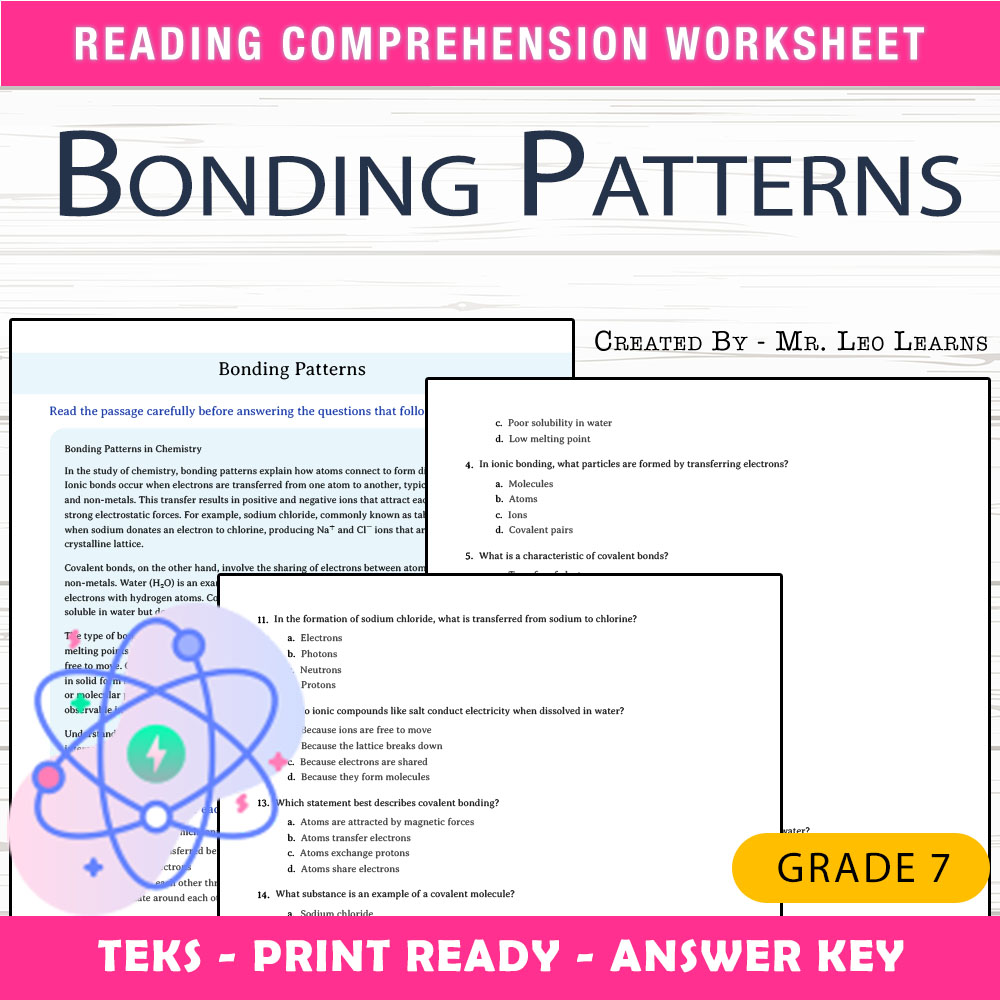
Grade 7 Science – Bonding Patterns Worksheet for Mastery
Created byThe Resource HubLearning Objectives
- Explain the differences between ionic and covalent bonding based on atomic interactions.
- Relate bonding types to properties like melting point, solubility, and electrical conductivity.
- Describe simple formation processes of binary ionic salts and molecular compounds.
Also included in: Grade 7 Science Unit Bundle – States, Reactions & Atomic Structure Worksheets +1 more
Instant download
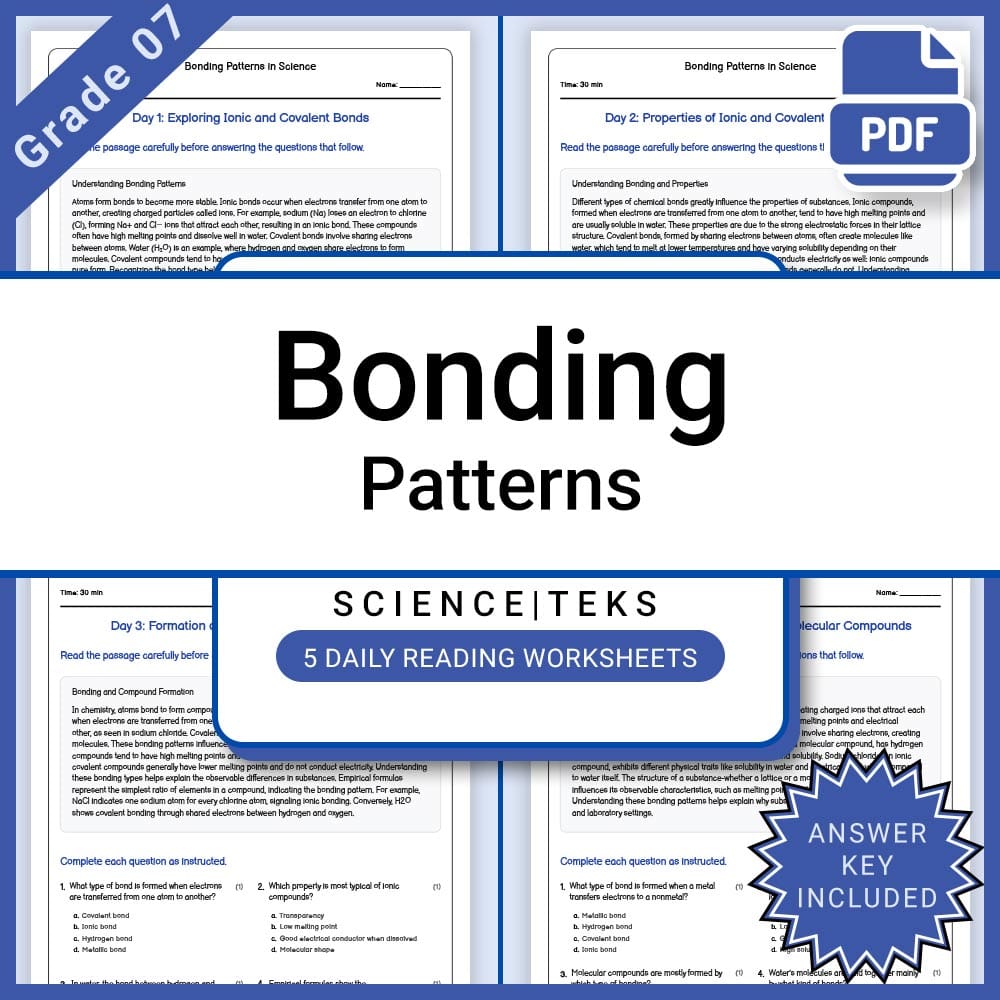
Grade 7 Science – Bonding Patterns Daily Reading Worksheet + Answer Key
Learning Objectives
- Understand key concepts related to Science
- Apply knowledge through practice questions
- Demonstrate comprehension of the material
Also included in: Grade 7 Science Lesson Group: TEKS-Aligned Daily Reading Worksheets +1 more
Instant download
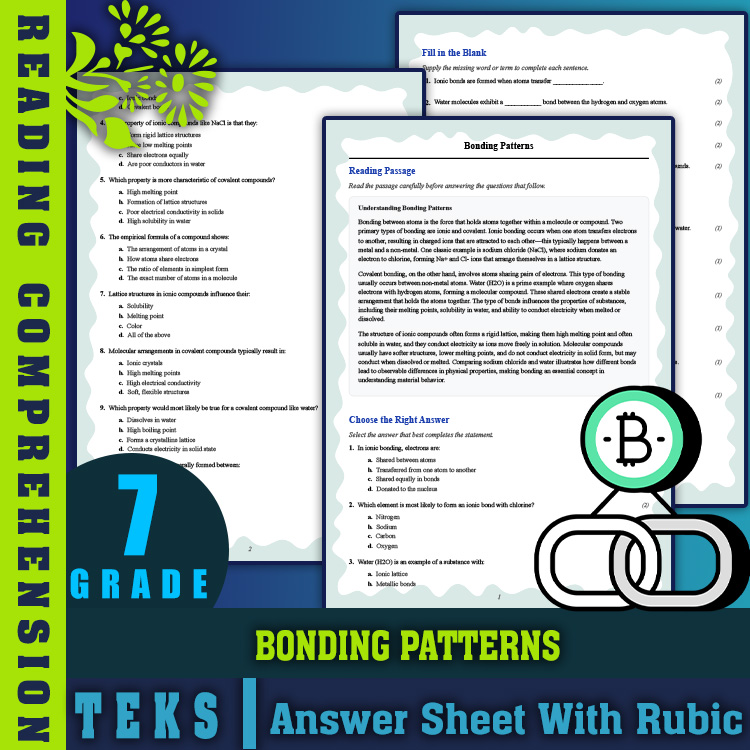
7th Grade Science | Bonding Patterns Reading Worksheet & Answer Key (PDF)
Learning Objectives
- Understand the differences between ionic and covalent bonding.
- Relate bonding types to properties like melting point, solubility, and electrical conductivity.
- Describe how simple binary ionic salts and molecular compounds form using empirical formulas.
Instant download
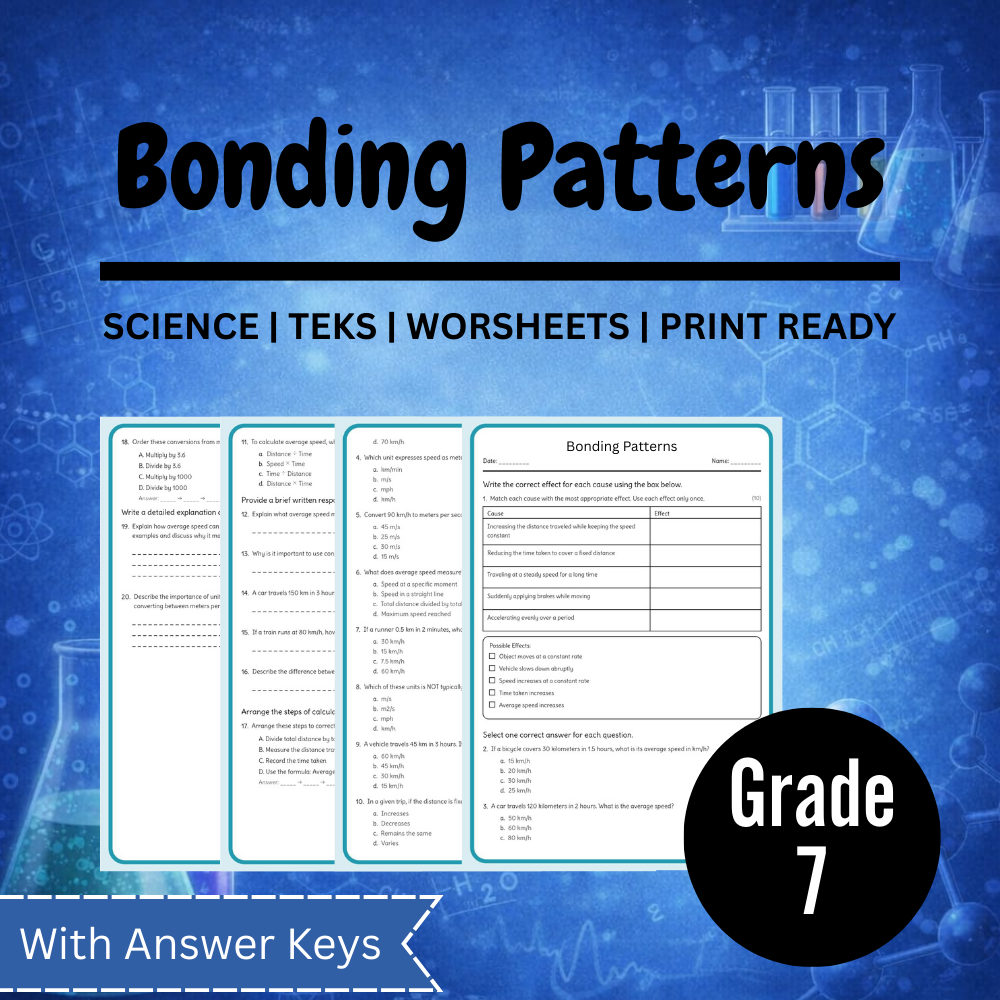
Grade 7 Science – Bonding Patterns Worksheet (Science 1 + TEKS) PDF
Created byBright Mind ResourcesLearning Objectives
- Distinguish between ionic and covalent bonding interactions
- Relate bonding types to properties like melting point, solubility, and electrical conductivity
- Describe formation of binary ionic salts and molecular compounds using empirical formulas
Also included in: Grade 7 Science Unit Bundle | States of Matter & Atomic Structure Worksheets +2 more
Instant download

Grade 7 Science | Bonding Patterns in Science - Daily Reading Comprehension
Created byCoral Reef LearningLearning Objectives
- Identify and distinguish ionic and covalent bonds based on descriptions and examples.
- Understand how bonding types influence properties like melting point, solubility, and electrical conductivity.
- Describe the formation of binary ionic salts and molecular compounds using empirical formulas.
Instant download
About Grade 7 Science Worksheets
Browse 6,126 printable Grade 7 Science worksheets — ready-to-print PDFs with answer keys where available.
Every worksheet on MyTeachingSheets is created by independent teacher-authors and reviewed before publication. All resources download as printable PDFs for classroom, homework, or at-home practice, and many include answer keys. Preview any worksheet free before buying.