
Grade 7 Science Worksheets
6,126 worksheets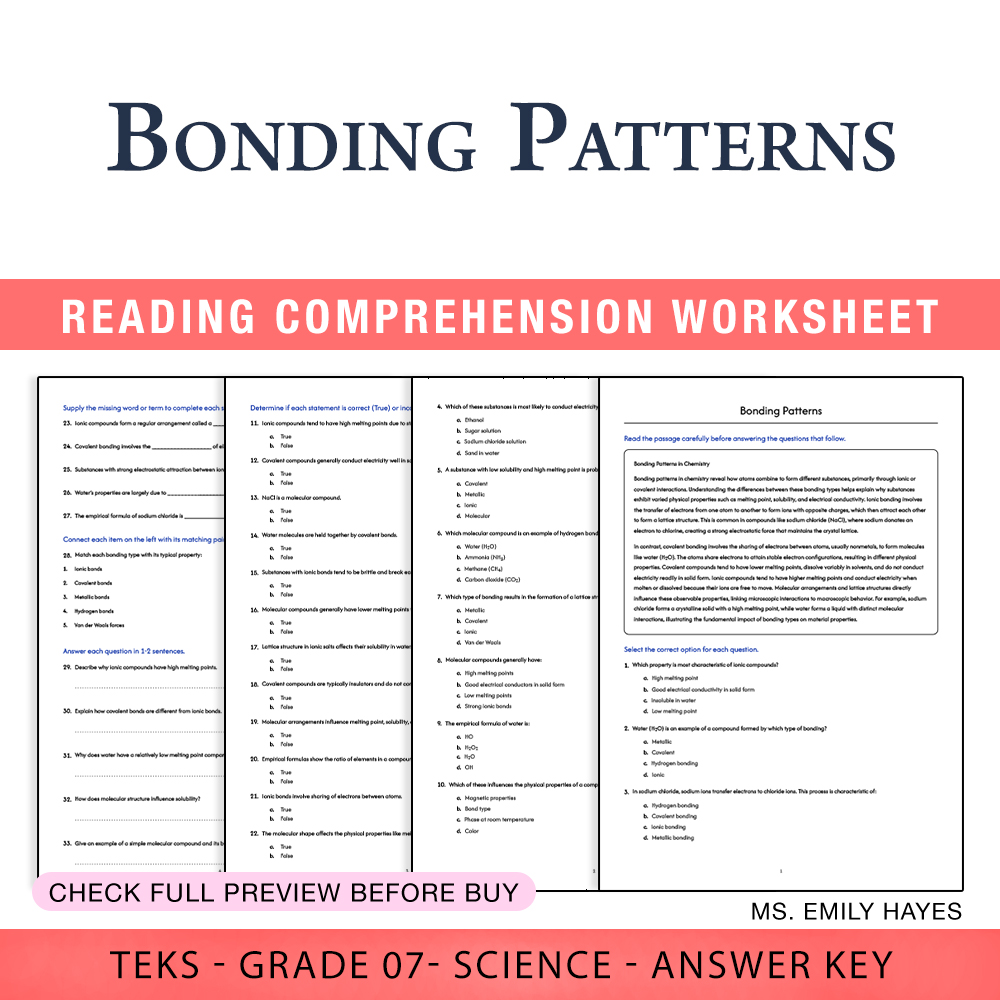
7th Grade Science | Bonding Patterns Worksheet (PDF+ Answer Key)
 Created byCopper Leaf Classroom
Learning Objectives
- Distinguish between ionic and covalent bonding based on properties and formation.
- Relate bonding types to macroscopic properties such as melting point, solubility, and electrical conductivity.
- Describe the formation of simple binary ionic salts and molecular compounds using empirical formulas.
Instant download

Bonding Patterns Worksheet | Grade 7 Science TEKS Practice
 Created byPrism Point Learning
Learning Objectives
- Differentiate ionic and covalent bonding using evidence from bonding structure and particle interactions.
- Relate bonding type to observable properties such as melting point, solubility, and electrical conductivity.
- Use empirical formulas to describe simple binary ionic salts and molecular compounds.
Also included in: Grade 7 Matter, States, and Reactions in Science Lesson Bundle TEKS
Instant download

Bonding Patterns Assessment | TEKS Standards-Aligned Grade 7 Science
Created byPrism Point LearningLearning Objectives
- Distinguish between ionic and covalent bonding based on observed properties.
- Relate bonding types to macroscopic properties such as melting point, solubility, and electrical conductivity.
- Describe the formation of binary ionic salts and molecular compounds using empirical formulas.
Also included in: Grade 7 Matter and Energy Science Lesson Bundle: TEKS assessments
Instant download
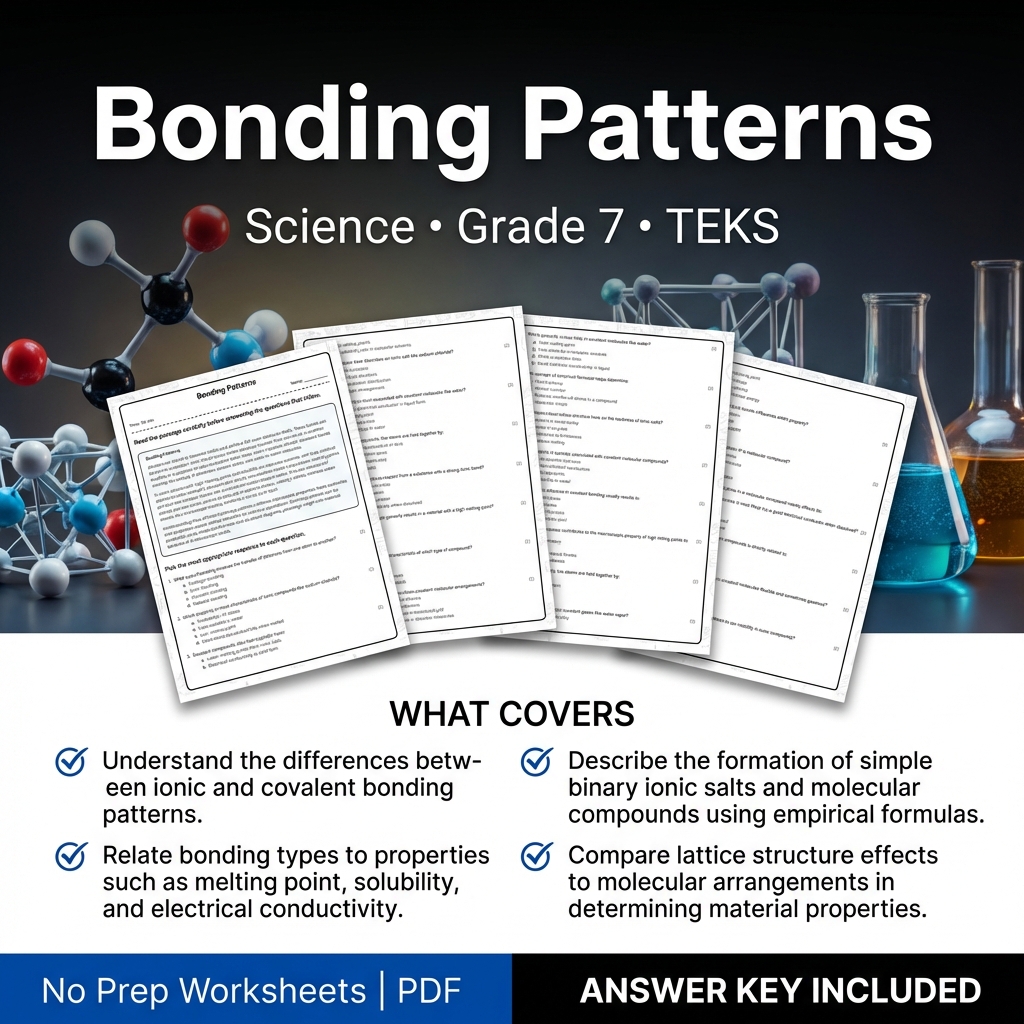
Grade 7 Science Bonding Patterns Worksheet with Answer Key | TEKS
 Created byCoral Reef Learning
Learning Objectives
- Understand the differences between ionic and covalent bonding patterns.
- Relate bonding types to properties such as melting point, solubility, and electrical conductivity.
- Describe the formation of simple binary ionic salts and molecular compounds using empirical formulas.
Instant download

Grade 7 Bonding Patterns Science Daily Reading Worksheet | TEKS
 Created byBRIGHT PATH RESOURCES
Learning Objectives
- Describe how electron transfer can form ions
- Distinguish ionic and covalent bonding using electron behavior
- Connect bonding patterns to observable properties
Also included in: Matter-Energy Grade 7 Science Daily Reading Worksheets Lesson Bundle | TEKS +1 more
Instant download

Grade 7 Science | Bonding Patterns Worksheet (TEKS) PDF
 Created byEvergreen Desk Education
Learning Objectives
- Distinguish ionic from covalent bonding using particle-level evidence and bonding patterns.
- Relate bonding type to macroscopic properties such as melting point, solubility, and electrical conductivity.
- Construct simple binary ionic salts and molecular compounds using empirical formulas.
Instant download

Bonding Patterns Worksheet for Grade 7 Science | Standards-Aligned Practice
Learning Objectives
- Distinguish ionic and covalent bonding using particle-level evidence (ions vs. electron sharing).
- Relate bonding type to macroscopic properties such as melting point, solubility, and electrical conductivity.
- Use empirical formula ideas to explain simple formation of binary ionic salts and molecular compounds.
Instant download

Grade 7 Science – Bonding Patterns & Chemical Bonds | Daily Reading Worksheet
 Created byBright Mind Resources
Learning Objectives
- Identify the differences between ionic and covalent bonds
- Recognize examples of ionic and covalent compounds
- Relate bonding types to properties like melting point, solubility, and electrical conductivity
Also included in: 7th Grade States of Matter Science Daily Reading Lesson Bundle | TEKS +2 more
Instant download
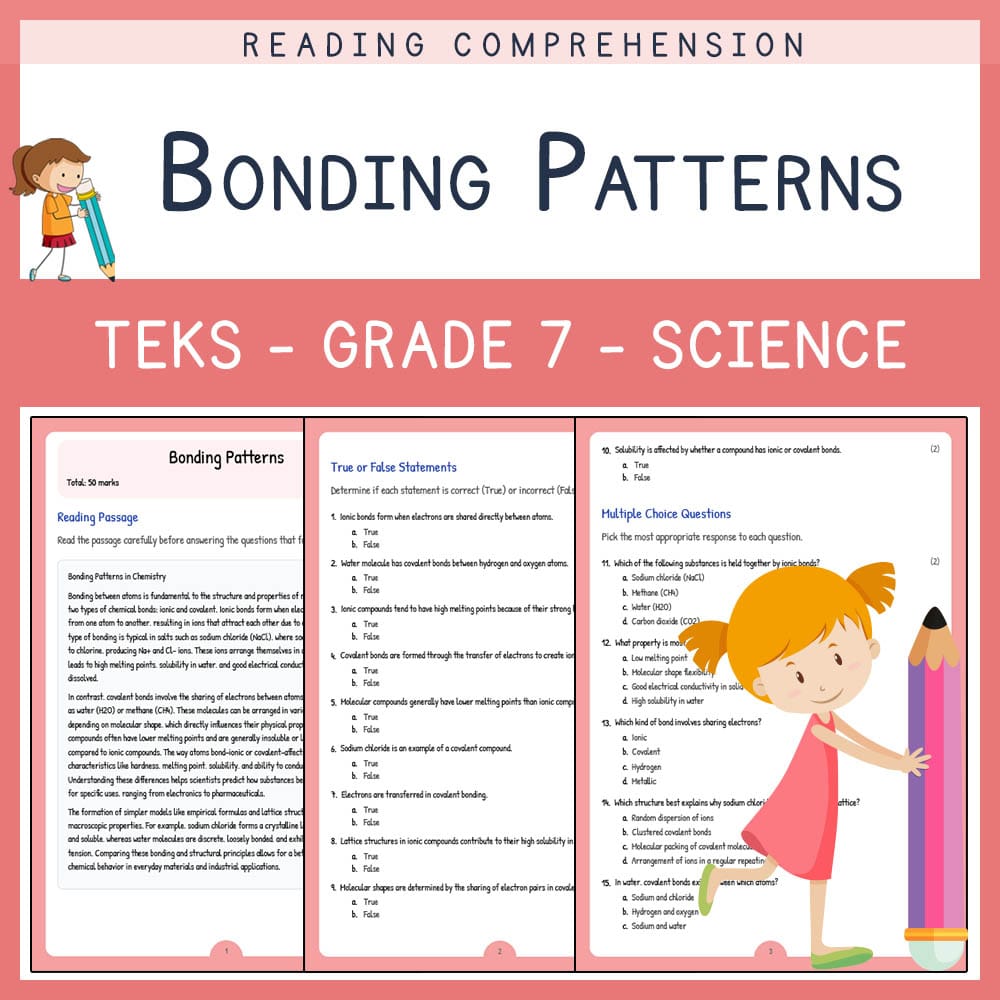
Grade 7 Science | Bonding Patterns Worksheet | TEKS-Aligned
 Created byLumora Learning
Learning Objectives
- Understand the differences between ionic and covalent bonding and their effects on macroscopic properties.
- Identify and describe simple formation of binary ionic salts and molecular compounds using empirical formulas.
- Relate bonding types to observable properties such as melting point, solubility, and electrical conductivity.
Also included in: Grade 7 Science | Matter and Energy Lesson Bundle | TEKS Aligned
Instant download
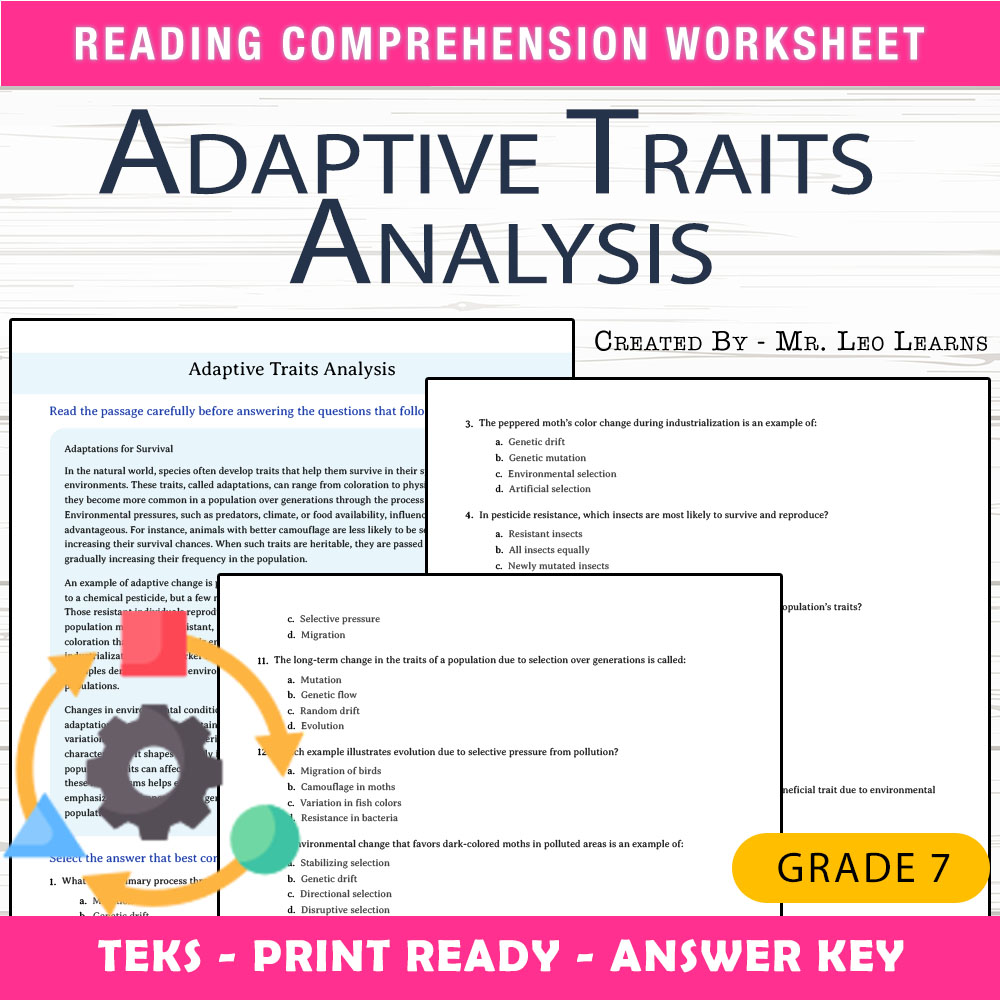
Grade 7 Science — Adaptive Traits Analysis Worksheet for Mastery
 Created byThe Resource Hub
Learning Objectives
- Understand how adaptive traits increase in populations through natural selection.
- Analyze examples such as pesticide resistance and camouflage to identify mechanisms of adaptation.
- Explain the role of environmental pressures in shaping trait distributions across generations.
Also included in: Grade 7 Science Unit Bundle – Ecosystems, Cells & Adaptations Worksheet Pack +1 more
Instant download
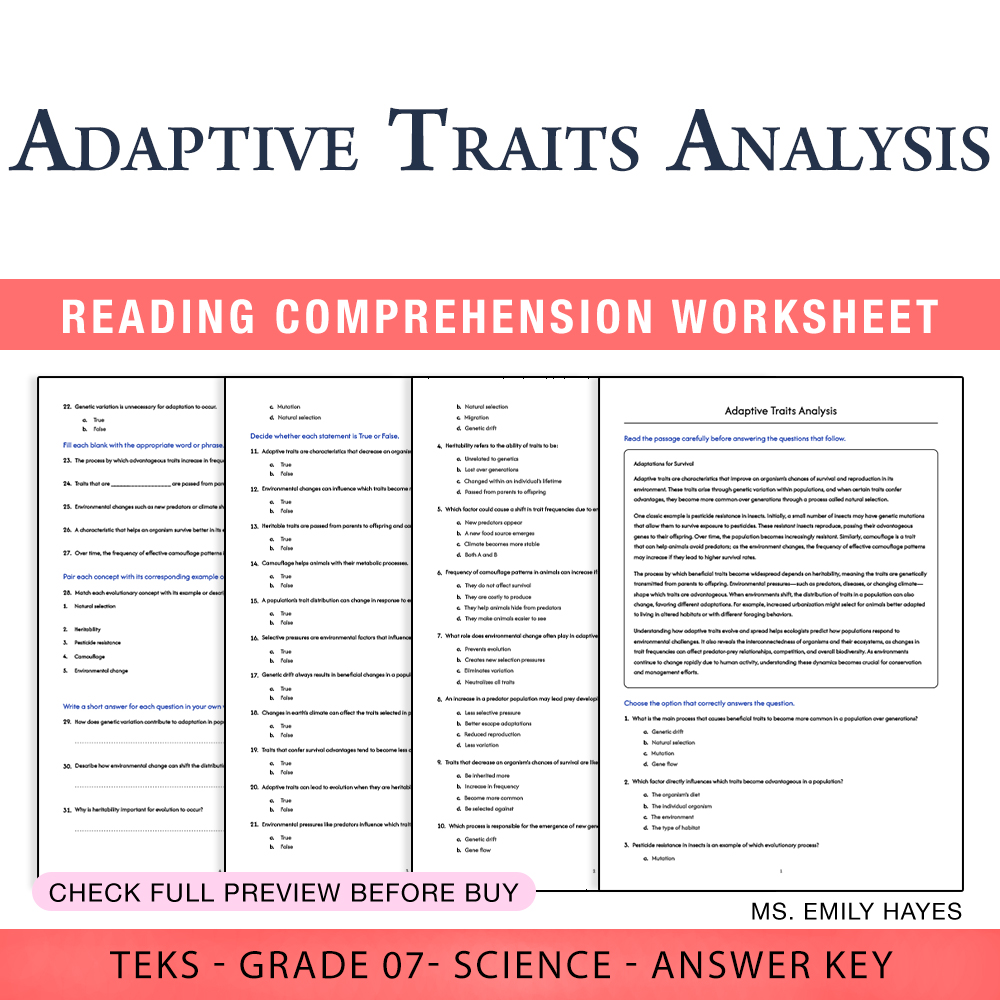
7th Grade Science | Adaptive Traits Analysis Worksheet (PDF+ Answer Key)
Created byCopper Leaf ClassroomLearning Objectives
- Explain how differential survival and reproduction influence the frequency of adaptive traits in populations.
- Describe the roles of variation, heritability, and selective pressures in evolution.
- Illustrate how environmental changes can shift trait distributions in populations.
Instant download

Grade 7 Science – Adaptive Traits Analysis Worksheet (TEKS) (PDF)
Created byEvergreen Desk EducationLearning Objectives
- Explain how variation, heritability, and selective pressures can cause adaptive traits to become more common in a population.
- Use examples (pesticide resistance and camouflage) to describe differential survival and reproduction across generations.
- Predict how environmental change can shift which traits are favored and how that affects populations and ecosystems.
Instant download

Grade 7 Science | Adaptive Traits Analysis - Daily Reading Comprehension
Created byCoral Reef LearningLearning Objectives
- Understand what adaptive traits are and how they help organisms survive
- Identify examples of adaptive traits in different species
- Learn how environmental pressures influence the frequency of traits in populations
Instant download

Adaptive Traits Analysis Worksheet | Grade 7 Science Activities
Created byPrism Point LearningLearning Objectives
- Explain how variation, heritability, and selective pressures can change allele frequencies across generations.
- Use examples such as pesticide resistance and camouflage to describe differential survival and reproduction.
- Predict how environmental change can shift which adaptive traits become common in a population.
Also included in: Ecosystems & Adaptations Grade 7 Science Lesson Bundle TEKS Worksheets
Instant download

Grade 7 Adaptive Traits Analysis Worksheet | TEKS Evolution Science Activity
Created byBRIGHT PATH RESOURCESLearning Objectives
- Define variation, selection, adaptation, and selective pressure in simple terms
- Explain how differences in survival and reproduction can change trait frequencies over time
- Connect environmental change to shifts in which traits are most helpful
Also included in: Grade 7 Ecosystems Science Daily Reading Worksheets Bundle | TEKS +1 more
Instant download

Grade 7 Science – Adaptive Traits & Environmental Changes | Reading Worksheet
Created byBright Mind ResourcesLearning Objectives
- Understand what adaptive traits are and how they help animals survive.
- Identify examples of camouflage and other adaptive traits in animals.
- Analyze how environmental factors influence the development of adaptive traits.
Also included in: Grade 7 Ecosystems & Adaptations Science Daily Reading Lesson Bundle | TEKS +2 more
Instant download

Adaptive Traits Analysis Worksheet | TEKS Grade 7 Science Practice
Learning Objectives
- Explain how variation, heritability, and selective pressure can cause adaptive traits to become more common in a population
- Describe how differential survival and reproduction affect trait frequencies across generations
- Interpret examples such as pesticide resistance and camouflage frequency changes as evidence of natural selection
Instant download

Adaptive Traits Analysis Assessment | TEKS Grade 7 Science Worksheet
Created byPrism Point LearningLearning Objectives
- Understand how adaptive traits become common in populations through natural selection.
- Identify factors such as variation, heritability, and environmental pressures that influence trait distribution.
- Apply examples like camouflage and pesticide resistance to illustrate the process of selection.
Instant download

Grade 7 Surface Processes Worksheet | NGSS Earth Science Activity with Answer Key
 Created byNorthstar Worksheets
Learning Objectives
- Explain how weathering, erosion, transport, and deposition change Earth’s surface over short and long timescales.
- Differentiate mechanical and chemical weathering and identify their likely effects on landforms and soils.
- Describe how water, wind, ice, and gravity contribute to shaping features such as canyons, coastal cliffs, moraines, and deltas.
Also included in: Grade 7 Earth Systems Processes Lesson Bundle | NGSS Earth Science +1 more
Instant download

Surface Processes and Landscape Change Worksheets | Grade 7 Science
 Created byTeachers Club
Learning Objectives
- Explain how weathering, erosion, transport, and deposition change Earth's surface
- Compare mechanical and chemical weathering effects on rocks and soil
- Describe how rivers, coasts, and glaciers change landforms over time
Also included in: Grade 7 Science Worksheets | Earth's Systems NGSS Bundle +2 more
Instant download

Surface Processes Worksheet for Grade 7 Science | NGSS-Aligned Practice
Learning Objectives
- Understand the different types of weathering, erosion, transport, and deposition processes shaping Earth's surface.
- Identify agent-specific signatures and landform examples associated with surface processes.
- Connect rates of landscape change with geologic timescales and agent activity.
Also included in: Grade 7 Earth Systems Science Worksheet Set Print Lesson Bundle – NGSS +1 more
Instant download

Grade 7 Surface Processes Worksheet | NGSS Practice PDF
 Created byClear Sky Classroom
Learning Objectives
- Describe the key geologic surface processes such as weathering, erosion, transport, and deposition.
- Differentiate between mechanical and chemical weathering and their signatures.
- Explain how landforms like canyons, deltas, and moraines are created by surface processes over time.
Also included in: Grade 7 Earth Systems Science Lesson Bundle NGSS: 6 Worksheets +1 more
Instant download

Surface Processes and Landscape Change Worksheets | Grade 7 Science
 Created bythe curious pencil
Learning Objectives
- Distinguish weathering, erosion, transport, and deposition
- Explain how water, ice, wind, waves, and gravity shape Earth
- Identify landforms produced by different surface processes
Also included in: Earth's Systems Worksheets Grade 7 Science | NGSS Unit Bundle +2 more
Instant download

Grade 7 Surface Processes Worksheet | NGSS Earth Science Activity
Created byBRIGHT PATH RESOURCESLearning Objectives
- Understand key concepts related to Science
- Apply knowledge through practice questions
- Demonstrate comprehension of the material
Also included in: Earth Systems Grade 7 Science Daily Reading Worksheets Lesson Bundle | NGSS +2 more
Instant download

Surface Processes Worksheet | Grade 7 Science Printable PDF Assessment
Learning Objectives
- Understand the key geologic processes that modify Earth’s surface, including weathering, erosion, transport, and deposition.
- Differentiate between mechanical and chemical weathering and identify agent-specific landforms.
- Explain how landforms such as canyons, deltas, moraines, and coastal features are formed through surface processes.
Also included in: Grade 7 Science Earth's Systems Lesson Bundle | NGSS Worksheets +1 more
Instant download

Science Grade 7 Worksheet Surface Processes NGSS Assessment
 Created bySkylark Worksheets
Learning Objectives
- Explain how weathering, erosion, transport, and deposition change Earth’s surface over short and long timescales.
- Compare mechanical vs. chemical weathering and identify agent-specific clues in landscapes and soil profiles.
- Describe how water, wind, ice, and coastlines can create or modify landforms such as canyons, moraines, and deltas.
Also included in: Grade 7 Earth Systems Science Worksheet Lesson Bundle for NGSS Assessment +1 more
Instant download

Grade 7 Science | Surface Processes - Daily Reading Comprehension
Created byCoral Reef LearningLearning Objectives
- Understand the different types of weathering that modify Earth's surface.
- Identify examples of mechanical and chemical weathering.
- Describe how erosion and deposition shape landforms over time.
Instant download
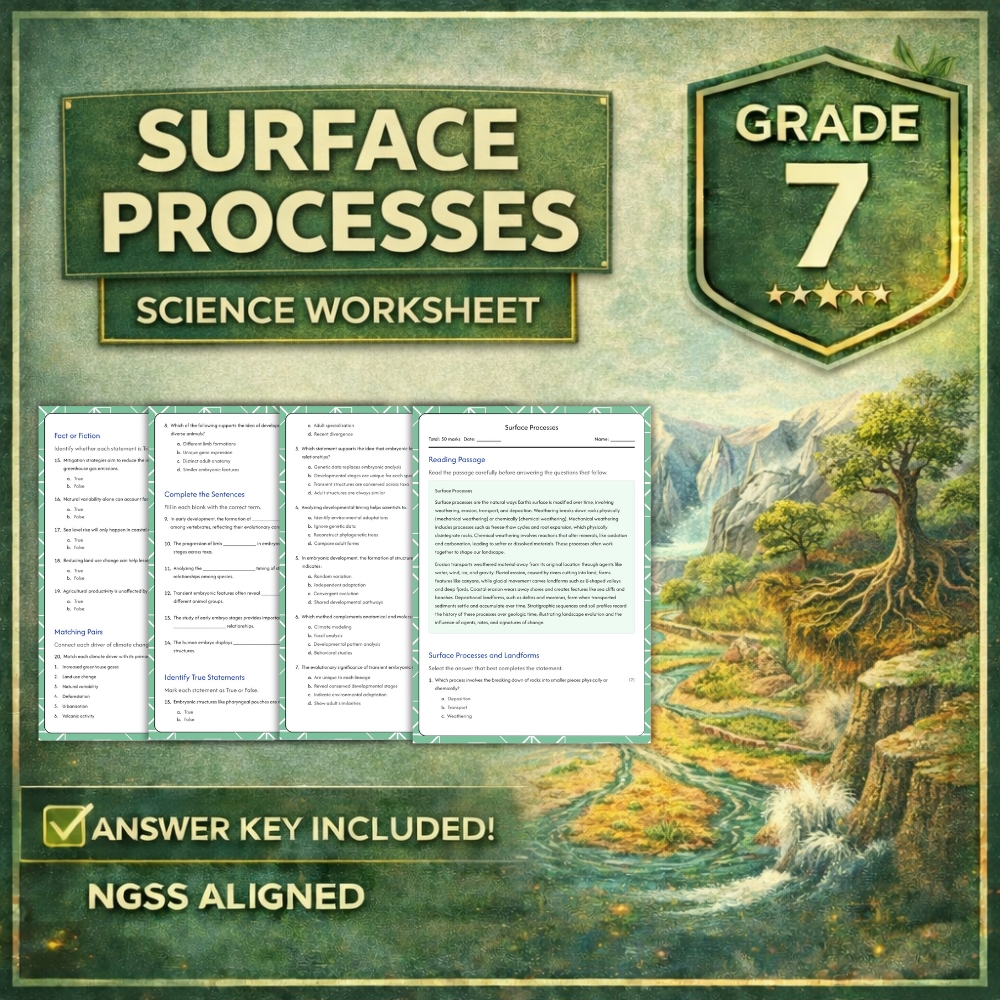
Grade 7 Science | Surface Processes Worksheet (NGSS-Aligned + Answer Key)
 Created byCedar Grove Learning
Learning Objectives
- Describe the key geologic processes that shape Earth's surface over short and long timescales.
- Distinguish between mechanical and chemical weathering and identify examples of each.
- Explain how erosion, transport, and deposition contribute to landscape features such as canyons, deltas, and landforms.
Also included in: Grade 7 Science Bundle | Earth Systems & Processes NGSS (Worksheet Pack)
Instant download

Surface Processes Assessment Printables | Grade 7 Science
Created byPrism Point LearningLearning Objectives
- Explain how weathering, erosion, transport, and deposition reshape Earth’s surface over different timescales.
- Compare mechanical and chemical weathering and identify evidence of each in land and soil features.
- Describe how water, coasts, and glaciers create distinctive landforms such as canyons, deltas, and moraines.
Also included in: Grade 7 Earth Systems Science Lesson Bundle: NGSS Review Worksheets
Instant download
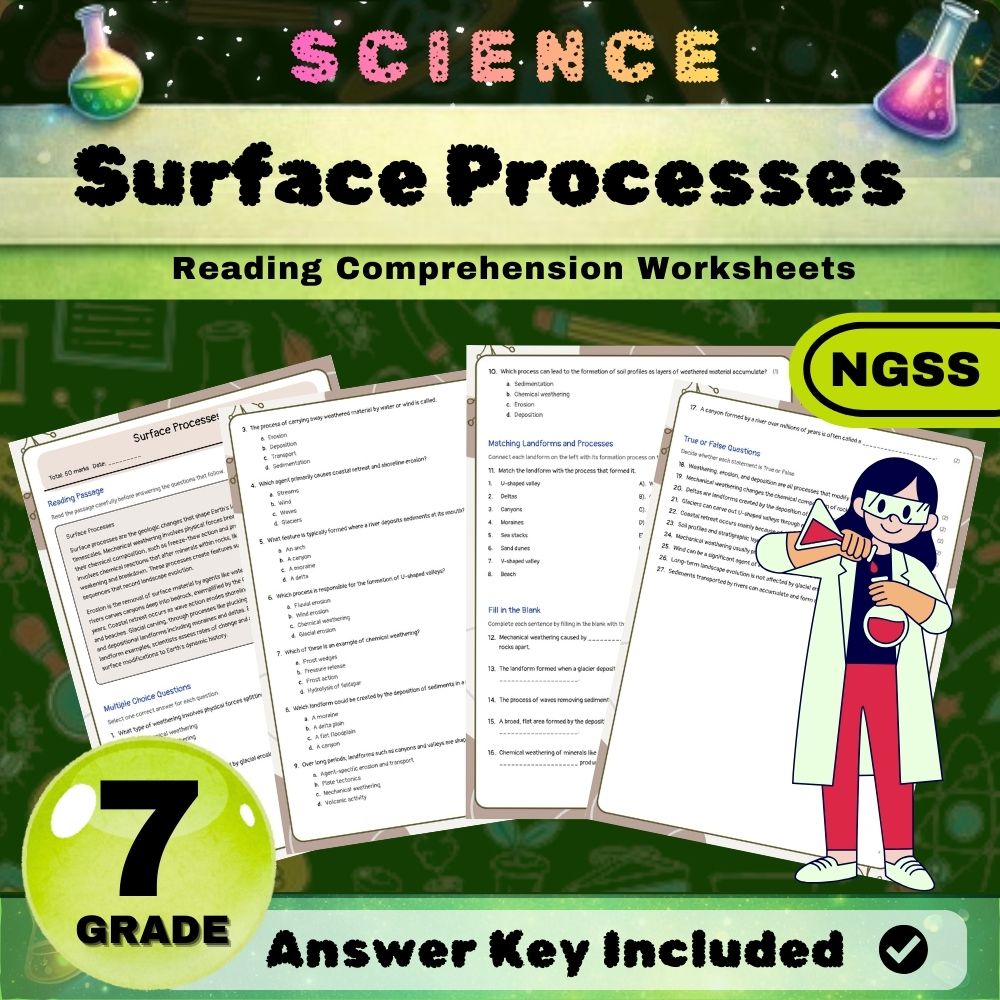
Grade 7 Science | Surface Processes Worksheet (NGSS) – Engaging PDF & Answer Key
 Created byMaple Path Learning
Learning Objectives
- Explain how mechanical and chemical weathering modify Earth's surface over time.
- Describe the roles of erosion, transport, and deposition in landscape change.
- Identify landforms created by river, glacier, and coastal processes.
Instant download

Surface Processes Worksheet Grade 7 NGSS | Weathering & Erosion
 Created byAmber Owl Education
Learning Objectives
- Explain how weathering, erosion, transport, and deposition change Earth’s surface across short and long timescales
- Compare mechanical vs. chemical weathering and identify agent-specific evidence in landscapes
- Describe how moving water, waves, and glaciers create characteristic landforms and sediment deposits
Also included in: Earth's Systems Lesson Bundle | Grade 7 Science | Next-Gen Science Standards +1 more
Instant download
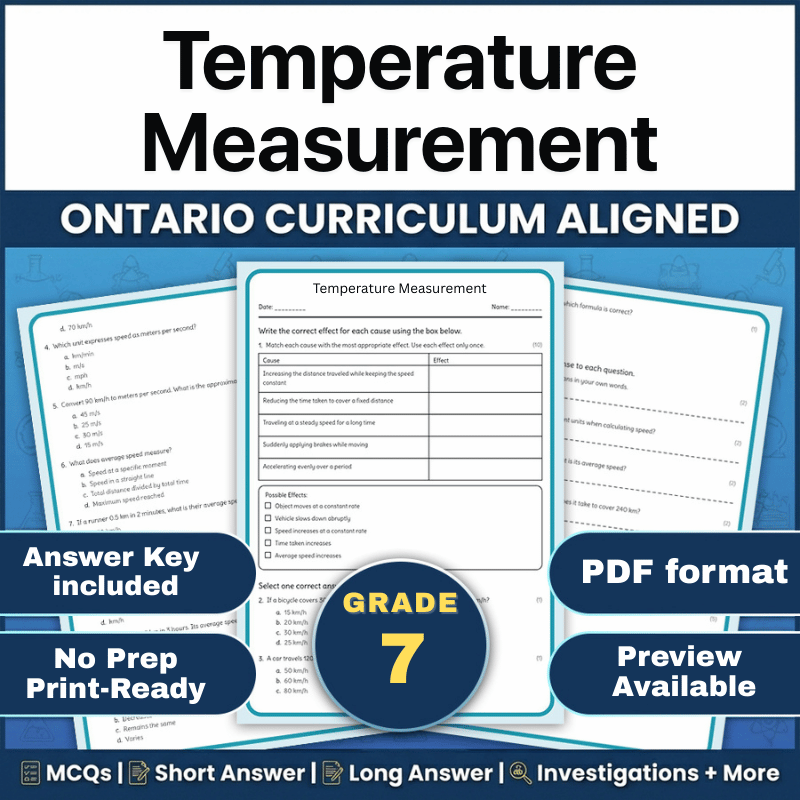
Grade 7 Science Worksheet – Temperature Measurement (PDF) – Ontario Standards
Created byBright Mind ResourcesLearning Objectives
- Understand principles of temperature measurement and characteristics of different thermometers.
- Identify appropriate temperature measurement instruments for specific ranges and accuracies.
- Explain Celsius scale conventions, fixed points, and calibration importance.
Instant download
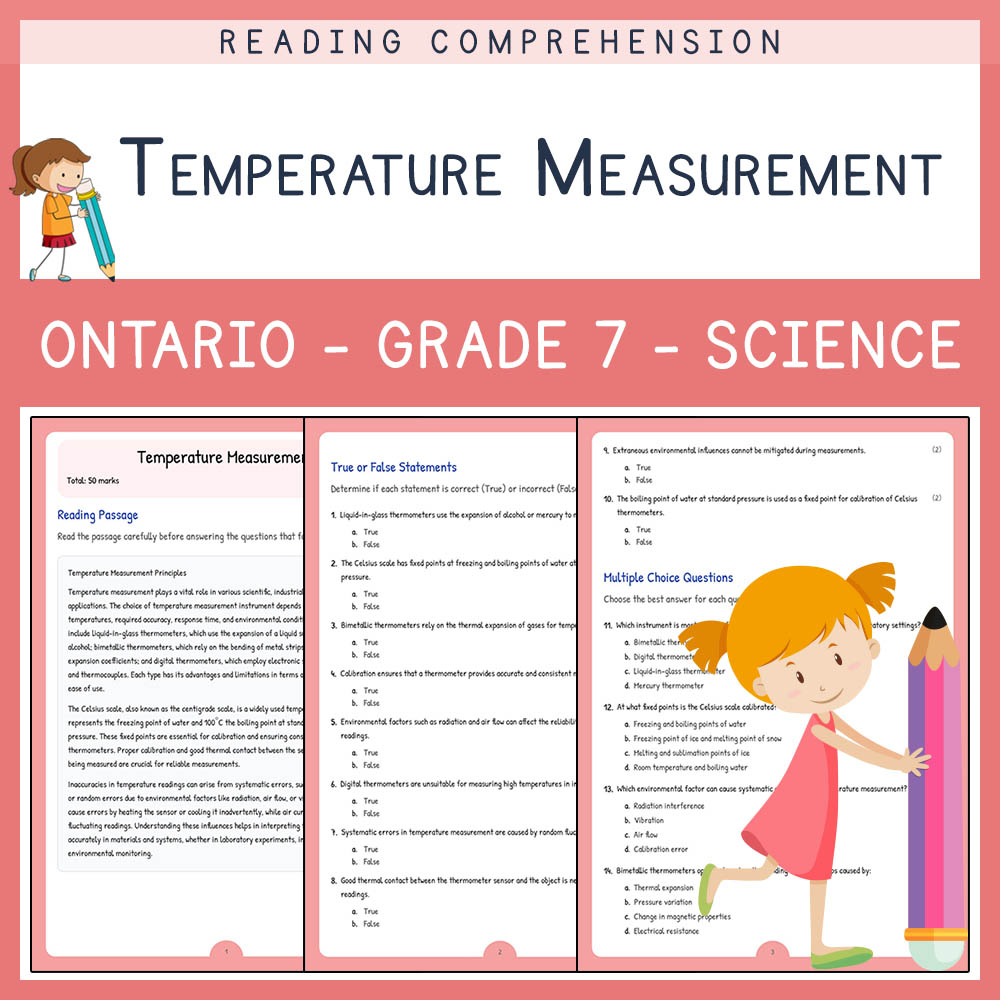
Grade 7 Science | Temperature Measurement Worksheet Elena | Ontario
Created byLumora LearningLearning Objectives
- Understand different types of thermometers and their appropriate ranges and uses.
- Explain the principles behind Celsius scale conventions and fixed points.
- Recognize factors affecting temperature measurement accuracy and reliability.
Instant download

Temperature Measurement and Calibration Worksheets Grade 7 Science
Created byPrism Point LearningLearning Objectives
- Compare thermometer types by sensing method and accuracy limits
- Explain why Celsius fixed points support thermometer calibration
- Identify random and systematic sources of measurement uncertainty
Also included in: Thermal Energy & Heat Transfer Lesson Bundle | Grade 7 Science | Ontario +1 more
Instant download

Temperature Measurement Worksheet Grade 7 Science Ontario Activity
 Created byChalk and Compass
Learning Objectives
- Explain how different temperature measurement instruments work and what ranges they are most suitable for.
- Use Celsius scale conventions, including fixed points and interval meaning, to interpret temperature readings.
- Describe how calibration, thermal contact, and environmental factors affect measurement accuracy and uncertainty.
Also included in: Grade 7 Science Heat Transfer and Thermal Energy Lesson Bundle | Ontario +1 more
Instant download
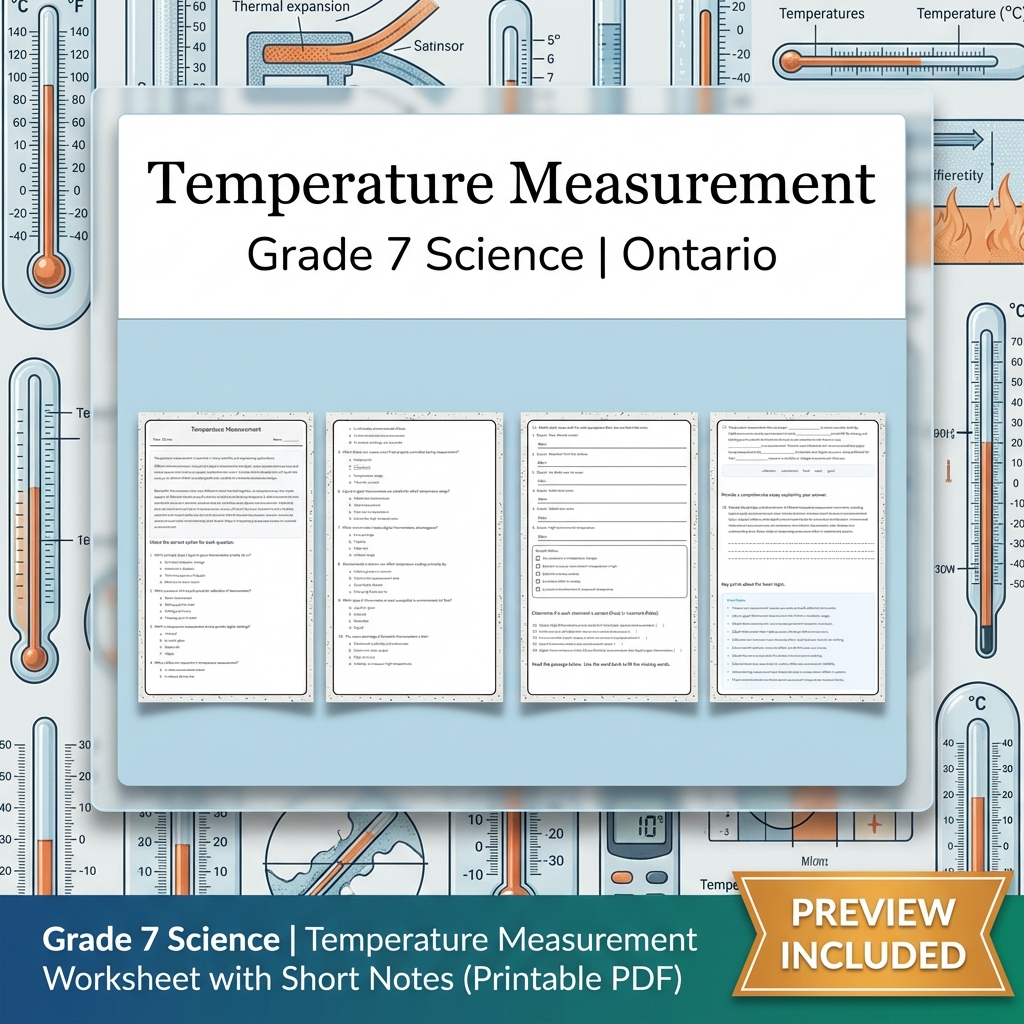
Grade 7 Science | Temperature Measurement Worksheet with Short Notes (PDF)
 Created byMeadowlark Worksheets
Learning Objectives
- Understand the principles of temperature measurement and instrument characteristics.
- Differentiate between liquid-in-glass, bimetallic, and digital thermometers.
- Explain the significance of calibration, fixed points, and thermal contact for accurate readings.
Also included in: Grade 7 Science Lesson Group | Thermal Effects and Heat Transfer Worksheets +1 more
Instant download

Grade 7 Science Worksheet | Temperature Measurement (PDF) | Ontario Standards
Created byEvergreen Desk EducationLearning Objectives
- Compare temperature measurement principles and instrument characteristics across liquid-in-glass, bimetallic, and digital thermometers.
- Use the Celsius scale conventions and understand the need for fixed points and calibration for reliable measurements.
- Identify sources of uncertainty and environmental influences (radiation and air flow) that affect recorded temperatures.
Also included in: Grade 7 Thermal Heat Transfer Science Lesson Bundle: Ontario Framework +1 more
Instant download
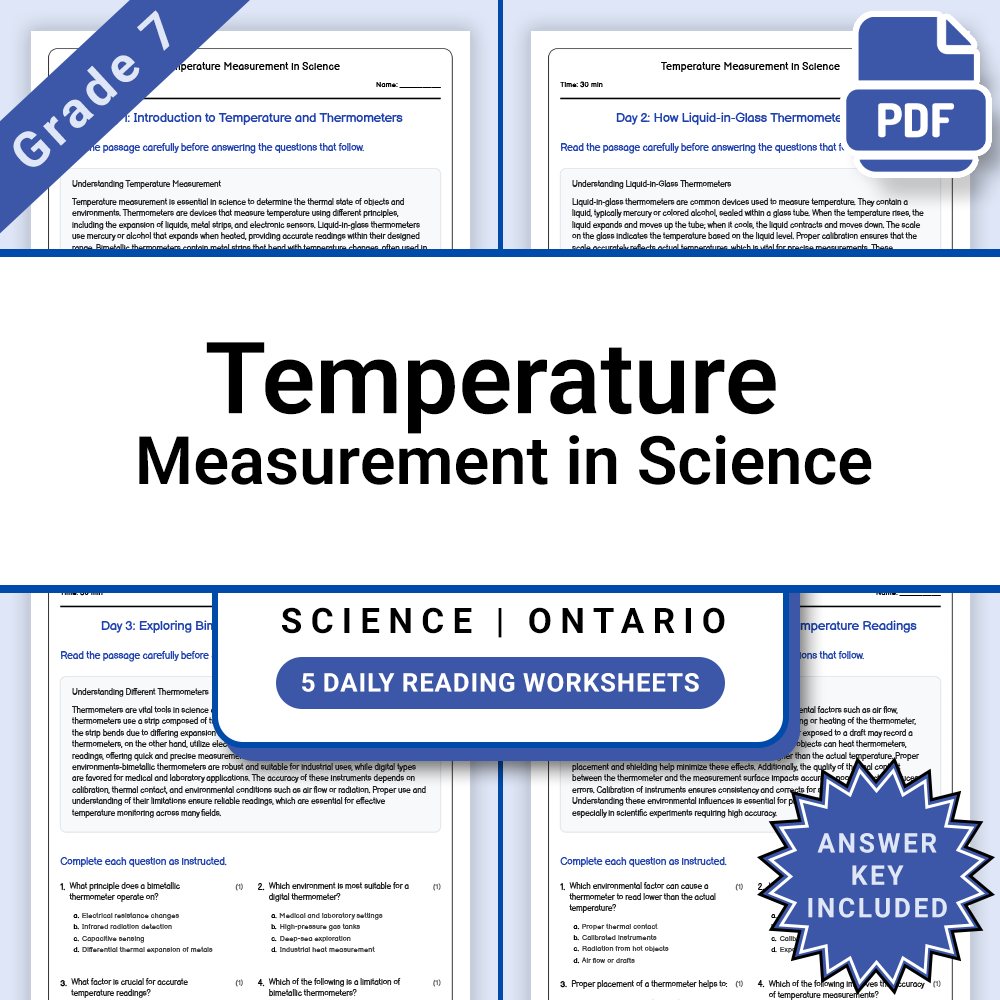
Grade 7 Science – Temperature Measurement Daily Worksheet with Answer Key
Learning Objectives
- Identify different types of thermometers and their uses
- Explain basic principles of temperature measurement
- Understand the characteristics of liquid-in-glass, bimetallic, and digital thermometers
Also included in: Grade 7 Science Lesson Group: Ontario Curriculum | Thermal & Heat Transfer +1 more
Instant download

Grade 7 Science | Temperature Measurement in Science - Reading Comprehension
Created byCoral Reef LearningLearning Objectives
- Identify different types of thermometers commonly used in science.
- Understand the basic functioning of liquid-in-glass, bimetallic, and digital thermometers.
- Learn about temperature scales, fixed points, and calibration importance.
Instant download

Temperature Measurement Worksheet | Ontario Grade 7 Science Assessment
Created byCedar Grove LearningLearning Objectives
- Compare how liquid-in-glass, bimetallic, and digital thermometers measure temperature and identify their suitable uses.
- Use Celsius scale conventions (0°C and 100°C) and explain why calibration and good thermal contact improve accuracy.
- Distinguish systematic and random uncertainty and describe environmental factors that can affect temperature readings.
Also included in: Grade 7 Thermal Energy & Heat Transfer Science Lesson Bundle: Ontario +1 more
Instant download

Science Worksheet: Temperature Measurement Grade 7 | Ontario Standards
Learning Objectives
- Compare common temperature-measuring instruments (liquid-in-glass, bimetallic, and digital) by how they work and when they are appropriate.
- Explain Celsius scale conventions, including fixed points and why calibration is necessary.
- Describe how thermal contact and environmental factors (radiation and air flow) can affect temperature readings.
Instant download
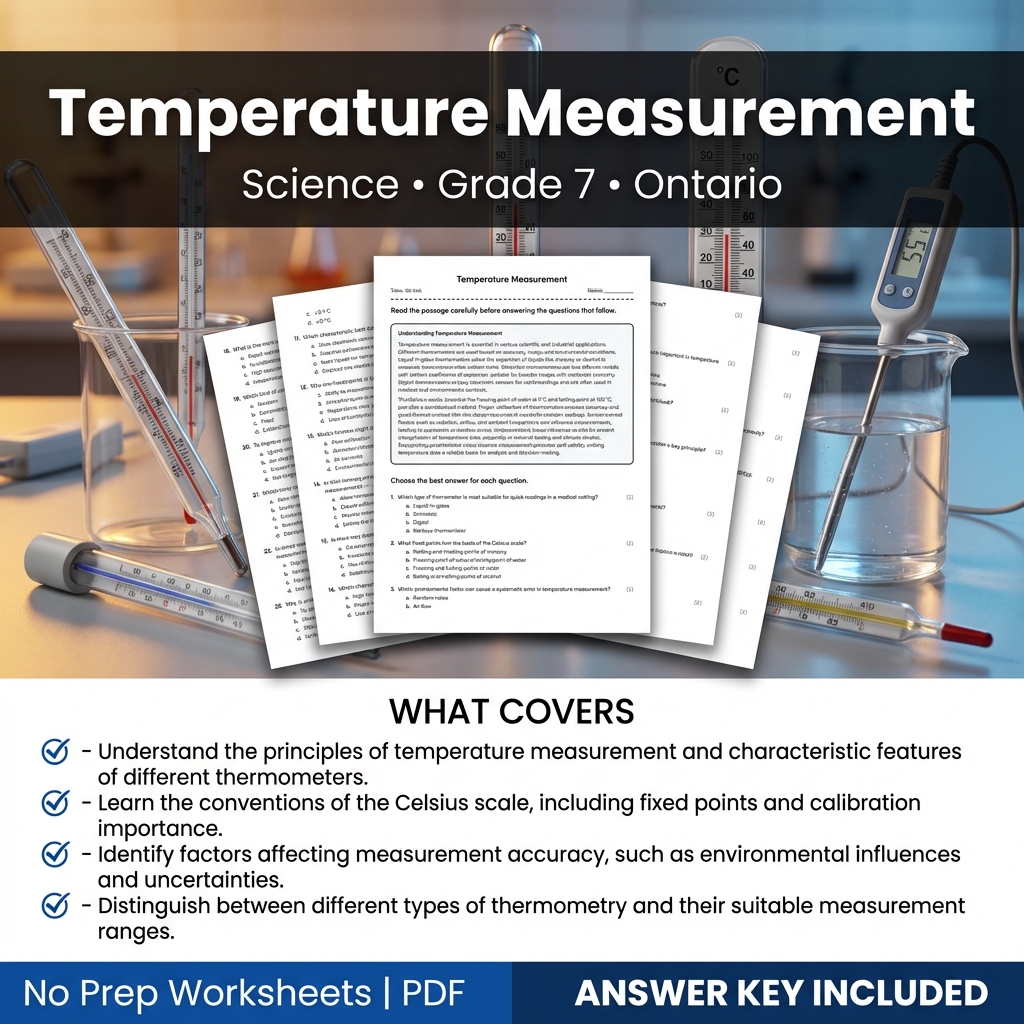
Temperature Measurement Worksheet | Grade 7 Science | Ontario
Created byCoral Reef LearningLearning Objectives
- Understand the principles of temperature measurement and characteristic features of different thermometers.
- Learn the conventions of the Celsius scale, including fixed points and calibration importance.
- Identify factors affecting measurement accuracy, such as environmental influences and uncertainties.
Instant download

Temperature Measurement Worksheet | Grade 7 Science Assessment Practice
Created byPrism Point LearningLearning Objectives
- Explain how different thermometers measure temperature and identify their typical ranges and accuracy limits.
- Use Celsius scale conventions, including fixed points, to interpret temperature readings correctly.
- Describe how calibration, thermal contact, and environmental factors affect measurement uncertainty.
Instant download
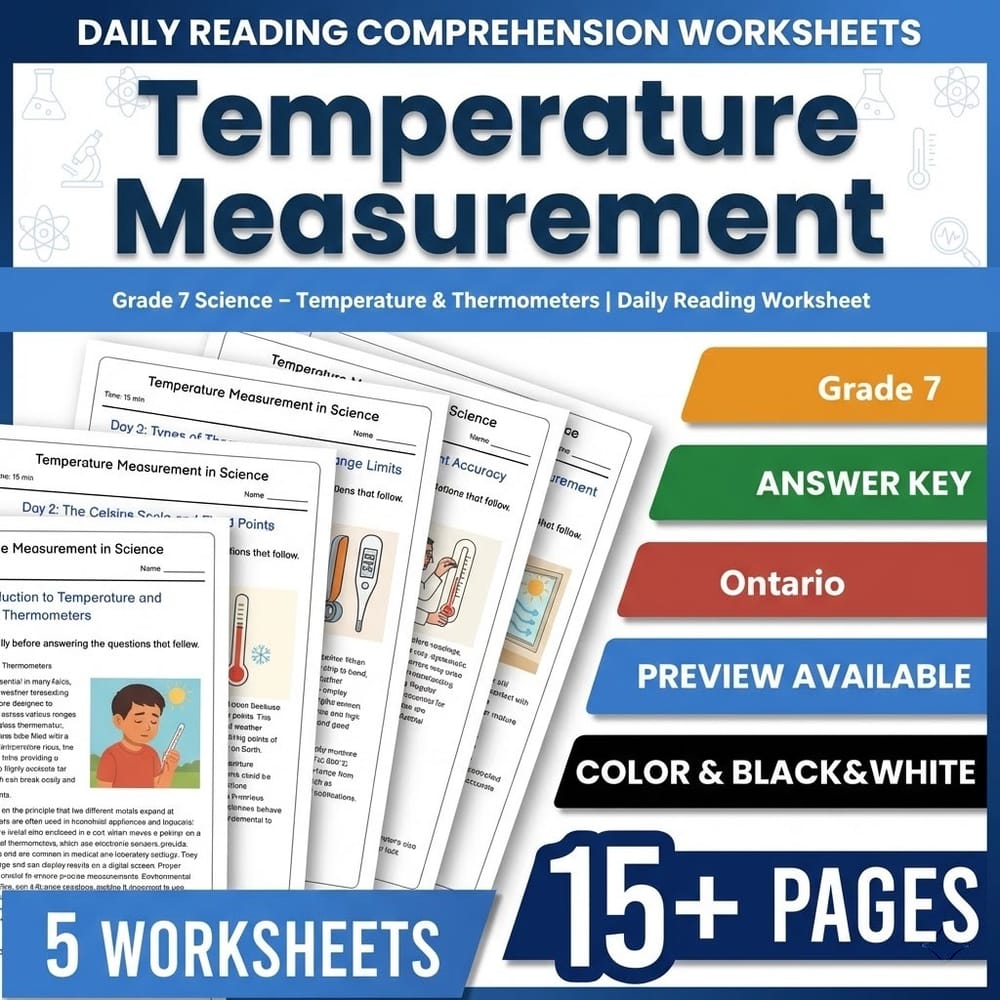
Grade 7 Science – Temperature & Thermometers | Daily Reading Worksheet
 Created byQuiet Forest Education
Learning Objectives
- Identify different types of thermometers and understand their basic functions
- Understand the principles of temperature measurement
- Recognize the importance of calibration and environmental influences on temperature readings
Also included in: Thermal Energy Grade 7 Science Daily Reading Worksheets Bundle | Ontario +1 more
Instant download

Grade 7 Science – Temperature Measurement & Thermometers | Reading Worksheet
Created byBright Mind ResourcesLearning Objectives
- Understand the principles of temperature measurement and the functions of different thermometers.
- Identify and compare liquid-in-glass, bimetallic, and digital thermometers.
- Describe Celsius scale conventions and the importance of calibration.
Also included in: Heat Transfer Grade 7 Science Daily Reading Worksheets Lesson Bundle | Ontario +1 more
Instant download
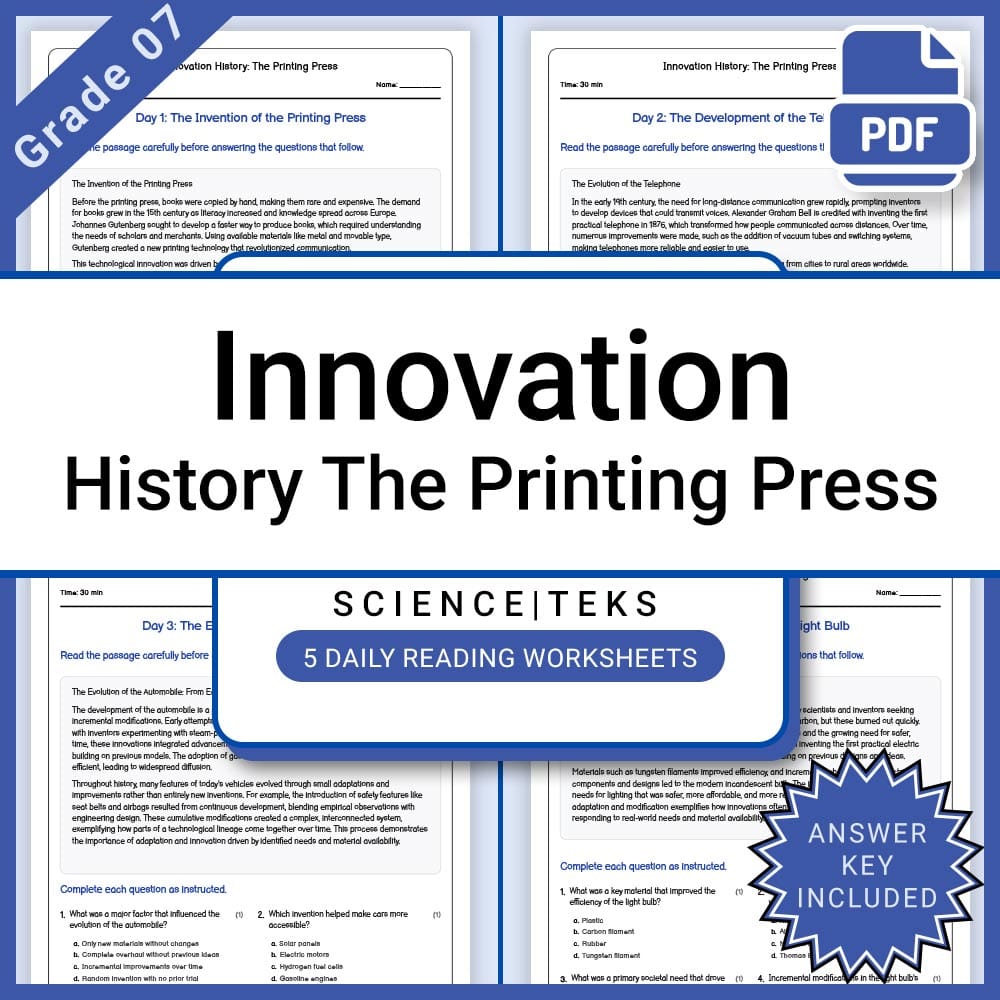
Grade 7 Science – Innovation History The Printing Daily Worksheet + Answer Key
Learning Objectives
- Understand the causes that led to the invention of the printing press.
- Analyze how materials and needs influenced technological advancements.
- Explore the process of innovation through historical examples.
Also included in: Grade 7 Science Lesson Group TEKS Bundle – Standards and Inquiry Activities +1 more
Instant download

Grade 7 Science | Innovation History - Daily Reading Comprehension
Created byCoral Reef LearningLearning Objectives
- Understand the causes that lead to technological innovation.
- Identify how needs, materials, and incremental improvements contribute to invention and innovation.
- Recognize examples of historical innovations and their development processes.
Instant download
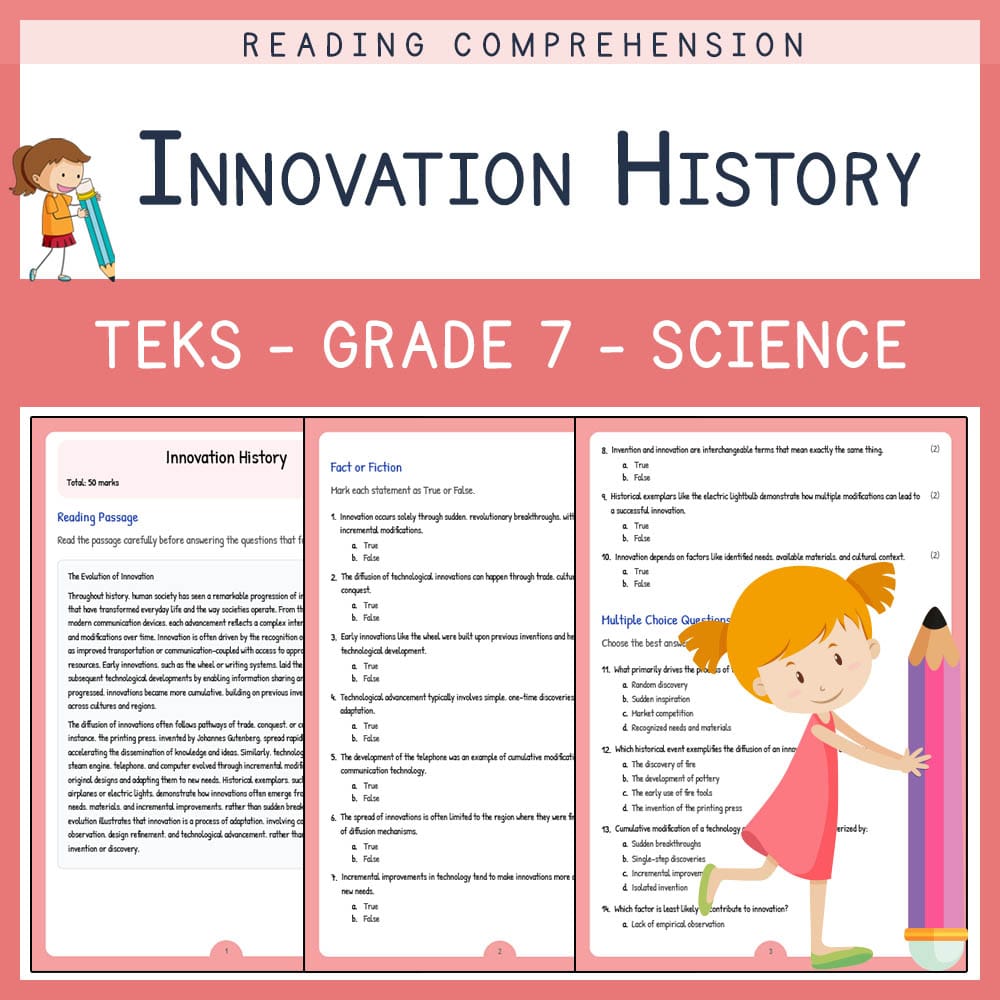
Grade 7 Science | Innovation History Worksheet | TEKS-Aligned
Created byLumora LearningLearning Objectives
- Understand the process and factors that contribute to technological innovation over time.
- Identify examples of inventions and innovations across different historical periods.
- Analyze causes, diffusion, and modifications that lead to technological advancements.
Instant download
About Grade 7 Science Worksheets
Browse 6,126 printable Grade 7 Science worksheets — ready-to-print PDFs with answer keys where available.
Every worksheet on MyTeachingSheets is created by independent teacher-authors and reviewed before publication. All resources download as printable PDFs for classroom, homework, or at-home practice, and many include answer keys. Preview any worksheet free before buying.