
Grade 6 Science Worksheets
6,100 worksheets
Cell Evidence and Biological Organization
 Created bythe curious pencil
Learning Objectives
- Identify cells as the basic units of life using observational evidence.
- Distinguish single-celled organisms from multicellular organisms.
- Explain how cells relate to tissues, organs, and whole organisms.
Also included in: Grade 6 Science Cells & Organisms Worksheets Bundle | NGSS +2 more
Instant download

Grade 6 Science – Oceans & Climate Regulation Daily Reading Worksheet
 Created byBright Mind Resources
Learning Objectives
- Understand how oceans influence climate stability
- Learn about the process of heat absorption and release by oceans
- Identify how ocean conditions affect weather patterns
Also included in: Climate Grade 6 Science Daily Reading Worksheets Lesson Bundle | Florida NGSSS +1 more
Instant download

Lunar Phases & Earth-Moon-Sun Relationships Grade 6 Science Worksheet
Created bythe curious pencilLearning Objectives
- Explain how Earth, Moon, and Sun positions produce lunar phases
- Distinguish solar and lunar eclipses using their alignment patterns
- Sequence the primary lunar phases in their repeating pattern
Also included in: Grade 6 Space Science Worksheets Bundle | Earth's Place in Universe +2 more
Instant download
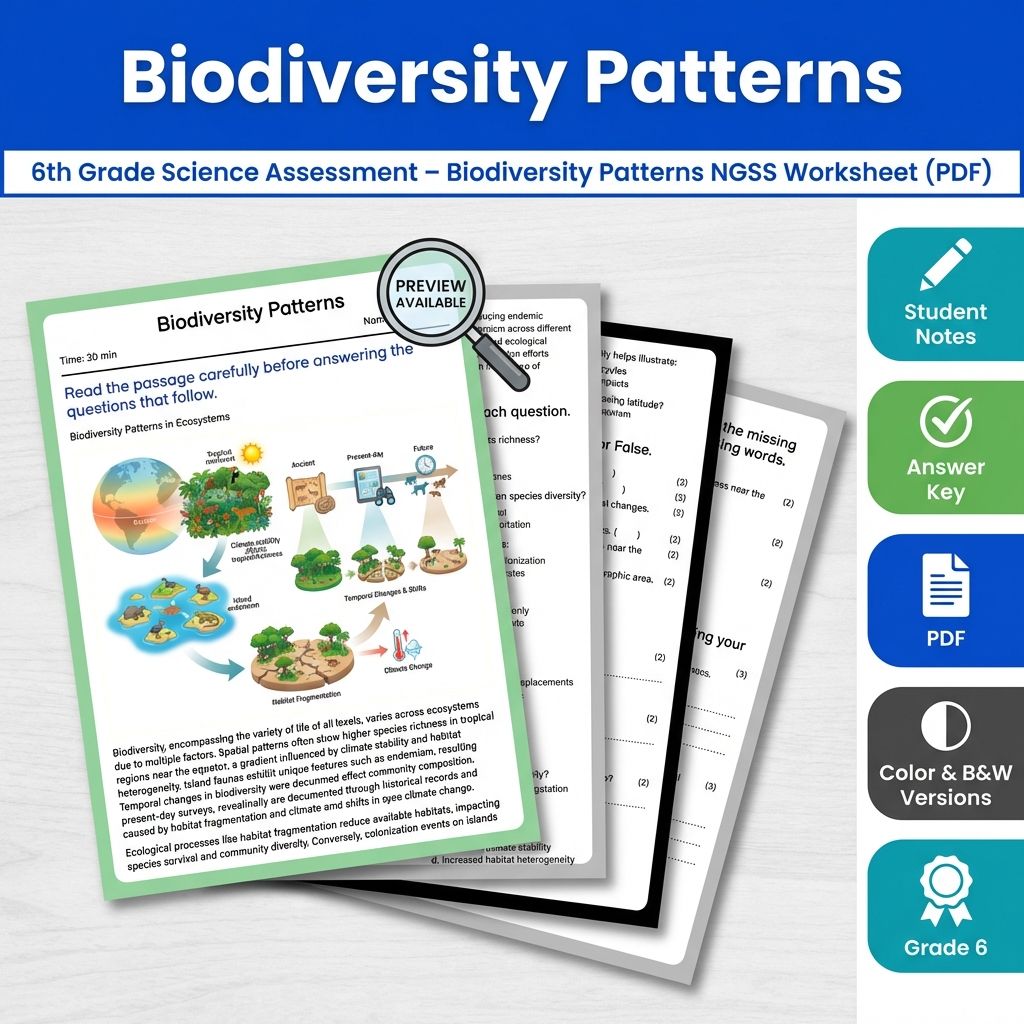
Biodiversity Patterns Assessment | NGSS Grade 6 Science Worksheet
 Created byPrism Point Learning
Learning Objectives
- Understand how species occurrence and richness reveal biodiversity patterns across ecosystems.
- Compare spatial and temporal biodiversity among different habitats and regions.
- Interpret ecological and historical factors that influence biodiversity distribution.
Also included in: Grade 6 Science Mini Bundle – Biological Evolution: Unity & Diversity +1 more
Instant download

Grade 6 Atom Conservation Worksheet | Practice & PDF with Standards
 Created byClear Sky Classroom
Learning Objectives
- Explain that atoms of elements are neither created nor destroyed in chemical reactions.
- Use particle diagrams to represent reactants and products and check that the same atoms appear on both sides.
- Connect conservation of atoms to macroscopic observations such as new substances forming.
Instant download

Grade 6 Science | Heat and Temperature Worksheet | NGSSS Aligned
 Created byLumora Learning
Learning Objectives
- Explain the difference between heat and temperature using particle motion and energy transfer ideas
- Use temperature differences to predict the direction of heat flow
- Describe how the amount of matter affects how much heat energy an object can store
Instant download

Cell Evidence Worksheet | NGSS Grade 6 Cells & Scientific Evidence
 Created byAmber Owl Education
Learning Objectives
- Describe how microscopy and preserved specimens provide evidence that cells are the basic unit of life.
- Distinguish single-celled organisms from multicellular organisms using observable cell features.
- Explain how the organization from cells to tissues, organs, and whole organisms is supported by empirical observations.
Also included in: Cells & Scientific Evidence Lesson Bundle – Grade 6 Science NGSS +1 more
Instant download

Cell Evidence Worksheet | Standards-Aligned Grade 6 Science Practice
Learning Objectives
- Identify observable characteristics that distinguish single-celled from multicellular organisms.
- Understand the relationship between cells, tissues, organs, and whole organisms.
- Recognize empirical features such as membrane-bound compartments, cell size ranges, and specialization in different organism types.
Also included in: Grade 6 Cellular Processes and Feedback Science Lesson Bundle – NGSS +1 more
Instant download

Cell Evidence for Biological Organization Grade 6 Science Worksheets
 Created byTeachers Club
Learning Objectives
- Identify cells as the basic unit of life using observations from microscopy and preserved specimens
- Compare single-celled and multicellular organisms based on visible cell structures and organization
- Describe how cells relate to tissues, organs, and whole organisms using empirical evidence
Also included in: From Molecules to Organisms Grade 6 Science NGSS Bundle +2 more
Instant download

Grade 6 Science | Mixture Separation Worksheet | NGSSS Aligned
Created byLumora LearningLearning Objectives
- Explain why mixtures can be separated without forming a new substance
- Identify physical properties used to separate components of a mixture
- Match common separation methods to the mixtures and properties they use
Instant download
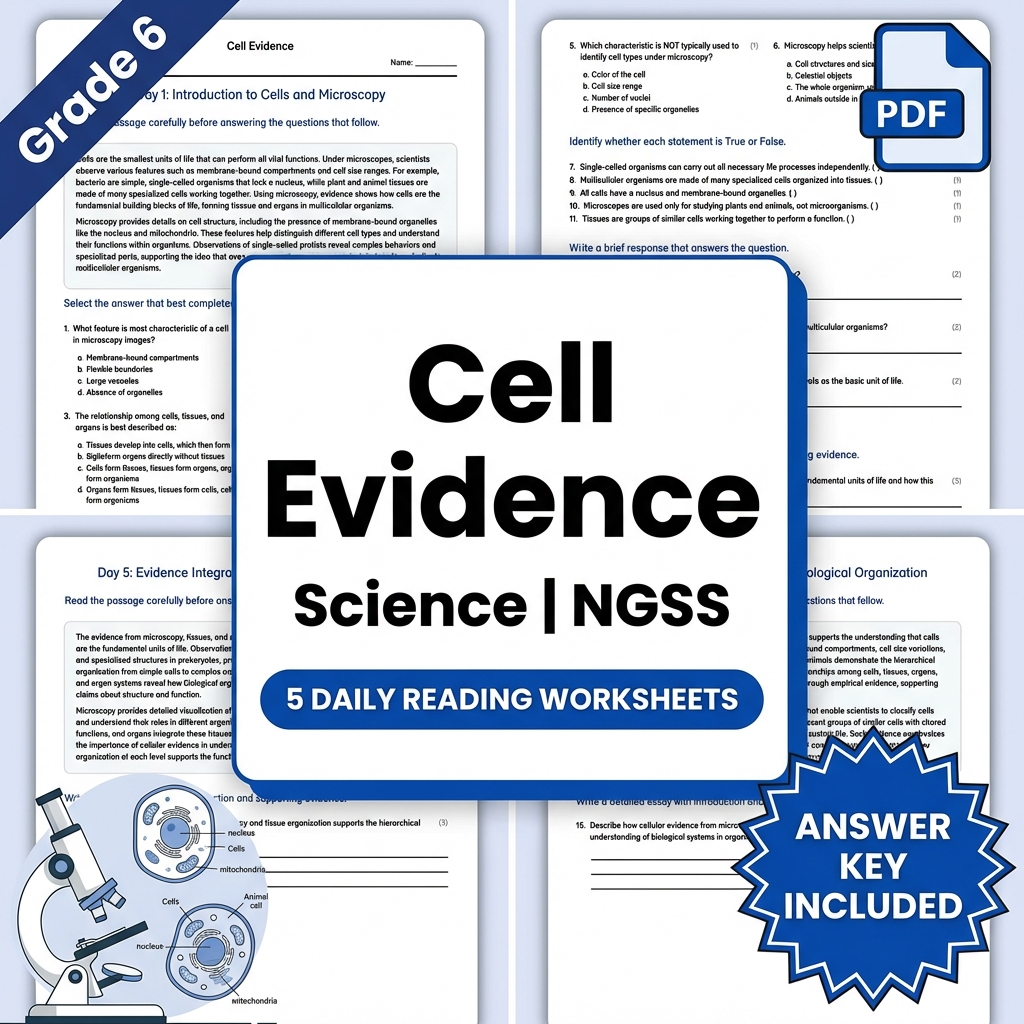
6th Grade Science | Cell Evidence Daily Reading Worksheet (PDF + Answer Key)
 Created byCopper Leaf Classroom
Learning Objectives
- Identify common cellular features observable under microscopes.
- Differentiate between single-celled and multicellular organisms based on evidence.
- Understand the relationships among cells, tissues, and organs in organisms.
Instant download
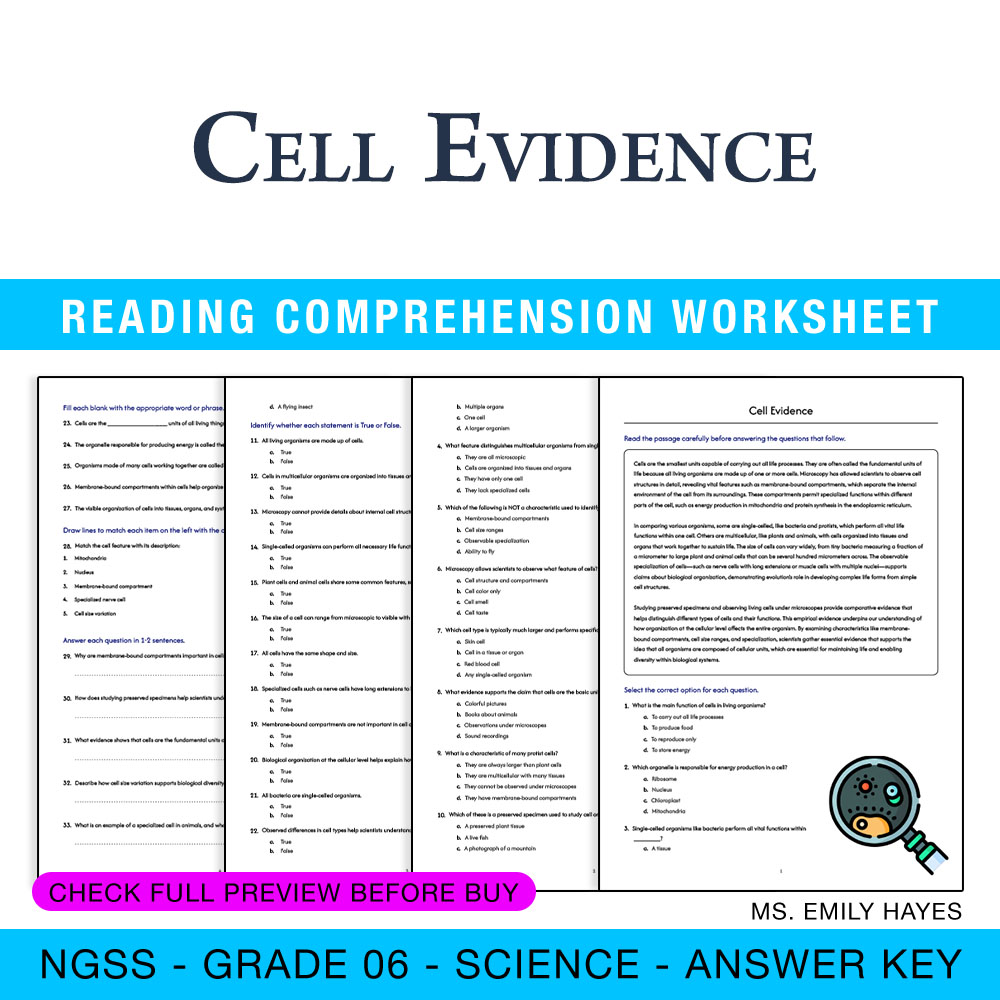
6th Grade Science | Cell Evidence Worksheet (PDF + Answer Key)
Created byCopper Leaf ClassroomLearning Objectives
- Identify the basic structure and characteristics of cells as the fundamental unit of life.
- Compare and contrast single-celled and multicellular organisms based on microscopy evidence.
- Describe the relationships among cells, tissues, organs, and whole organisms in biological organization.
Instant download
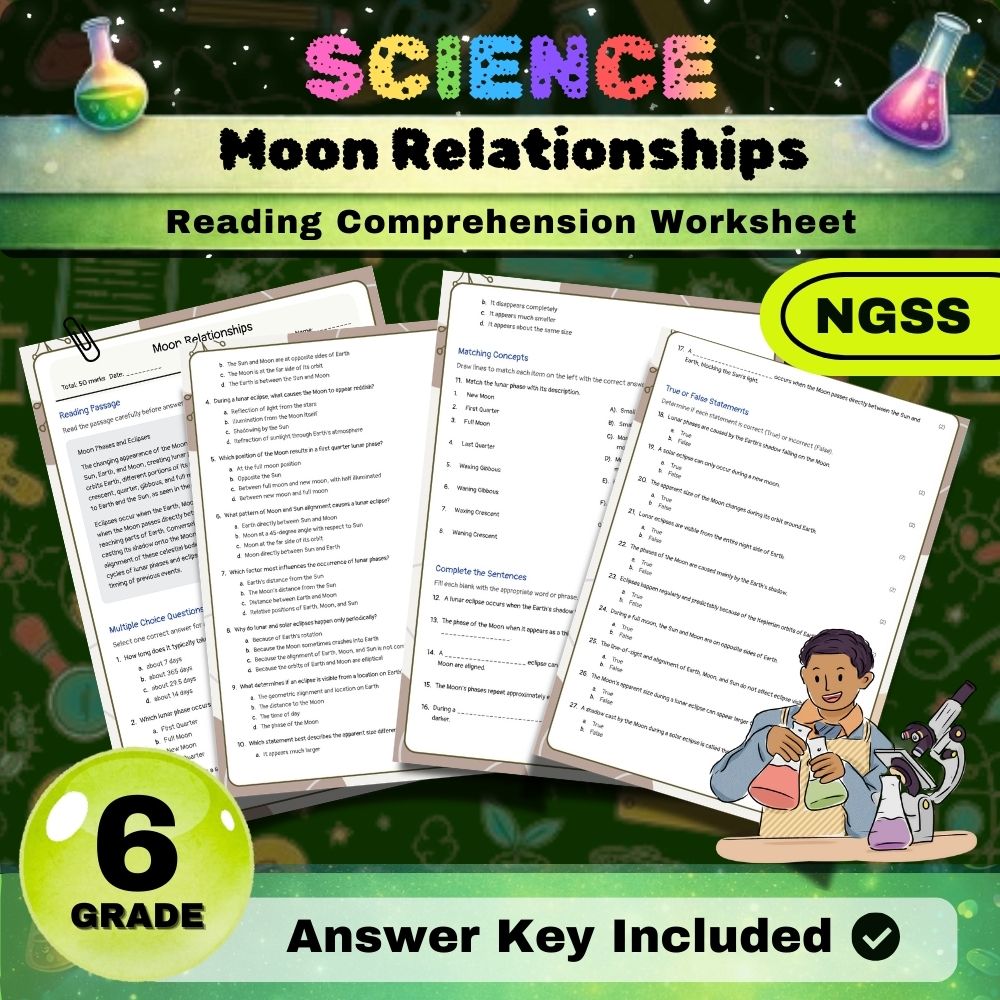
Grade 6 Science | Moon Relationships NGSS Worksheet (PDF + Answer Key)
 Created byMaple Path Learning
Learning Objectives
- Describe the geometric relationships among Earth, Moon, and Sun that produce lunar phases and eclipses.
- Explain how relative positions of Earth, Moon, and Sun determine the occurrence of lunar phases and eclipses.
- Predict the timing and types of lunar phases and eclipses based on Earth-Moon-Sun positions.
Also included in: Grade 6 Science | Earth's Rotation, Seasons & Orbital Motion Worksheet Bundle +1 more
Instant download

Grade 6 Mixture Separation Worksheet with Answer Key | Florida NGSSS Science
 Created byEvergreen Desk Education
Learning Objectives
- Identify physical properties that can be used to separate components of a mixture
- Explain why mixture separation does not create a new substance
- Choose an appropriate separation method for a given mixture based on its properties
Instant download

Mixture Separation Worksheet Grade 6 Science | Filtering & Solutions
Created byPrism Point LearningLearning Objectives
- Explain why mixtures can be separated without forming new substances
- Identify physical properties used to separate mixture components
- Match separation methods to mixtures based on properties like particle size, density, boiling point, and solubility
Also included in: Grade 6 Energy, Matter & Motion Lesson Bundle | Florida NGSSS
Instant download

Grade 6 Science | Comparative Flight - Daily Reading Comprehension
 Created byCoral Reef Learning
Learning Objectives
- Understand the differences in design features of kites, gliders, and round canopies.
- Identify how glide ratio, lift-to-drag performance, and control responsiveness affect flight.
- Explain how regional atmospheric conditions influence flying device performance.
Also included in: Air and Aerodynamics Lesson Bundle – Grade 6 Science Alberta Reading Comp. +1 more
Instant download

Biodiversity Richness and Turnover Worksheets | Grade 6 Science
Created byTeachers ClubLearning Objectives
- Describe how species richness and species occurrence can show biodiversity patterns across space and time
- Compare island faunas, latitudinal gradients, and habitat heterogeneity as examples of biodiversity variation
- Explain how turnover and community composition can be assessed using historical records and present-day surveys
Also included in: Biological Evolution & Unity and Diversity | Grade 6 Science NGSS +2 more
Instant download

Biodiversity Patterns Worksheet | NGSS Grade 6 Ecology Activity
 Created byElena Brooks
Learning Objectives
- Understand how island size influences species diversity.
- Analyze spatial patterns of biodiversity.
- Interpret data related to species richness across ecosystems.
Instant download

Grade 6 Science – Understanding Mixture Separation Daily Reading Worksheet
Created byBright Mind ResourcesLearning Objectives
- Define what mixtures are and how they differ from chemical compounds.
- Identify different physical properties used to separate mixtures.
- Explain common separation techniques, such as filtration, evaporation, and density differences.
Also included in: Grade 6 Science Energy & Matter Daily Reading Lesson Bundle | Florida NGSSS +1 more
Instant download

Grade 6 Science | Moon Relationships Worksheet (PDF) | NGSS Aligned
Created byLumora LearningLearning Objectives
- Understand the relative positions of the Earth, Moon, and Sun that cause lunar phases and eclipses.
- Identify the primary lunar phases and the conditions needed for solar and lunar eclipses.
- Recognize the periodicity and predictability of Earth-Moon-Sun alignments.
Instant download

Grade 6 Science – Heat & Temperature | Daily Reading Worksheet
Created byBright Mind ResourcesLearning Objectives
- Understand the difference between heat and temperature.
- Learn how temperature measures energy in particles.
- Explore how heat transfers from warmer to cooler objects.
Also included in: Grade 6 Science Energy & Matter Daily Reading Lesson Bundle | Florida NGSSS +1 more
Instant download

Grade 6 Introduction to Cell Evidence Worksheet | NGSS Life Science
 Created byBRIGHT PATH RESOURCES
Learning Objectives
- Identify features that distinguish single-celled organisms from multicellular organisms.
- Understand the relationship among cells, tissues, organs, and entire organisms.
- Observe and compare the characteristics of different cell types using microscopy and specimens.
Also included in: From Molecules to Organisms Lesson Bundle | Grade 6 Science | NGSS +2 more
Instant download
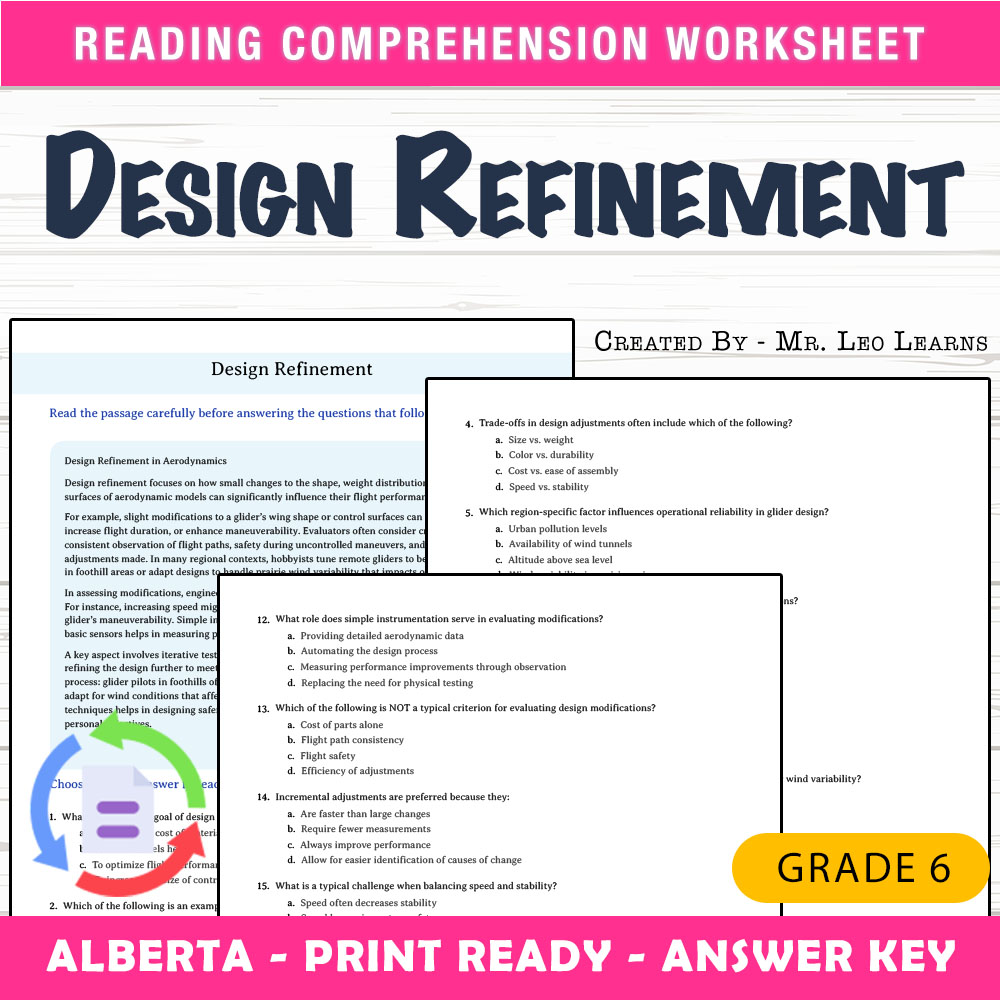
Grade 6 Science — Worksheet MCQ Paper for Mastering Design Refinement
 Created byThe Resource Hub
Learning Objectives
- Understand how incremental adjustments to design affect aerodynamic performance and safety.
- Identify criteria used to evaluate modifications in aerodynamic models.
- Analyze trade-offs between speed, stability, and payload in design refinement.
Also included in: Grade 6 Science | Air and Aerodynamics UNIT Worksheet Bundle (Alberta Framework) +1 more
Instant download
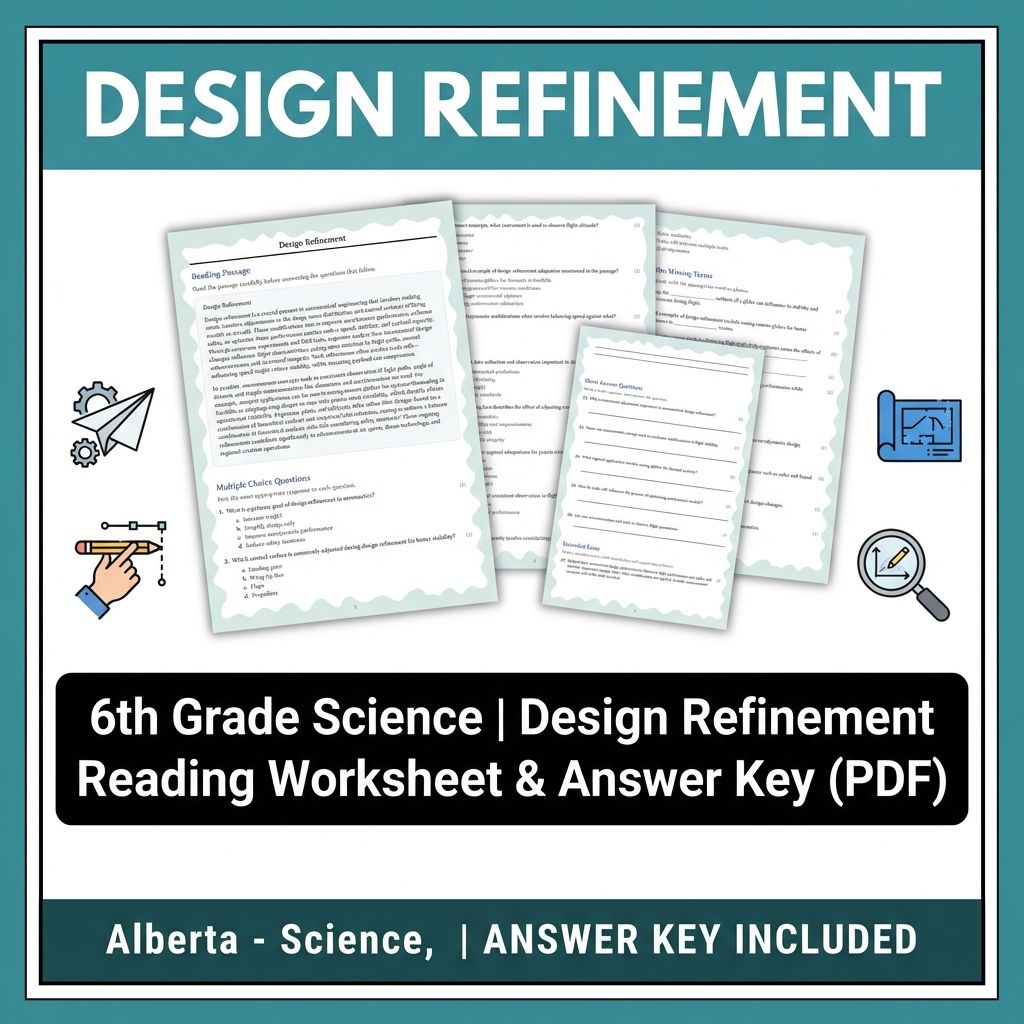
6th Grade Science | Design Refinement Reading Worksheet & Answer Key (PDF)
Learning Objectives
- Explain how incremental design modifications influence aerodynamic performance and safety.
- Identify criteria used to evaluate modifications on aerodynamic models.
- Understand trade-offs between speed, stability, and payload in aerodynamic design.
Also included in: Grade 6 Science | Flight Physics & Aerodynamics UNIT Pack (Answer Keys Included) +1 more
Instant download
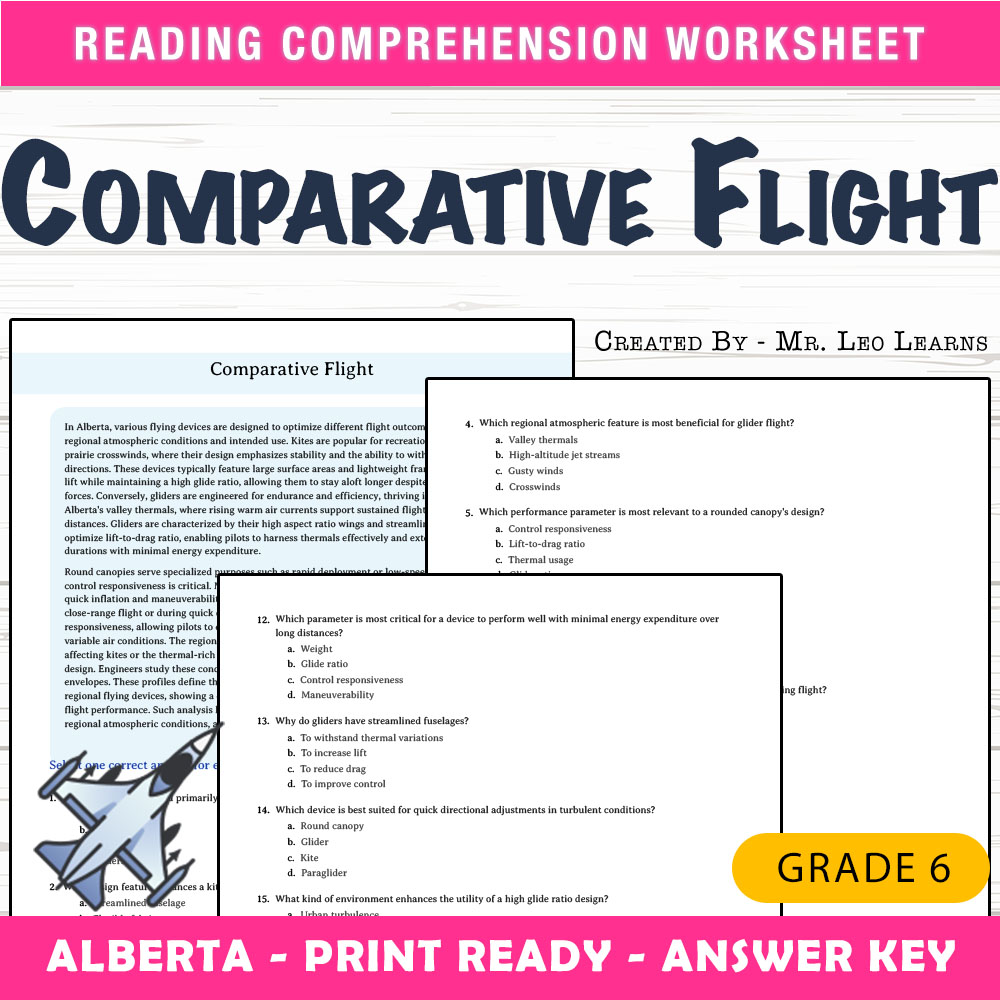
Grade 6 Science — Comparative Flight Worksheet MCQ Paper
Created byThe Resource HubLearning Objectives
- Compare the glide ratio, lift-to-drag performance, and control responsiveness of different flying devices.
- Explain how design parameters influence endurance and maneuverability in kites, gliders, and round canopies.
- Understand regional atmospheric influences, such as prairie crosswinds and valley thermals, on flight performance.
Also included in: Grade 6 Science | Air and Aerodynamics UNIT Worksheet Bundle (Alberta Framework) +1 more
Instant download

Grade 6 Science | Chemical Evidence - Daily Reading Comprehension
Created byCoral Reef LearningLearning Objectives
- Identify observable signs that indicate a chemical change has occurred
- Differentiate between physical and chemical changes based on signs
- Recognize real-life examples of chemical reactions
Instant download

Chemical Evidence Assessment | California Standards Grade 6 Science
Created byPrism Point LearningLearning Objectives
- Identify observable indicators that a chemical reaction has occurred.
- Differentiate chemical evidence from signs of physical change.
- Connect evidence of new substances to particle-level rearrangements.
Also included in: Grade 6 Atoms and Chemical Change Science lesson bundle | California Standards +1 more
Instant download

Grade 6 Thermal Energy Transfer Worksheet with Answer Key | Florida NGSSS
Created byEvergreen Desk EducationLearning Objectives
- Explain how conduction, convection, and radiation transfer thermal energy
- Identify the role of matter (solids, liquids/gases, or space) in each thermal transfer mechanism
- Use evidence from everyday examples to choose the correct thermal energy transfer process
Instant download

Biodiversity Patterns Worksheets: Richness, Turnover & Endemism Grade 6
 Created byWorld Paper Hub
Learning Objectives
- Explain how species richness and species occurrence can be used to describe biodiversity patterns.
- Compare biodiversity patterns across space (islands, latitudes, and habitat types) and time (community turnover).
- Identify ecological and historical factors that influence endemism and species composition.
Instant download

Grade 6 Chemical Evidence Worksheet | NGSS Practice PDF
Created byClear Sky ClassroomLearning Objectives
- Identify chemical evidence that indicates a new substance has formed.
- Explain why chemical evidence suggests a change in composition, not just mixing.
- Connect common indicators (color change, gas, precipitate, temperature change, persistence) to particle-level changes.
Instant download

Grade 6 Moon Relationships Worksheet | Practice NGSS PDF
Created byClear Sky ClassroomLearning Objectives
- Describe the geometric relationships among Earth, Moon, and Sun that produce lunar phases and eclipses.
- Explain the sequence of primary lunar phases and the conditions for solar and lunar eclipses.
- Use observational records to understand periodicity and predictability of Earth–Moon–Sun configurations.
Also included in: Grade 6 Earth's Place in the Universe Science Lesson Bundle: NGSS +1 more
Instant download

Grade 6 Science | Chemical Evidence Assessment | California Standards
Created byLumora LearningLearning Objectives
- Identify observable indicators that suggest a new substance formed during a chemical reaction
- Explain how chemical evidence connects to changes in composition at the particle level
- Differentiate chemical changes from physical changes using evidence such as gas, precipitate, color, temperature, and persistence
Instant download

Grade 6 Science | Atom Conservation Worksheet | California Standards
Created byLumora LearningLearning Objectives
- Explain atom conservation in chemical reactions using the particle model
- Describe how reactants’ atoms rearrange to form products without being created or destroyed
- Connect particle diagrams to the macroscopic observation of new substances
Instant download

Reactants and Products Chemical Reactions Worksheet Grade 6 Science
Created byPrism Point LearningLearning Objectives
- Identify reactants and products in a chemical reaction scenario
- Explain how product properties can differ from reactant properties as evidence that a reaction occurred
- Use particle diagrams to describe how atoms are rearranged during a reaction
Instant download

Grade 6 Science – Design Refinement Worksheet (Alberta) (PDF)
Created byEvergreen Desk EducationLearning Objectives
- Explain how incremental design changes (shape, mass distribution, and control surfaces) can improve aerodynamic performance and safety.
- Use criteria and observations to evaluate whether a modification achieves the intended trade-off among speed, stability, and payload.
- Describe how simple measurements and consistent flight-path observations can support evidence-based design refinement.
Instant download

Grade 6 Thermal Energy Transfer Worksheet | NGSS Practice PDF
Created byClear Sky ClassroomLearning Objectives
- Explain how thermal energy is transferred by conduction, convection, and radiation
- Identify which mechanism of thermal energy transfer is occurring in everyday situations
- Use evidence from a text or scenario to support claims about heat transfer
Instant download
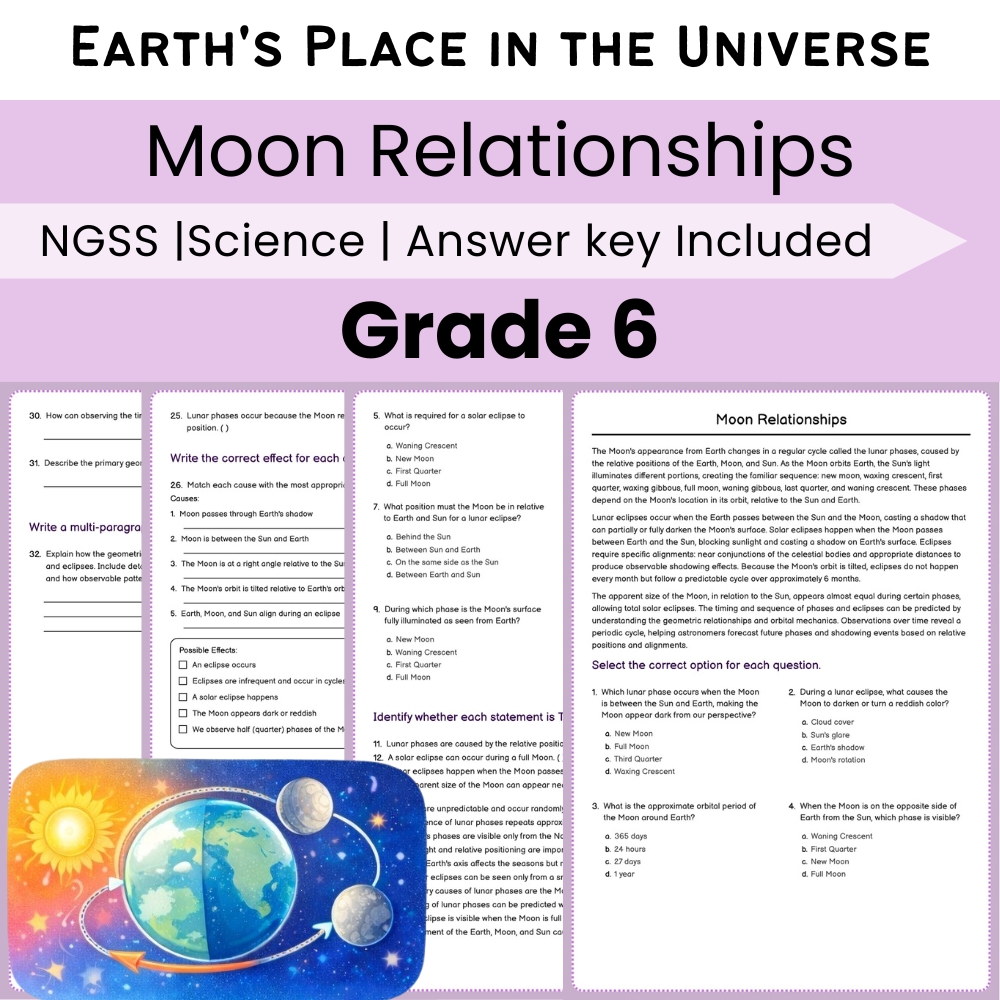
Moon Relationships Worksheet | NGSS Grade 6 Science Printable PDF
Learning Objectives
- Explain the geometric relationships among Earth, Moon, and Sun that produce lunar phases and eclipses.
- Identify the sequence of primary lunar phases and the conditions for solar and lunar eclipses.
- Describe how the apparent size and alignment of the Moon influence visibility of phases and eclipses.
Also included in: Grade 6 Science | Earth's Place in the Universe Unit Bundle (NGSS Aligned Worksheets) +1 more
Instant download
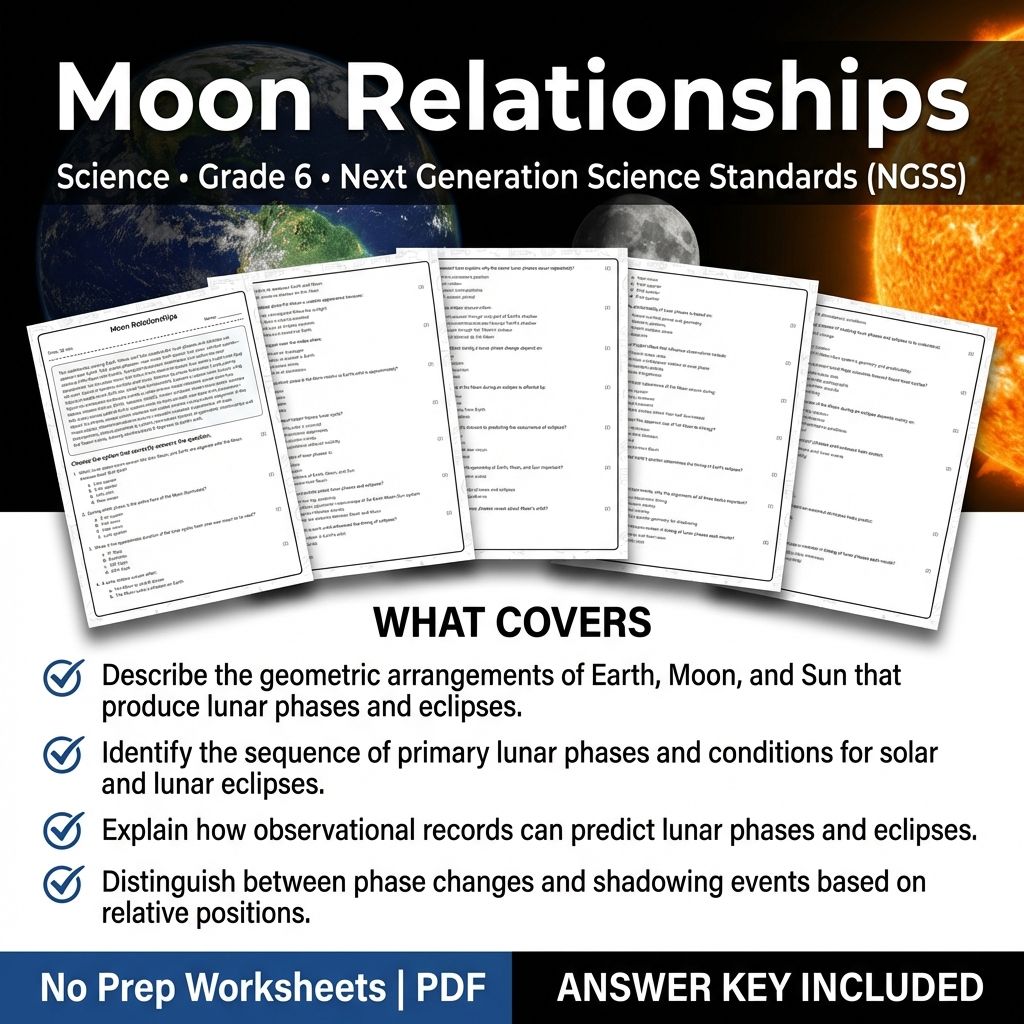
6th Grade Science | Moon Relationships Worksheet & Answer Key (Printable PDF)
Created byCoral Reef LearningLearning Objectives
- Describe the geometric arrangements of Earth, Moon, and Sun that produce lunar phases and eclipses.
- Identify the sequence of primary lunar phases and conditions for solar and lunar eclipses.
- Explain how observational records can predict lunar phases and eclipses.
Instant download

Grade 6 Science | Heat & Temperature - Daily Reading Comprehension
Created byCoral Reef LearningLearning Objectives
- Understand the difference between heat and temperature
- Identify how energy transfers due to temperature differences
- Recognize systems that involve heat and temperature in real-world contexts
Instant download
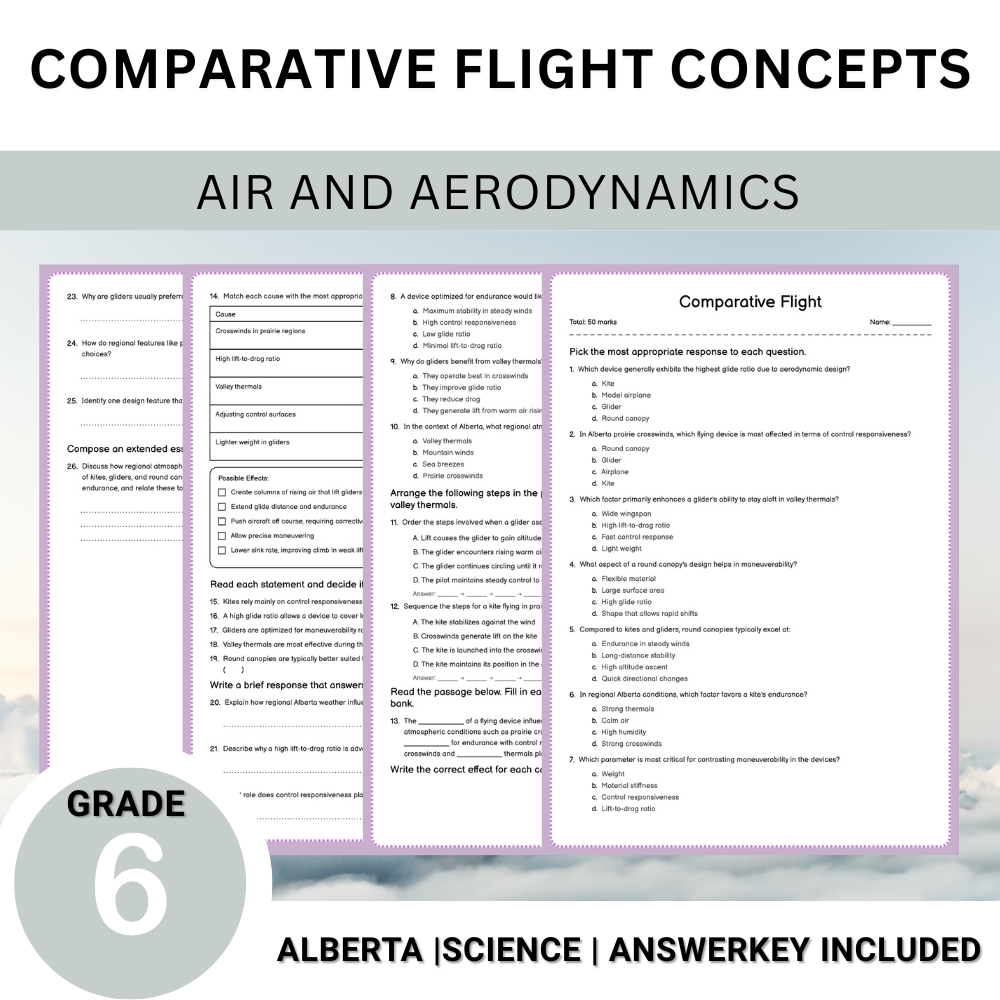
Grade 6 Science | Comparative Flight Worksheet (Assessment & Student Practice PDF)
Learning Objectives
- Compare the flight performance of kites, gliders, and round canopies based on glide ratio, lift-to-drag performance, and control responsiveness.
- Analyze how design parameters influence endurance versus maneuverability in different flying devices.
- Apply regional atmospheric concepts such as prairie crosswinds and valley thermals to understanding flight outcomes.
Also included in: Grade 6 Science Unit Bundle | Flight, Air Pressure & Aerodynamics Worksheets +1 more
Instant download

Grade 6 Science | Understanding Moon Phases & Shadows - Daily Reading Practice
Created byCoral Reef LearningLearning Objectives
- Understand key concepts related to Science
- Apply knowledge through practice questions
- Demonstrate comprehension of the material
Instant download
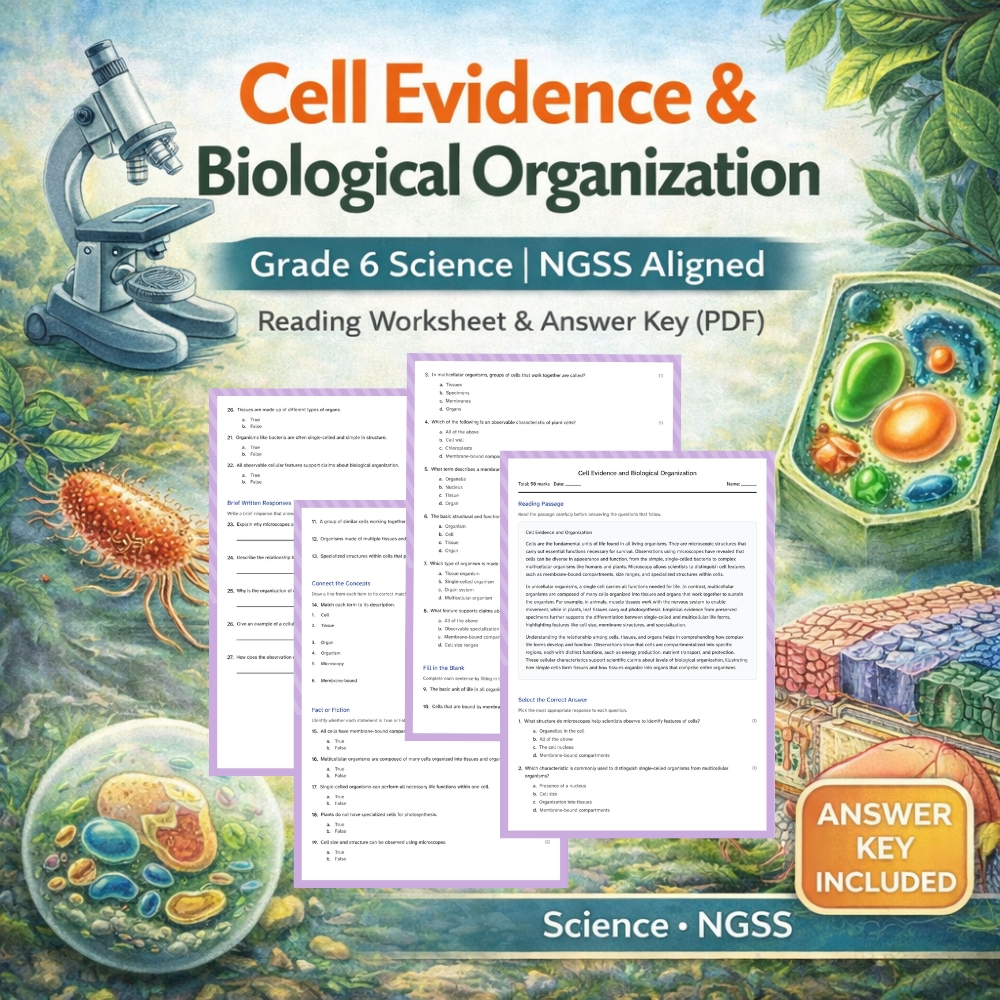
6th Grade Science | Cell Evidence & Biological Organization | NGSS Worksheet
 Created byCedar Grove Learning
Learning Objectives
- Identify and describe the basic unit of life, the cell, through observation and comparison.
- Differentiate between single-celled and multicellular organisms based on cellular evidence.
- Understand the relationships among cells, tissues, organs, and whole organisms.
Also included in: Grade 6 Science Worksheet Bundle | Cell Processes & Systems NGSS(PDF+Answer Key) +1 more
Instant download

Grade 6 Heat and Temperature Worksheet | NGSS Practice PDF
Created byClear Sky ClassroomLearning Objectives
- Distinguish heat from temperature using the idea of energy transfer versus particle motion.
- Explain how heating and cooling depend on temperature differences and energy movement.
- Compare how mass and material affect how much heat energy a system can hold at the same temperature.
Instant download

Heat and Temperature Worksheet | Standards-Aligned Grade 6 Science Practice
Learning Objectives
- Understand the difference between heat and temperature and how they relate to energy transfer.
- Describe how heat moves from warmer to cooler regions and how this affects systems.
- Explain why the same temperature does not necessarily mean the same amount of energy.
Also included in: Grade 6 Matter, Energy, and Forces Science lesson bundle – Florida (NGSSS) +1 more
Instant download

Moon Relationships Worksheet | NGSS Grade 6 Space Science Activity
Created byAmber Owl EducationLearning Objectives
- Explain how the relative positions of Earth, Moon, and Sun produce the sequence of lunar phases.
- Distinguish between lunar phases (illumination changes) and eclipses (shadowing events).
- Predict when solar and lunar eclipses can occur based on line-of-sight alignment.
Also included in: Grade 6 Science Moon Relationships & Day Night Seasons Lesson Bundle | NGSS +1 more
Instant download

Grade 6 Science – Atom Conservation & Reactions | Daily Reading Worksheet
Created byBright Mind ResourcesLearning Objectives
- Understand that atoms are neither created nor destroyed in chemical reactions.
- Recognize how atoms are rearranged to form new substances during reactions.
- Describe the particle-level explanation of atom conservation using diagrams.
Also included in: Grade 6 Matter Science Daily Reading Worksheets Lesson Bundle | CA Standards +1 more
Instant download

Biodiversity Patterns Test Prep Printable | Grade 6 Science
Created byPrism Point LearningLearning Objectives
- Describe how species richness and occurrence patterns can reveal biodiversity trends across space and time
- Explain how comparisons such as island faunas and latitudinal gradients help identify endemism and turnover
- Use ecological and historical factors (like habitat fragmentation and colonization) to interpret why communities differ
Also included in: Grade 6 Evolution and Biodiversity Science lesson bundle | NGSS
Instant download

6th Grade Science Chemical Evidence Worksheet | Reactions & Clues (PDF)
Created byEvergreen Desk EducationLearning Objectives
- Identify observable indicators that a chemical reaction has formed a new substance.
- Explain how chemical evidence suggests changes in composition rather than temporary mixing.
- Use examples (such as rusting and burning) to connect evidence to particle-level rearrangements.
Instant download
About Grade 6 Science Worksheets
Explore Grade 6 Science worksheets for classwork, homework, or review. Our 6,100 printables download instantly as PDFs.
MyTeachingSheets worksheets are made by real teacher-authors and checked before they go live. Download any as a print-ready PDF for lessons, homework, or independent practice — most include answer keys, and previews are always free.